August 1, 2026
Sticker Chart for Toddlers Who Won't Sit on Potty
Struggling with a 3-year-old who says they need to go but refuses to sit? Try this printable sticker chart to motivate potty sitting today.
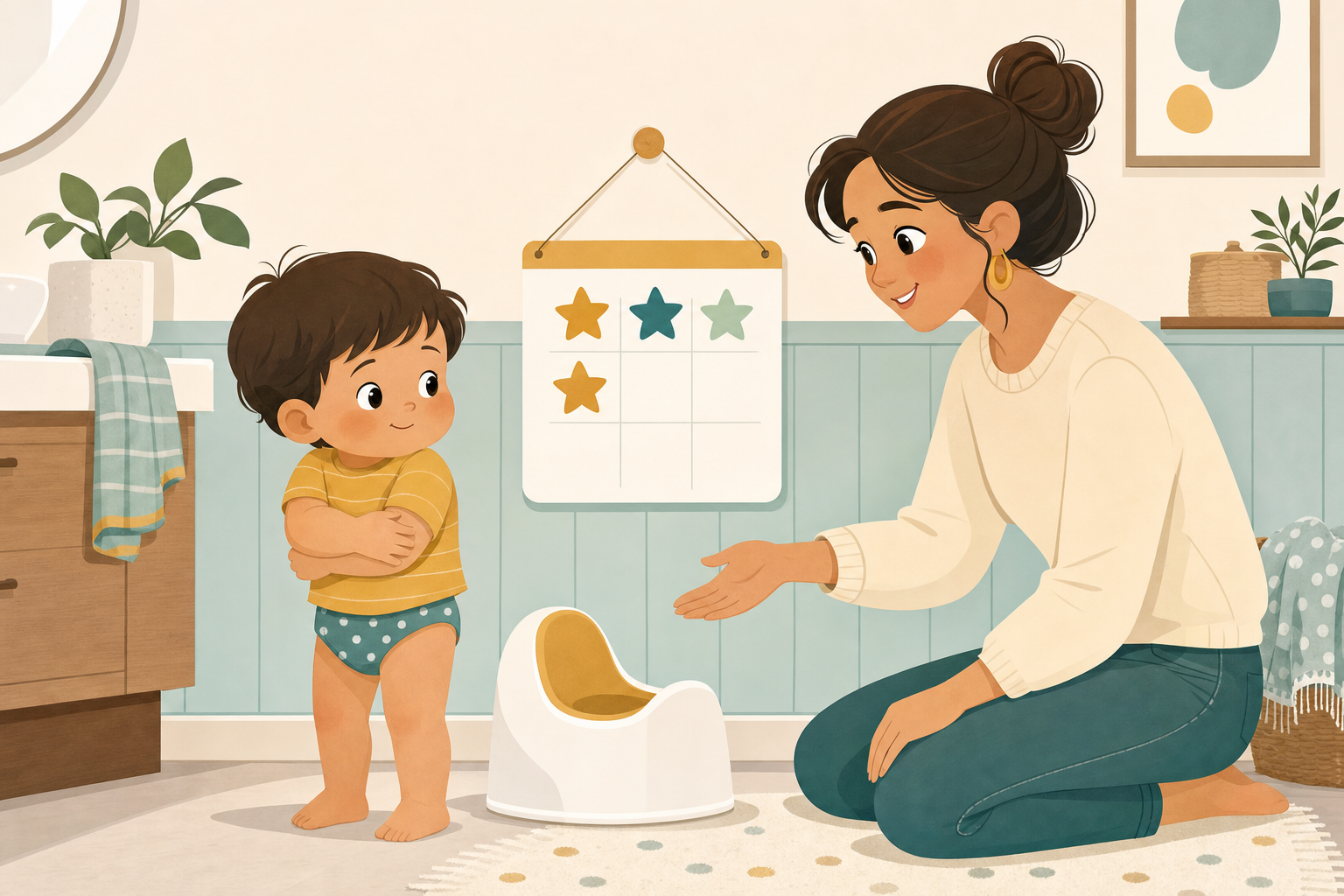
How to Use a Sticker Chart for a 3-Year-Old Who Says They Need to Go but Refuses to Sit on the Potty
Your kid walks up, announces "I need to go potty," marches to the bathroom, and then plants both feet and refuses to sit down. Ten seconds later there's an accident on the floor. If this is your daily loop, you're not dealing with a potty training problem. You're dealing with a sitting problem, and it needs a different fix than the generic "praise them when they go" advice you've already tried.
This is one of the most frustrating stages of potty training because your child clearly has the awareness. They know the signal. They know where to go. The missing piece is the physical act of sitting long enough for anything to happen, and that gap is exactly where a well-built sticker chart can help, as long as you aim it at the right behavior.
Why the Standard Potty Chart Doesn't Work Here
Most printable potty charts reward one thing: successful use of the toilet. That's a problem when your child's sticking point isn't success, it's sitting. If the only way to earn a sticker is to actually pee in the potty, a child who's scared or resistant to sitting never gets close enough to try, and the chart becomes one more thing they're failing at.
A reward chart for using the toilet independently only works if it rewards the steps that lead up to independence, not just the finish line. For a reluctant preschooler, that means breaking "go potty" into smaller pieces your child can actually succeed at today.
Build the Chart Around Sitting, Not Just Success
Instead of one box labeled "used the potty," set up a visual potty training chart for preschoolers with several small, separate steps:
- Told a grown-up they needed to go
- Walked to the bathroom
- Sat on the potty for a count of 10 (even with clothes on, even with nothing happening)
- Sat on the potty for a count of 30
- Actually went in the potty
Each step gets its own sticker. This turns the chart into a printable potty chart with small frequent rewards, which matters a lot for 3-year-olds. At this age, a reward that's five steps away feels like it might as well not exist. A reward that shows up every 20 seconds keeps them in the game.
Once sitting for 10 seconds stops being scary, you quietly raise the bar to 20, then 30. You're not asking for a giant leap, you're asking for one more breath of patience each time.
Make the First Sit Feel Like Nothing
A lot of potty refusal at this age is about control and sensation, not defiance. The seat feels cold or unstable, the sound of flushing is scary, or they simply don't like feeling exposed. You can lower the stakes by making the very first sits completely disconnected from performance:
- Let them sit fully dressed once or twice, just to get used to the seat
- Bring a favorite small toy or board book they only get during potty sits
- Set a visible timer (a sand timer works well) so "sitting" has a clear, predictable end
- Sit nearby and narrate calmly instead of asking "did you go yet?" every few seconds
Every one of these micro-wins earns a sticker. You're building a track record of the potty being a place where nothing bad happens, which is often the real barrier behind the refusal.
How to Motivate a Child to Sit on the Potty Without a Power Struggle
The fastest way to stall out with a sticker chart for stopping accidents at home is turning it into a negotiation or a bribe fest in the moment. Set the terms before you're standing in the bathroom mid-crisis, not during it.
A few things that actually help:
- Use a visual timer instead of verbal countdowns. Kids this age respond better to something they can watch than to a parent saying "just five more seconds" for the fourth time.
- Offer two acceptable choices, not an open negotiation: "Do you want to sit for the sand timer or sing the potty song twice?" Both lead to the same outcome.
- Keep your own energy flat and boring during refusals. Big reactions, even frustrated ones, can accidentally become the interesting part of the interaction.
- Never remove an already-earned sticker as a consequence. That turns the chart into a threat instead of encouragement, and kids stop trusting it fast.
If your child seems to like tangible markers but stickers themselves aren't landing, it's worth knowing that stickers aren't the only option. Some kids respond better to stamps, tally marks, or moving a small token across a track instead.
When to Bring in a Bigger Reward, and When to Step Back
Once your child is consistently completing full sits, you can shift the chart toward a toilet training chart for reluctant preschooler that rewards full successful uses again, with small daily rewards plus a slightly bigger one after a full sticker row. Keep the bigger reward cheap and immediate, like picking the bedtime story or choosing a fun straw for their cup. A free coloring page from Chunky Crayon makes a nice no-cost reward when the chart fills up, since it feels special without adding another toy to the house.
Be honest with yourself about timing, too. If your child is under 3, sick, going through a big transition, or actively terrified rather than just stubborn, a chart won't fix that on its own, and pushing harder usually backfires. Pause the chart, wait a couple of weeks, and try again when things are calmer. Reward charts work on willingness, not on physical or emotional readiness.
A Simple Week One Plan
- Days 1 to 2: Reward telling an adult and walking to the bathroom only. No pressure to sit yet.
- Days 3 to 4: Add stickers for sitting 10 seconds, dressed or undressed, no pressure to perform.
- Days 5 to 7: Stretch sit time gradually and start rewarding actual use again as a bonus sticker, not the only sticker.
If you want the full system for building routines that don't lose steam after day three, our guide on routine charts for kids who lose interest fast covers how to keep momentum going once the novelty wears off. And if accidents are tangled up with other behavior challenges at home, like meltdowns when things don't go their way, it can help to look at how a sticker chart for hitting and other tough behaviors handles similar small-steps thinking.
The goal isn't a perfectly dry week by Friday. It's a kid who no longer dreads the fifteen seconds between announcing the need and actually sitting down. Get that part comfortable, and the rest tends to follow faster than you'd expect.