July 24, 2026
Sticker Chart for Hitting, Grabbing, and Sharing Issues
Stop playtime battles with a sticker chart for sharing toys and kind hands. Get a free printable plan for turn taking and calmer siblings today.
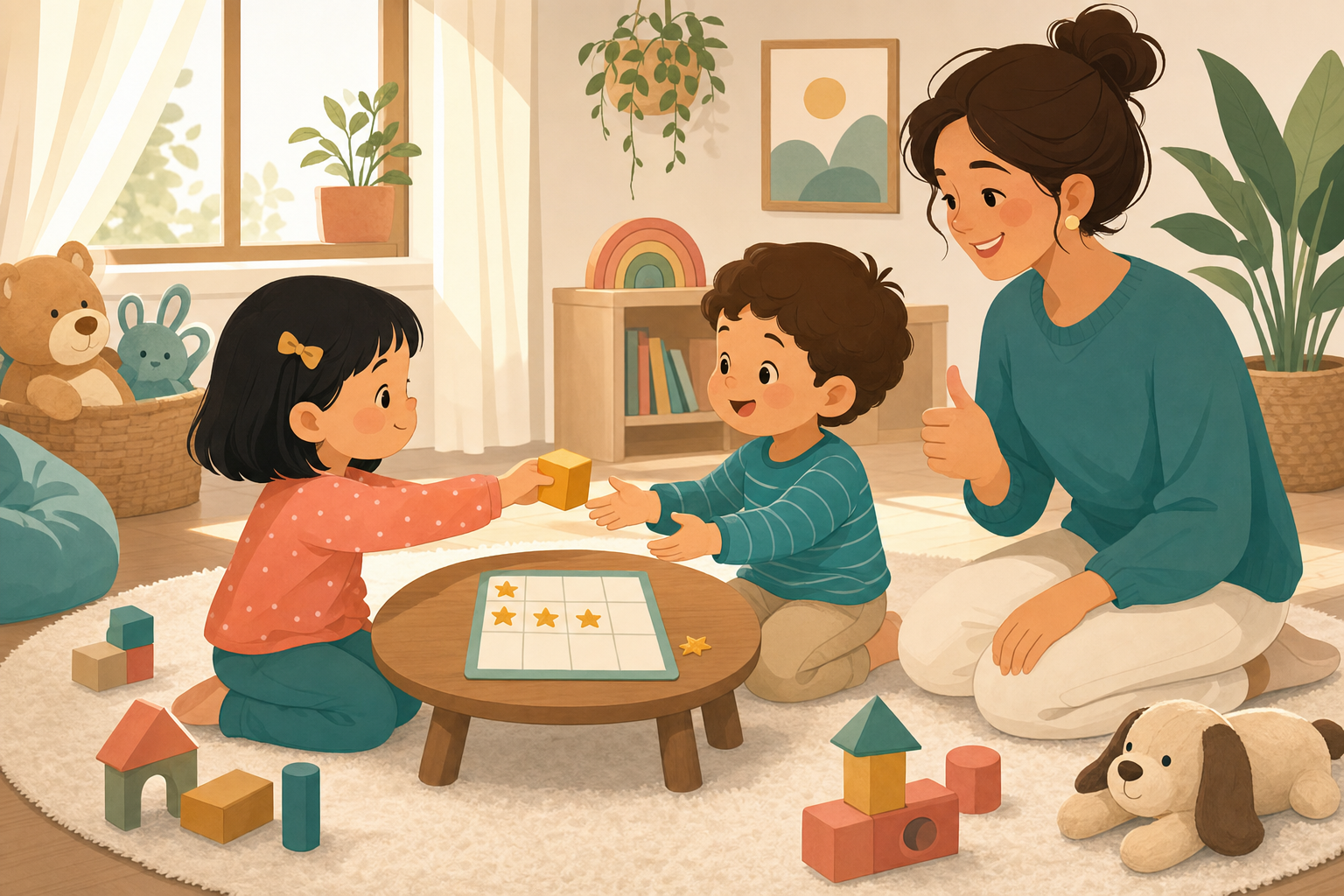
How to Use a Sticker Chart for Hitting, Grabbing, and Not Sharing (Ages 3 to 6)
Your kid just body-slammed their sibling over a plastic dinosaur, and you're standing there wondering if a sheet of stickers is really going to fix this. It won't fix everything. But a well-built sticker chart can turn "stop hitting your brother" from a nightly battle into something your child actually wants to work toward.
The trick is that most sticker charts fail at this specific job because they try to punish the bad behavior instead of building the good one. Here's how to set one up so it actually reduces hitting, grabbing, and toy hoarding instead of just becoming another thing to fight about.
Why Most Sticker Charts Fail for Hitting and Grabbing
A lot of reward chart for siblings fighting attempts go wrong in the first five minutes, before a single sticker gets placed. Parents write something like "Don't hit" at the top of the chart. That's a rule, not a goal, and preschoolers are terrible at aiming for the absence of something.
A 3-year-old's brain can't easily process "don't do the thing." It processes "do this instead." So instead of a chart that tracks hitting, you want a visual behavior chart for preschoolers that tracks the replacement behavior: kind hands, asking first, taking turns.
This single shift, from banning to building, is why positive reinforcement for 3-year-old behavior actually works when punishment charts stall out after day two.
Pick One Behavior, Not Three
If your child hits, grabs, and refuses to share, resist the urge to fix all three at once. Pick the one causing the most damage right now, usually hitting or grabbing, and build your first chart around that alone.
Good single-behavior goals for this age range:
- "Kind hands during playtime" (a reward chart for kind hands, tracking gentle touches instead of hits)
- "Asked before taking a toy" (a sticker chart for sharing toys)
- "Waited for a turn without grabbing" (a sticker chart for turn taking)
Once one behavior earns stickers reliably for a week or two, you can add a second row to the chart. Trying to reward three behaviors on day one usually just confuses a 3- or 4-year-old and makes the chart feel like a test they're failing.
If grabbing shows up specifically as "taking things that aren't theirs" rather than mid-play snatching, this sticker chart built for kids who take things without asking walks through that narrower version in more detail.
Building the Chart So It Actually Works
A printable sticker chart for home behavior works best when a preschooler can look at it and understand the rules without you explaining them every time. Here's a setup that holds up under real playtime chaos:
Use pictures, not just words. A drawing of two hands touching gently, or two kids taking turns with a toy, communicates faster than text for a 3- to 6-year-old.
Track short windows, not the whole day. "Kind hands during morning playtime" is trackable. "Kind hands all day" is not, because nobody, including you, remembers by dinner whether it happened.
Reward the moment, not the eventual perfect week. Give a sticker right after a good choice, ideally within the same few minutes. Waiting until bedtime to hand out stickers breaks the connection for a preschool brain.
Set a small, fast first goal. Three stickers earns something small, like picking the show before dinner or an extra bedtime book. Five or seven days is too far away for a 3-year-old to stay motivated.
Keep siblings on separate charts, even if the fight involves both of them. One chart for the grabber, one for the grabbee if they also need work on sharing space. Combining them into one shared goal usually backfires because one kid ends up feeling punished for the other's behavior.
If your household has more than one kid using charts at once, the routine of filling them in can get old fast. A flip-and-swap style chart helps if either kid tends to lose interest in a sticker chart after a few days, which is extremely common at this age.
What to Say in the Moment
The chart does nothing if the in-the-moment language turns every correction into a standoff. A few scripts that keep things calm:
- Instead of "Stop grabbing!" try: "Ask her, 'Can I have a turn?' Let's practice."
- Instead of "You're in trouble" after a hit, try: "Hitting hurts. Show me kind hands." Then physically model it, gently touching their hand to the sibling's arm.
- When you catch good behavior: "You waited for your turn! That's a sticker." Say it immediately, out loud, in front of the sibling too, so both kids hear what earns recognition.
- If a toy fight is brewing: "I see two kids who want the same truck. What's our turn-taking plan?" This turns you into a coach instead of a referee, which matters a lot for reducing the battle feeling.
None of this means ignoring the hit. Address it briefly and calmly, then move the energy toward the chart goal instead of a lecture. Long lectures at this age mostly teach kids that hitting gets a lot of parental attention, which some kids will take over no attention at all.
When the Chart Isn't Working
Be honest with yourself after about two weeks. If the hitting or grabbing hasn't budged at all, the chart alone probably isn't the problem, the trigger is. Common ones at this age:
- Overtiredness or hunger right before the fights happen (check the clock, not just the toy)
- Not enough of the same toy to go around, which turns into forced sharing that nobody actually wants
- A younger sibling entering the older one's space uninvited, which reads as a threat rather than an invitation to play
In those cases, adjust the environment first (a timer for turn-taking, duplicate favorite toys, a designated "big kid only" zone) and keep the chart running alongside it. The chart tracks progress; it doesn't replace the actual fix.
When the chart is full, keep the reward small and immediate rather than expensive. A free coloring page from Chunky Crayon makes a nice no-cost reward when the chart is full, since it gives the kid something to do with their hands right after a stretch of good behavior, without adding another toy to fight over.
If sharing struggles show up specifically around waiting for a turn on a device, a swing, or a game, the approach in this sticker chart for kids who won't wait pairs well with the turn-taking version described here.
The Bottom Line
A sticker chart won't turn a 3-year-old into a saint overnight, and it shouldn't try to. Pick one behavior, make the goal visual and short-term, reward the moment it happens, and use calm scripts instead of lectures when things go sideways. That combination is what actually chips away at hitting and grabbing, one small, boring, repeated win at a time.