July 18, 2026
Sticker Chart for Kids Who Won't Wait (Ages 3-5)
Struggling with meltdowns during waiting? Try this printable waiting chart for preschoolers to teach patience without tears. Free template inside.
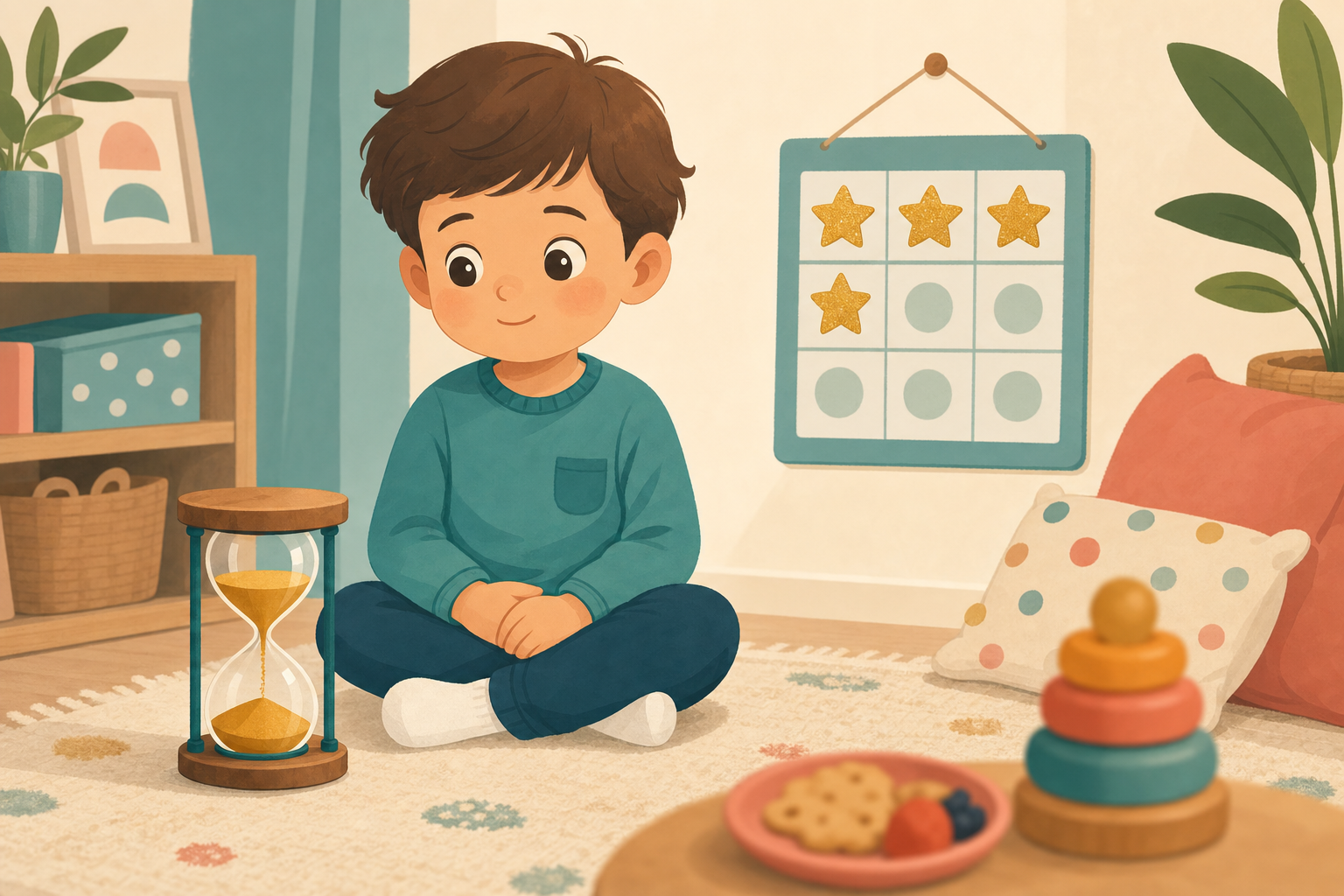
How to Use a Sticker Chart for a Kid Who Can't Wait Their Turn
Your four-year-old was fine two minutes ago. Now the microwave has 45 seconds left on it, and she's on the floor. Waiting, for a lot of preschoolers, doesn't feel like "a few more minutes." It feels like forever, with no guarantee it will ever end. A sticker chart can help, but only if you stop rewarding "waiting" as some vague virtue and start rewarding the specific, learnable skill of tolerating a delay.
Most printable charts you'll find just list "waiting" as one task among many, next to "brush teeth" and "put away toys." That's the gap. Waiting isn't a chore, it's an emotional regulation skill, and it needs its own approach.
Why Waiting Is So Hard at This Age
Kids ages 3 to 5 have very little sense of time. "Five minutes" and "twenty minutes" sound about the same to a four-year-old brain. On top of that, their impulse control (the part of the brain that says "hold on, don't grab it yet") is still under construction and won't be fully wired for years.
So when your child melts down over waiting, it's not manipulation. It's a mismatch between what you're asking (patience) and what their brain can currently deliver (almost none, especially when tired or hungry). A sticker chart works by making the invisible skill visible and giving it small, winnable steps.
What the Chart Should Actually Reward
Skip "waited nicely today." It's too big and too vague for a preschooler to connect to their own behavior. Instead, break waiting into specific, observable moments they can recognize in themselves:
- Waited for their turn in a game without grabbing
- Sat at the table without asking "is it ready" more than once
- Let a sibling go first without a protest
- Used a "waiting word" (see below) instead of crying
Each one gets its own sticker slot. This matters because a preschooler needs to feel the win right after the behavior, not at the end of a fuzzy day. If your child also struggles with sharing toys specifically, this pairs well with a sticker chart strategy for sibling toy-sharing battles, since waiting for a toy and sharing a toy are really the same skill wearing different clothes.
Step-by-Step: Setting Up a Waiting Sticker Chart
1. Pick one waiting situation to start, not three.
Choose the one causing the most daily friction, whether that's mealtimes, board games, or waiting for a toy a sibling has. Trying to fix every kind of waiting at once overwhelms both of you.
2. Give waiting a visual and a word.
Before you introduce the chart, teach a simple phrase like "my turn is coming" or "waiting turn." Say it out loud yourself during the wait, then have your child practice saying it. This gives their brain something to do besides spiral. Visual timers (a sand timer or a simple countdown) help even more, since young kids trust what they can see more than what you tell them.
3. Make the sticker moment immediate.
The sticker goes on the chart the second the wait ends successfully, not at bedtime. "You waited for your turn without grabbing, that's a sticker!" Say exactly what earned it. Vague praise doesn't build the skill; naming the behavior does.
4. Set the bar low at first.
If your child currently lasts five seconds before melting down, the first winnable goal is ten seconds, not two minutes. Build up gradually. Early, easy wins matter more than an ambitious chart nobody finishes.
5. Decide on a small, quick reward for a full row.
Keep the payoff close to the effort. A full row of stickers might earn a walk to pick a book, an extra bedtime story, or a coloring page. A free printable page from Chunky Crayon makes a nice no-cost reward when the chart fills up, since it's something they can do calmly right after a chart win instead of another screen or sugar reward.
For kids who do better with a physical, hands-on version of tracking progress rather than a static printed grid, a tactile flip-up routine chart style can work well for waiting too, since flipping a card down after a successful wait gives an extra sense of "I did it" that a sticker alone sometimes doesn't.
Using the Chart in Three Common Waiting Traps
Waiting during games. Turn-taking games are a minefield because the wait is unpredictable and other kids are involved. Before starting, remind your child of the waiting word and show them how many turns until theirs (hold up fingers, or use a small object passed hand to hand as a visual turn marker). Sticker goes on right after their first successful turn-wait, even mid-game if needed.
Waiting for food. Hunger and waiting are a brutal combination for a preschooler. Give a visual countdown (a timer they can watch, or "when the big hand gets to the 6") rather than "soon." If they wait calmly until the timer goes off, sticker immediately, even if it's a two-minute wait. Over a week or two, stretch the interval.
Waiting for a toy. This one often overlaps with sibling conflict. State the plan out loud before the wait starts: "You'll have the truck after your brother is done with it, in about five minutes." Then use the same countdown trick. If it's a recurring flashpoint between siblings, it's worth also looking at how a sticker chart approach for sibling toy-sharing sets up turn-taking rules ahead of time, so the chart isn't the only thing doing the work.
When the Chart Isn't Working
Be honest with yourself here. If your child is overtired, hungry, or overstimulated, no sticker chart will out-muscle biology. In those moments, skip the chart, meet the immediate need (snack, quiet, a break), and try again later when they're regulated enough to actually learn something.
Also watch for charts that get too complicated. If you're tracking five different waiting skills at once with different point values, most preschoolers lose the thread within a few days. Simplify back down to one behavior, one sticker, one small reward.
And if waiting struggles show up alongside bigger transition meltdowns generally (leaving places, starting new activities), it might be less about waiting itself and more about transitions overall. A sticker chart built for transition anxiety tackles that wider pattern and can work alongside a waiting-specific chart rather than instead of it.
The goal isn't a child who never struggles with waiting. It's a kid who has a tool (a word, a visual timer, a small sense of progress) to reach for instead of only having a meltdown. That's a skill worth a few stickers.