July 4, 2026
Potty Training Sticker Chart for Boys Who Refuse to Sit
Turn potty resistance into success with a proven sticker chart strategy for boys who won't stay on the potty. Get your free printable chart today.
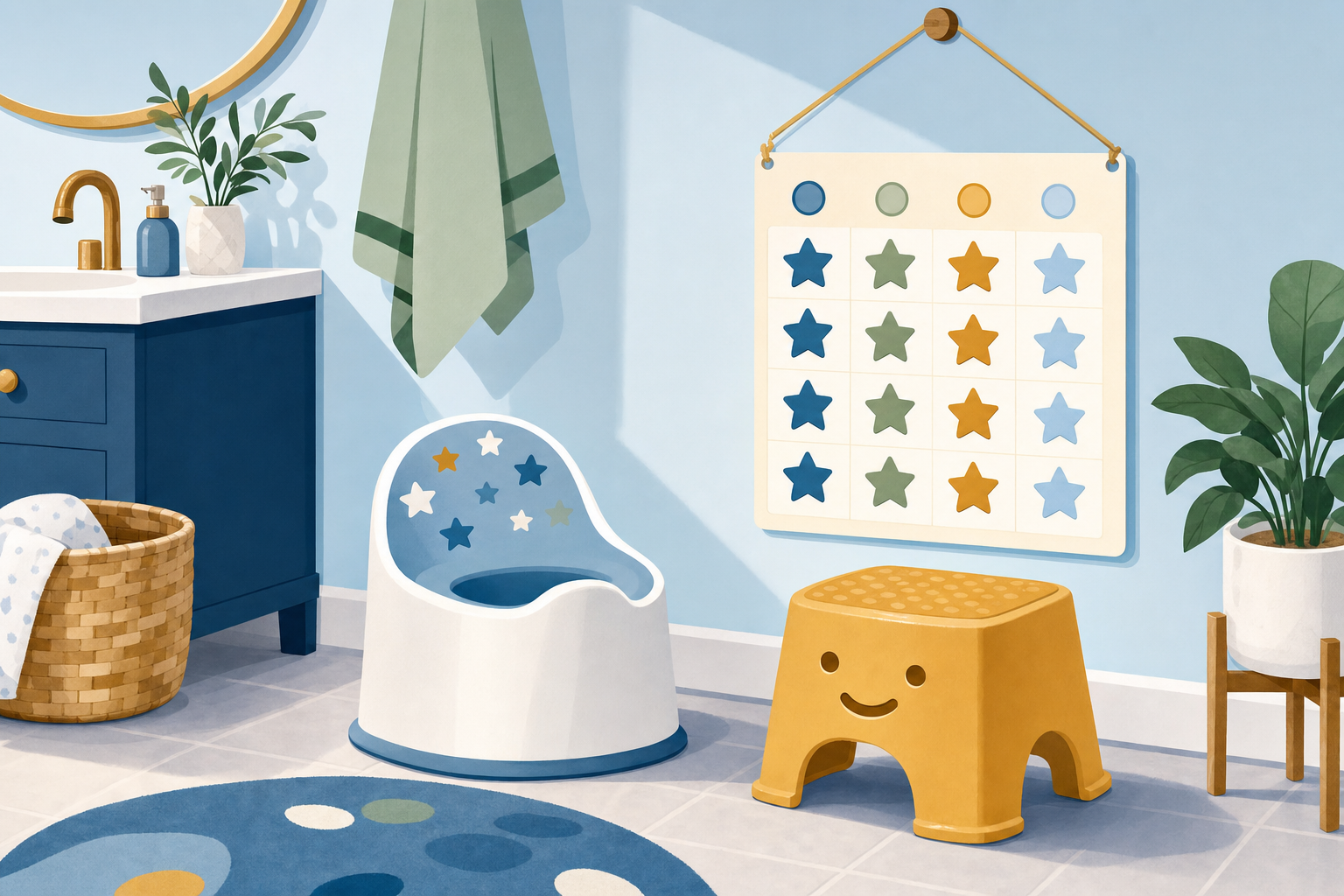
Sticker Chart Strategy for a 3- to 5-Year-Old Boy Who Refuses to Sit on the Potty
Your son knows where the potty is. He can pull down his pants. He just won't sit. The moment you suggest it, he goes rigid, sprints away, or melts into a full-body protest on the bathroom floor. You've tried stickers, you've tried praise, you've tried Thomas the Tank Engine underpants. Nothing works because the problem isn't motivation. It's the sitting itself.
Most potty training sticker chart advice assumes your child is willing to try. But a boy who actively refuses to sit needs a different approach. The chart can't reward something he won't do. Instead, it has to build comfort with the potty in tiny steps, then layer in the actual sitting once he stops treating the bathroom like enemy territory.
Here's how to use a sticker chart for boys potty training resistance when the refusal is the whole problem.
Why Boys Refuse to Sit (and Why It Matters for Your Chart)
Refusal usually comes from one of three places: fear (the potty looks big or scary), control (he's figured out this is one thing you can't force), or sensory discomfort (the seat feels cold, unstable, or weird). Sometimes it's all three.
You need to know which one you're dealing with because it changes what you reward. If he's scared, rewarding sitting too soon just makes the chart feel like pressure. If he's in a power struggle, going straight to "sit and pee" turns every bathroom trip into a battle you'll lose.
A potty training sticker chart for boys who refuse to sit works best when it starts before the sit. Reward proximity first. Reward curiosity. Reward being in the bathroom without fleeing. Then, once he's calm near the potty, you can move the goal closer to actually using it.
Start With a "Bathroom Visit" Chart (Not a "Use the Potty" Chart)
Forget rewarding successful potty trips for now. Your first chart should reward showing up. That's it.
Here's the step: ask him to come into the bathroom with you (or by himself if he'll go). He doesn't have to touch the potty. He doesn't have to pull his pants down. He just has to stand in the room for 10 seconds while you count or sing a short song.
Sticker goes on the chart. Done.
This removes the fight. He's not being asked to do the scary thing. He's being asked to be near it. Do this 3-4 times a day (morning wake-up, after meals, before bath). Within a few days, the bathroom stops being a place where bad things are demanded of him.
Once he's calm with this step, add one new behavior: he has to touch the potty seat (just a quick tap) before he gets the sticker. Then, a day or two later, he has to sit on it fully clothed for five seconds. Each micro-step gets a sticker. Each one is easier because the last one already felt safe.
This is the opposite of most potty training rewards for boys who fight sitting. You're not bribing him to do the full behavior. You're teaching his nervous system that the potty isn't a threat.
Use a Timer and a Silly Ritual to Make Sitting Feel Finite
Even when he's okay sitting fully clothed, the jump to sitting with pants down (or sitting and trying to pee) can trigger new resistance. Boys this age hate feeling stuck. If sitting feels open-ended or like something that might take forever, he'll refuse.
Set a visible timer (a sand timer works great, or a phone timer he can see counting down). Tell him he only has to sit for 20 seconds. That's it. When the timer goes off, he's done, whether he peed or not.
Pair the timer with a ritual that makes the wait less boring. Sing a specific song every time (same one, every time). Count his toes. Let him hold a small toy (nothing screen-based, just a car or action figure). The ritual becomes the cue that this won't last forever.
Sticker goes on the chart for sitting the full 20 seconds, even if nothing happens. You're rewarding compliance with the sit, not the pee. The pee will come once sitting stops feeling like a trap.
If you're dealing with a child who resists other routines in similar ways, the same step-by-step approach works. For example, visual routine charts for 2-year-olds use the same logic: break the behavior into smaller parts, reward the parts, then build up.
Add a "Big Win" Reward (But Keep Daily Stickers Small)
Sticker charts lose power when the reward feels impossibly far away. A 3-year-old can't stay motivated for a toy that requires 50 stickers. His brain doesn't work that way yet.
Use two reward tiers:
Daily sticker reward: He gets the sticker immediately after the bathroom visit. The sticker itself is the reward. Make a big deal about choosing it (let him pick from 3-4 options) and placing it on the chart. This keeps him engaged day to day.
Big win reward (5-7 stickers): After a short string of successful bathroom visits, he earns something bigger. This doesn't have to cost money. It can be extra playtime at the park, a special snack, or picking the dinner menu. If you want a no-cost option that feels like a treat, a free coloring page from Chunky Crayon works well when the chart is full. Boys this age love coloring pages with trucks, dinosaurs, or superheroes, and it feels like a reward without requiring a shopping trip.
Don't wait for him to pee in the potty before offering the big win. Reward the sitting streak first. The actual peeing will follow once he's comfortable.
Move the Sticker Goal Slowly (and Expect Setbacks)
Once he's sitting for 20 seconds regularly (clothed or unclothed, doesn't matter yet), you can start rewarding attempts to pee. Not successful pees. Attempts.
Tell him the new rule: he has to sit and "try" (which just means sitting there and relaxing, not forcing anything). If he sits the full time and nothing happens, he still gets a sticker. If he pees, huge celebration, sticker, and maybe an extra high-five or a call to grandma.
This keeps the chart from becoming pass/fail. He's not being judged on his bladder. He's being rewarded for cooperation.
Setbacks will happen. He'll refuse again after a week of success, usually because something else is hard (a bad day at preschool, a new sibling, illness). When that happens, go back one step on the chart. If he won't sit, go back to rewarding bathroom visits. If he won't visit, go back to rewarding just talking about the potty while playing in another room.
This is not failure. This is how potty training works with boys who need control. If you're also managing other transition refusals (like leaving the house on time), the same reset logic applies. A sticker chart for kids who refuse to put on shoes works the same way: shrink the ask, reward the micro-step, rebuild momentum.
When a Potty Training Chart for Boys Who Won't Stay on Potty Won't Work
Sometimes the refusal isn't about the chart. It's about the potty itself.
If your son is scared of falling in, get a potty seat with handles or a standalone toddler potty that sits on the floor. If he hates the cold seat, warm it with your hand first or let him sit on it clothed a few times to get used to it. If he's afraid of the flush, let him leave the room before you flush (seriously, this is a common fear and it's fine to work around it).
If he's in a full power struggle and the chart makes it worse (he starts refusing stickers or ripping them off), take a break. Put the potty away for two weeks. Don't mention it. Let him see you use the toilet, let him watch dad use it, but don't make it about him. Then, after the break, bring the chart back with a brand-new design and restart at step one (bathroom visits, no sitting required).
Some boys just aren't ready at three. That's okay. The chart can't force readiness. It can only make cooperation easier once readiness is close.
Print a Chart, Start Tomorrow Morning
You don't need a fancy chart. You need one that's big enough for him to see his progress and simple enough that you'll actually use it every day.
Go to Sticker Chart Maker, pick a theme he likes (trucks, dinosaurs, superheroes, whatever gets him interested), and print it. Hang it in the bathroom at his eye level. Buy a pack of stickers (or use dot stickers, he won't care).
Tomorrow morning, tell him the new plan: every time he comes into the bathroom and stays for 10 seconds, he gets a sticker. That's the only rule.
Don't mention sitting. Don't mention peeing. Just get him used to showing up and earning a win.
Once that's easy, add the next step. Then the next. The chart isn't magic. It's just a way to break a giant, scary behavior into pieces small enough that a three-year-old can handle them without shutting down.
And when he finally sits, stays, and pees in the potty for the first time? That sticker is going to feel like the best thing he's ever earned.