June 29, 2026
Hand Washing Sticker Chart for Kids Who Refuse After Play
Struggling with kids who won't wash hands after outdoor play? This sticker chart turns hand washing into a fun routine. Perfect for ages 3-5. Get yours free!
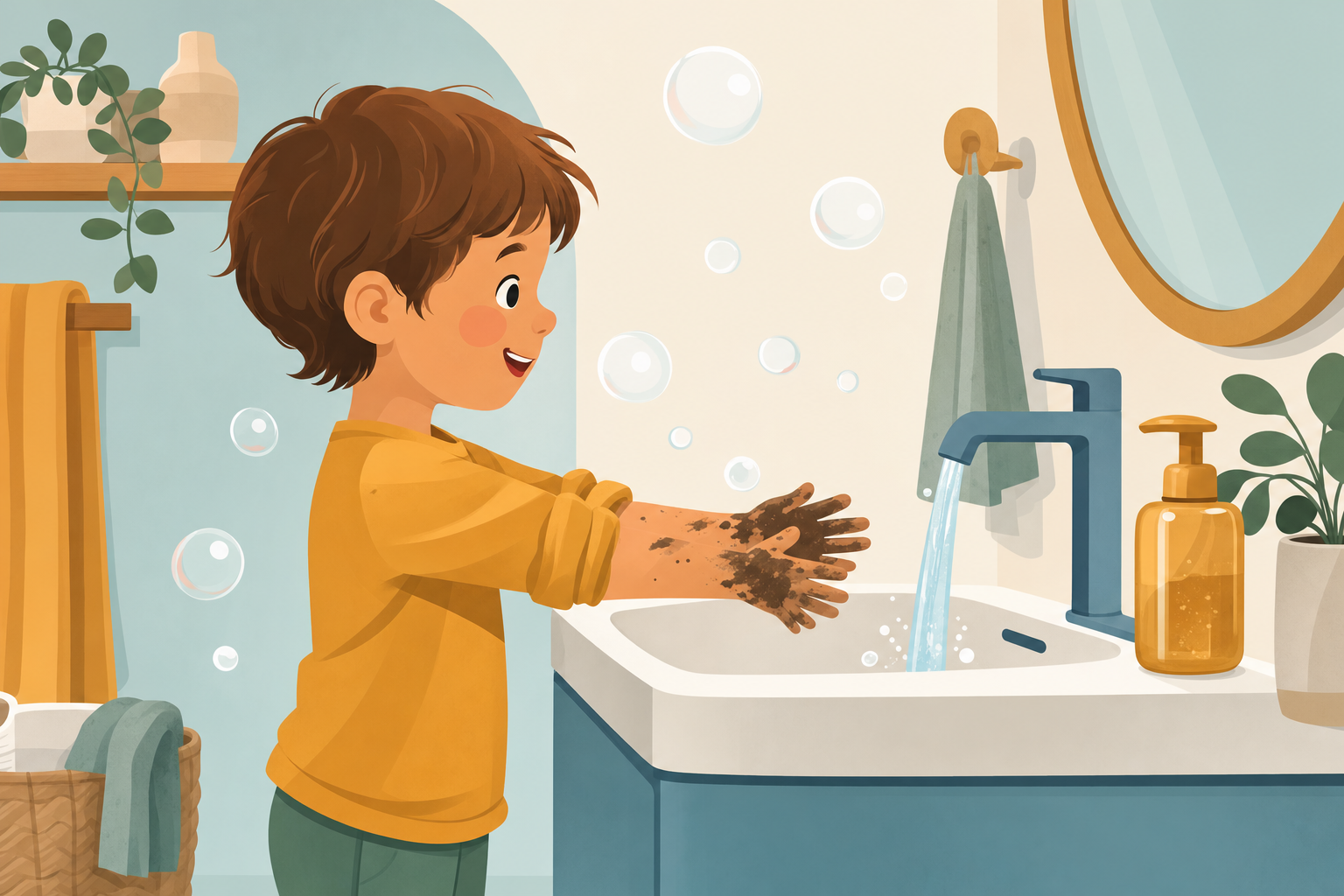
Hand Washing Sticker Chart for Kids Who Refuse to Wash Hands After Playing Outside
Your kid sprints in from the backyard, dirt under their nails and grass stuck to their knees, and heads straight for the snack drawer. You redirect them to the sink. They groan, argue, or pretend they didn't hear you. Five minutes later, you're still negotiating over soap.
This specific transition (outside play to hand washing) trips up so many families because kids are hungry, distracted, and genuinely don't see the point. A sticker chart for kids who won't wash hands after playing outside works when it targets this exact moment, not hand washing in general.
Why This Transition Is So Hard
Kids resist washing hands after outdoor play for a few predictable reasons. They're hungry and want food now. They're mid-imagination (still pretending to be a dinosaur or spy), so stopping feels random. And honestly, their hands don't look dirty to them.
Layering a hand washing routine chart for kids who resist washing onto an already-chaotic moment rarely works. You need a system that makes the behavior automatic before hunger or distraction kicks in.
Set Up the Chart Before the Problem Happens
Don't introduce a sticker chart mid-meltdown. Pick a calm morning and explain the new routine in one sentence: "When you come inside from playing, you wash hands first, then you get a sticker."
Show them the chart. Let them pick the sticker spot for today. Keep it near the back door or mudroom, not the bathroom, so they see it the second they walk in.
The chart itself should be dead simple. One row, one box per day, one goal (wash hands after outdoor play). A hand hygiene sticker chart for preschoolers works best when it tracks one behavior, not five.
Anchor It to a Physical Cue
The biggest mistake parents make is assuming kids will remember the new rule. They won't. You need a visual or physical cue that intercepts them before they scatter.
Tape the chart to the door frame they walk through when coming inside. Or hang it on the wall right next to where they kick off shoes. The goal is to make it impossible to miss.
Some families add a small bell or wind chime near the door. Kid rings it, washes hands, gets the sticker. The sound becomes the reminder, not your voice.
Pick Rewards That Match the Effort
A sticker chart reward for washing hands before dinner after playing doesn't need to be big. The behavior takes 30 seconds. The reward should feel proportional.
After five stickers, let them pick dinner music or choose what color plate they eat off. After ten, print a free coloring page from Chunky Crayon and let them color it while you cook. After twenty, they get to stay up ten minutes past bedtime one night.
Avoid food rewards for hygiene behaviors. It sends a weird message (wash your hands so you can eat candy). Stick to privileges, choices, or small activities they already enjoy.
How to Use Positive Reinforcement Without Sounding Fake
A positive reinforcement hand washing chart for preschoolers only works if your tone stays neutral and specific. Skip the over-the-top praise ("You're the best hand washer in the world!"). It sounds fake and kids tune it out.
Instead, name exactly what they did: "You came in, went straight to the sink, and used soap. Sticker's on the chart." That's it. No speech, no lecture about germs, no comparison to yesterday.
If they forget and head for the snack drawer, redirect once with no emotion: "Hands first, then snack." Point at the chart. Let the system do the reminding, not your voice.
What to Do When It Stops Working
Most hand washing sticker charts lose steam after two to three weeks. That's normal. The behavior usually sticks even after the chart stops, but if your kid regresses, don't restart the same chart.
Try a slight variation. Swap stickers for checkmarks. Move the chart to a new spot. Change the reward at the end. Sometimes the novelty matters more than the structure.
If the chart never worked in the first place, the problem might be timing. Are they genuinely starving when they come in? Offer a single-bite snack (a cracker, a cheese stick) after they wash, not instead of washing. Hunger is a strong motivator, and you can use it.
When a Sticker Chart Isn't the Right Tool
Some kids don't respond to sticker charts at all, and that's fine. If your child doesn't care about earning rewards or forgets the chart exists even when it's taped to their forehead, try a different strategy.
Make hand washing part of a larger visual routine. Print a three-step sequence (shoes off, wash hands, snack) and tape it to the wall. Walk through it together for a week without any rewards. The repetition builds the habit faster than stickers for some kids. If you've already used visual routine charts for 3-year-olds who won't listen for other transitions, apply the same approach here.
Or link hand washing to something they want to do. No hand washing, no trampoline time tomorrow. No negotiation, no emotion. Cause and effect.
Sample Weekly Plan (Copy This)
Here's a realistic week-one schedule for a hand washing sticker chart for toddlers 3-5 years. Adjust based on how often your kid plays outside.
Monday through Wednesday: Explain the chart once. Remind them at the door every single time. Celebrate every success (even if you had to walk them to the sink). No consequences for forgetting yet.
Thursday and Friday: Stop reminding unless they're halfway to the pantry. Let them catch themselves. If they forget, redirect with one sentence and point at the chart.
Weekend: Test it during higher-distraction times (after a playdate, when they're extra hungry). If they remember even once without a prompt, you're halfway there.
Pair It with One Environmental Tweak
Sticker charts work faster when you remove friction. If your bathroom sink is too tall, drag a step stool closer. If the soap dispenser is hard to pump, swap it for a foam pump or bar soap.
Some parents keep a small basket of hand towels near the back door so kids don't drip through the house to reach the bathroom. Others install a cheap hook-on sink extender so toddlers can reach the faucet without climbing.
The easier the behavior, the faster it becomes automatic. You're not lowering standards. You're removing pointless obstacles.
How Long Until It Sticks
Most kids internalize the hand washing habit in three to four weeks if you're consistent. After that, you can fade the chart. Leave it up but stop adding stickers. See if they keep washing anyway.
If they backslide, bring the chart back for one more week, then fade again. Some kids need a few rounds before the behavior locks in.
The goal isn't a perfect child who never forgets. It's a kid who washes their hands after outdoor play most of the time without a fight. That's a win.
One Last Thing
If you're using sticker charts for multiple behaviors (hand washing, bedtime, leaving the playground), make sure each chart tracks one thing. A hand washing routine chart for kids who resist washing should not also track teeth brushing, toy cleanup, and being kind to siblings.
Kids tune out when a chart tries to fix everything at once. Pick the behavior that's driving you the most insane right now and focus there. Once that one sticks, move to the next. If you've already tackled a tricky transition like getting kids to leave the park on time, you know how effective a single-focus chart can be.
Build your chart at Sticker Chart Maker, print it, tape it to the door frame, and give it two weeks. If your kid washes their hands even three times this week without a battle, you're already ahead.