October 2, 2026
Printable Sticker Chart for Poop Potty Training Success
Child pees fine but refuses to poop on the toilet? Try a separate pee and poop sticker chart to ease withholding. Get your free printable now.
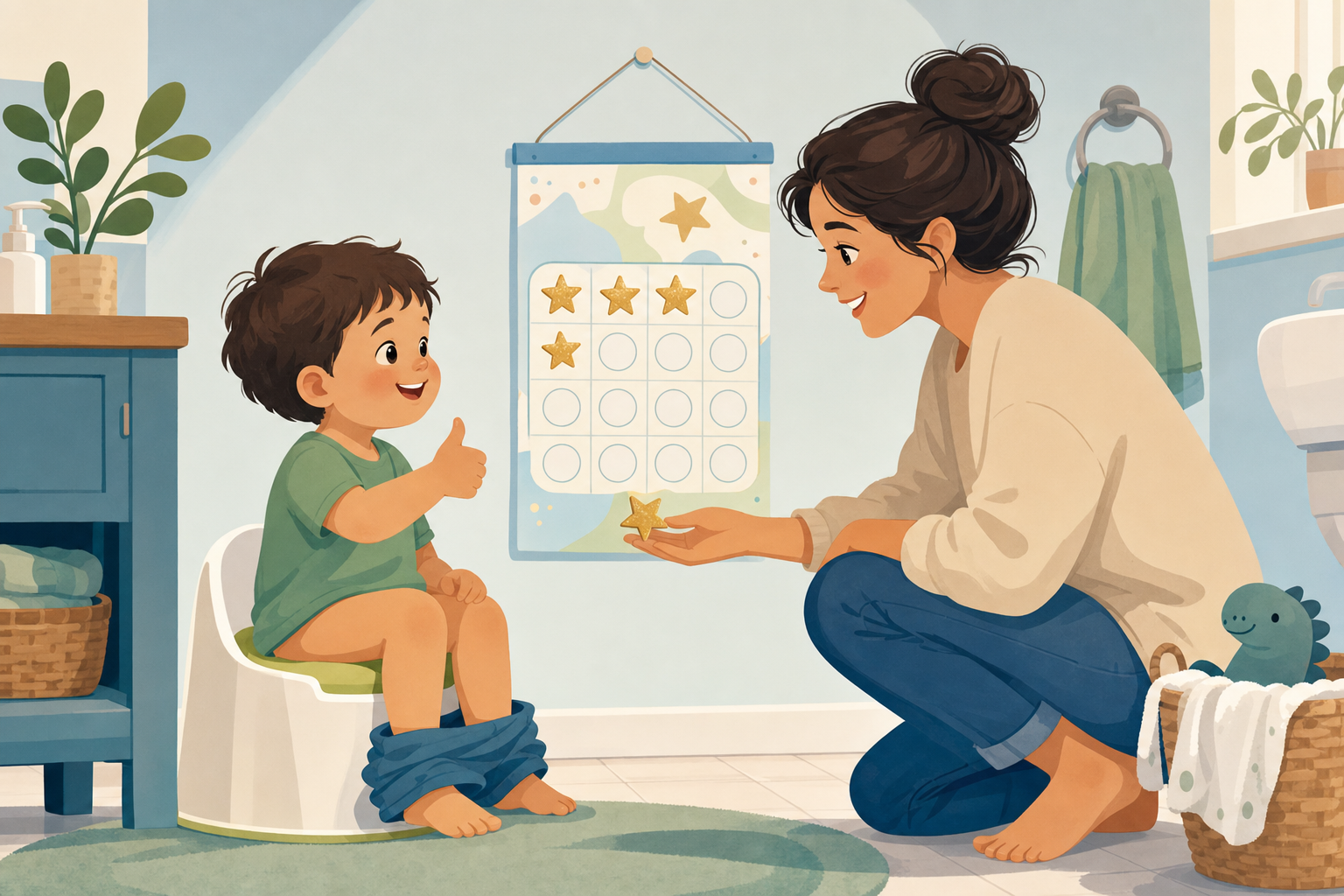
How to Use a Printable Sticker Chart When a Child Pees in the Potty but Refuses to Poop
Your kid is a pee champion. Dry pants, trips to the bathroom without a fight, maybe even a little dance when the toilet flushes. Then it's time to poop and suddenly they're hiding behind the couch, crossing their legs, or asking for a diaper. This is one of the most common and most confusing stages of potty training, and it is not a sign you did anything wrong.
Pee and poop are different skills with different fears attached. A sticker chart can help, but only if you set it up to match what's actually happening instead of treating poop like a bonus round on the same old pee chart.
Why Pee Success Doesn't Transfer to Poop
Kids who pee in the potty but refuse to poop are almost always dealing with one of these:
- Withholding anxiety. A past hard or painful poop made them associate pooping with pain, so they clench to avoid it.
- Fear of the unfamiliar sensation. The feeling of a poop dropping into water (and sometimes splashing) is new and startling.
- Loss of control. Some kids genuinely feel like they're "losing a part of themselves," which sounds strange to adults but is a real toddler worry.
- Routine attachment. If they've always pooped in a diaper, standing or squatting in a diaper in a corner feels safe. The toilet doesn't.
None of this is defiance. It's physical and emotional, and pushing harder usually backfires, sometimes leading to constipation, which makes the whole cycle worse. This is the gap most generic potty charts miss: they reward "used the toilet" as one category, when for your child, peeing and pooping need to be treated as two separate goals with two separate levels of difficulty.
Set Up a Separate Pee and Poop Chart
Stop using one chart for both. A single chart that lumps pee and poop together either overrewards an already-mastered skill or makes poop refusal look like a failure on a chart your child was otherwise acing.
Instead, build two charts, or one chart with two clearly separate rows:
- Row 1: Peeing in the potty. Keep rewarding this consistently so the habit stays strong. Don't let it quietly fade just because it's no longer the hard part.
- Row 2: Poop steps. This row should track small, specific, low-pressure behaviors, not just "pooped in the toilet," which is too big a jump for a child who's withholding.
If you want a printable template you can customize for exactly this split, our guide on potty refusal sticker charts walks through chart layouts built around this problem specifically. Our resistant toddler potty training chart guide is also useful if pee itself was a battle a few months ago and you're worried about backsliding.
Break Poop Into Steps Small Enough to Actually Reward
This is the part most charts skip. If the only sticker-worthy event is "pooped in the toilet," a withholding child might go days or weeks without earning anything on that row, which just confirms to them that poop is a problem, not progress.
Instead, reward the steps that lead there. Pick 3 to 5 that match where your child currently is:
- Sits on the toilet for a few minutes after a meal, clothed or unclothed, no pressure to produce anything
- Tells you when they feel the urge to poop, even if they then go in a diaper
- Agrees to poop in a diaper while sitting on or near the toilet (a real bridge step for many kids)
- Lets you dispose of the diaper poop in the toilet together, so they see where it's "supposed" to go
- Sits on the toilet without a diaper and tries, even if nothing happens
- Poops in the toilet
Each of these earns a sticker. You are not waiting for the finish line to celebrate, you're celebrating every step that moves toward it. For many kids, step 3 (diaper while sitting near the toilet) is the step they get stuck on longest, and that's completely normal. Let them stay there as long as they need to, still earning stickers the whole time.
Keep the Pressure Out of the Reward
A chart can accidentally become a source of pressure if it's not handled carefully, and pressure is the exact opposite of what a withholding child needs. A few guardrails:
- Never remove a sticker or skip a reward because a poop attempt "failed." There's no failure here, only steps that haven't happened yet.
- Don't talk about the chart right before or during a poop attempt. Bring it up afterward, when the pressure is off.
- Avoid comparing the poop row to the pee row out loud. "You're so good at pee, why not poop?" lands as criticism even when you don't mean it that way.
- Let your child choose some of the small steps themselves. Kids who feel some control over the process relax faster than kids who feel pushed through it.
- If you're also dealing with stool withholding or signs of constipation (straining, infrequent poops, pain), loop in your pediatrician. A sticker chart can't fix a physical blockage, and sometimes a stool softener needs to be part of the plan before behavior rewards will work at all.
Pick Rewards That Match the Size of the Step
Small steps deserve small, frequent rewards, not a huge prize sitting at the end of a long road. Stickers themselves work well because they're immediate and visual, but think about what happens when the row fills up.
For the bigger milestone (an actual poop in the toilet), many families like to pair it with something calm and low-key rather than a big toy or treat, since excitement can sometimes spook a nervous kid right back into holding it. A free coloring page from Chunky Crayon makes a nice no-cost reward when the poop row is full, something your child can sit and enjoy right after instead of a big fanfare that puts the spotlight back on the bathroom.
For daily steps, keep it simple: a sticker, a high five, or a sentence like "you told me your tummy felt funny, that's exactly the kind of thing that helps." The small steps are doing the real work even when they don't look dramatic.
If Progress Stalls or Reverses
It's common for poop progress to stall for a week or two, especially around travel, illness, or any schedule change. If your child was further along and seems to have slid backward, that's a regression, not a failure of the chart. Our guide on resetting after a potty training regression covers how to adjust the chart without starting completely over, which usually works better than pretending nothing happened.
The bottom line: pee success and poop success are two different journeys. Give poop its own row, its own small steps, and its own patient pace, and the chart will finally reflect what's actually true: your child isn't refusing, they're working through something real, one sticker at a time.