September 28, 2026
Potty Refusal Sticker Chart: Stop Poop Battles for Good
Child refuses to poop on the potty? Try this printable potty behavior chart to ease toilet refusal without fights. Get your free sticker chart now.
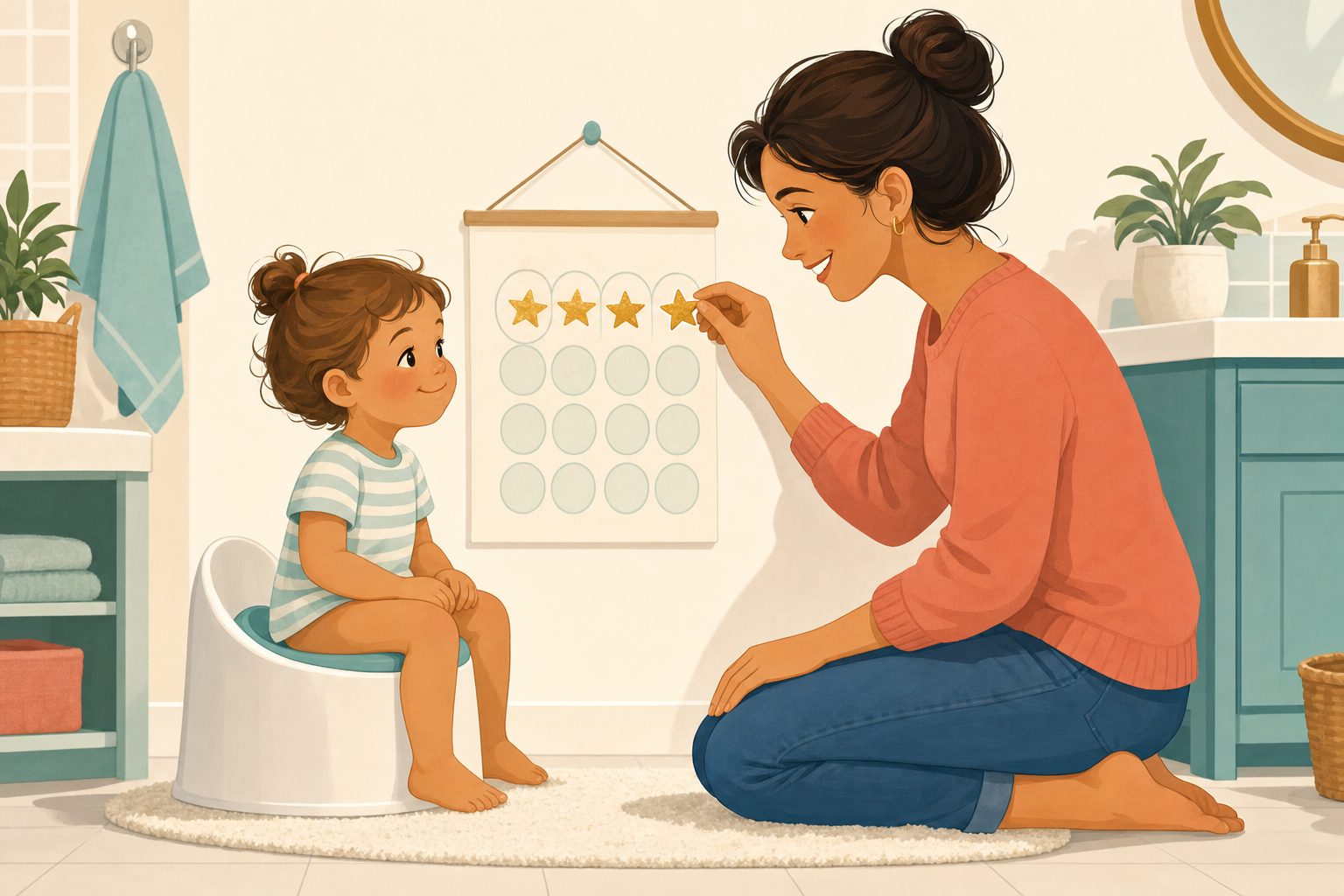
How to Use a Sticker Chart When Your Kid Refuses to Poop on the Potty
Your toddler will pee on the potty all day long, but the second poop is involved, they clamp down, hide behind the couch, or ask for a diaper. If this is your house right now, you're not doing anything wrong, and neither is your kid. Stool withholding is one of the most common and most misunderstood parts of potty training, and a sticker chart can genuinely help, but only if you use it the right way.
Most advice stops at "put a sticker chart on the wall." That's not enough when a child is scared, not just stubborn. Here's a plan that actually accounts for the refusal part.
Why Poop Refusal Happens (And Why Pressure Makes It Worse)
Before you build a toilet refusal reward chart, it helps to know what you're dealing with. Kids who refuse to poop on the potty usually aren't being defiant. They're often:
- Scared of the sensation of letting go while sitting over an open bowl
- Holding on because one uncomfortable poop made them associate the potty with pain
- Confused about timing, since pee is frequent and low-stakes but poop is rare and feels like a big event
- Testing whether this is something they can control, which for toddlers, it absolutely is
This matters because if you push too hard, kids tend to hold it in even more, which can lead to constipation and make the whole cycle worse. A sticker chart for toilet refusal only works if it rewards bravery and small steps, not just the end result. If you're also seeing signs of a full backslide after previous success, our guide to a potty training regression sticker chart is a good next stop.
Break It Into Tiny, Rewardable Steps
A printable potty behavior chart that only has one box, "pooped on the potty," sets kids up to fail. If a child isn't there yet, they'll go zero for two weeks and lose interest completely.
Instead, build a reward chart for toilet sitting that gives credit for the steps that lead up to the goal:
- Sitting on the potty fully clothed, just to get used to it
- Sitting on the potty with a diaper on, if that's the compromise that gets them there at all
- Sitting on the potty at a predictable time, like right after breakfast
- Trying for a few minutes without demanding it happen
- Pooping in a diaper while sitting near or on the potty
- Pooping on the potty itself
Every child skips around this list differently, and that's fine. The point of a child refuses to poop on the potty chart isn't a straight line to success, it's visible proof that they're moving in the right direction even on days when there's no poop at all.
Building the Chart: What to Actually Put on It
Keep the chart simple enough that a 3 or 4 year old can read it at a glance. A few columns work better than a giant grid.
Good categories for a printable potty behavior chart:
- Sat on the potty (any amount of time)
- Stayed calm during a bathroom visit
- Told a parent they needed to go
- Tried, even if nothing happened
- Success (whatever that looks like this week)
Give a sticker for effort categories just as often as for the actual poop. This keeps the chart honest and keeps your child from feeling like the only thing that counts is the outcome they're most afraid of.
Set the reward bar low and frequent at first. A sticker after every attempt, a small prize after 5 to 7 stickers, works better than one big prize after two weeks of a nervous toddler. When the chart fills up, you don't need to spend money to celebrate. A trip to the park, an extra bedtime story, or a free coloring page from Chunky Crayon makes a nice no-cost reward that doesn't turn the whole process into a bribery arms race.
If you're starting from scratch on the pee side too, our full potty training sticker chart for toddlers who refuse walks through the basic setup before you add the poop-specific steps above.
What to Do When They Still Refuse
Some days the chart won't matter, and that's normal. Here's what actually helps when your child refuses to poop on the potty despite the chart being right there.
- Don't remove the chart or threaten to take stickers away. Losing stickers turns the chart into a punishment tool, and punishment is exactly what drives withholding in the first place.
- Never force a sit. A forced sit becomes a battle, and battles make kids hold on tighter, literally.
- Watch for constipation. If it's been more than 2 to 3 days without a bowel movement, or your child seems to be in pain, check in with your pediatrician before continuing with behavioral strategies alone.
- Offer a diaper as a bridge, not a failure. Some kids need to poop in a diaper while standing near the toilet for a while before they'll sit on it. That's still progress, and it still earns a sticker.
- Say less, not more. "I see you're trying" beats a ten-minute pep talk every time. Toddlers shut down under pressure, even well-meaning pressure.
If you've been through a full toilet training refusal chart cycle before and things fell apart, it's worth reading through what a reset looks like rather than assuming you have to start completely over from nothing.
Keeping the Chart From Becoming a Battle
A potty refusal sticker chart should lower the tension in the bathroom, not raise it. If your child starts crying at the sight of the chart, or refuses to even walk into the bathroom, it's a sign the pressure is too high right now.
A few ways to keep things low-key:
- Let your child put their own stickers on, so it feels like something they're doing, not something being done to them
- Skip talking about the chart in front of siblings or other adults
- Keep the chart in the bathroom itself, not on the fridge for everyone to comment on
- Take a full break for a week or two if refusal turns into panic, and pick it back up when things feel calmer
Most toddlers get there. It's rarely a straight line, and a printable chart is just one tool that helps you both see progress that would otherwise be invisible on the hard days. Keep it low-pressure, keep the rewards small and frequent, and let your kid move at the pace their body needs.