October 16, 2026
Gentle Hands Sticker Chart for Sibling Hitting & Grabbing
Stop sibling hitting and grabbing without shame. Try this printable reward chart for gentle hands, turn taking, and calmer play for kids ages 3 to 6.
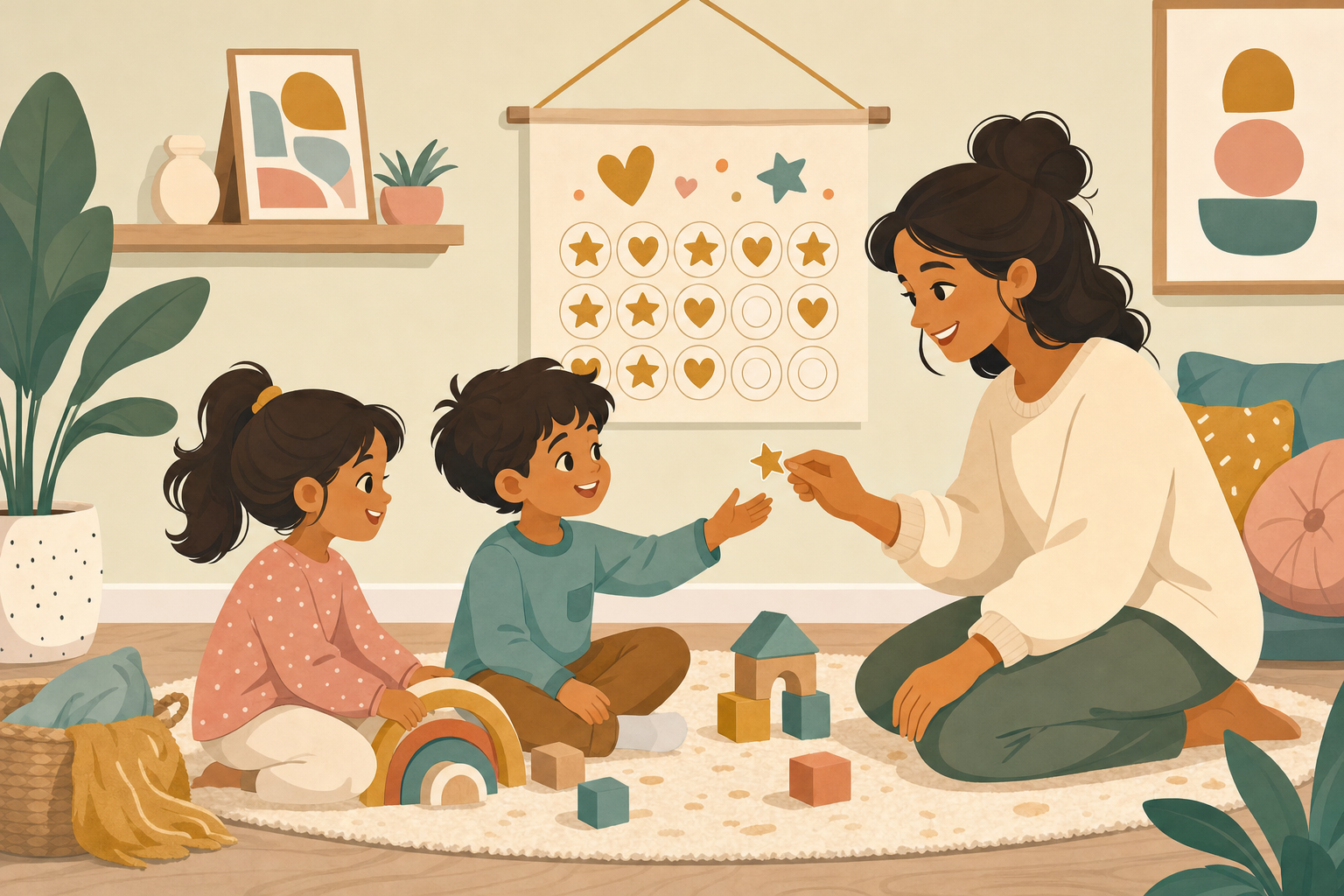
How to Use a Printable Sticker Chart for a Child Who Hits or Grabs From Siblings
Your kid just shoved their little sister off the couch for the third time today, and you're standing there wondering if a sticker chart could possibly fix something that feels this big. Here's the honest answer: it can help, but only if you set it up differently than a typical chore chart. Hitting and grabbing aren't a motivation problem the way forgetting to brush teeth is. They're usually an impulse-control problem, which means the chart needs to reward the skill you're building, not just the absence of bad behavior.
This plan works for most 3 to 6 year olds, though younger kids on the lower end may need shorter stretches between rewards and more hands-on coaching in the moment.
Why a Normal Behavior Chart Backfires Here
Most printable templates tell you to track "no hitting" and give a sticker for each hit-free hour or day. The problem is that a young child can't hold an abstract negative goal in their head. "Don't hit" doesn't tell them what to do instead when their brother grabs the truck they wanted.
It also sets up a shame trap. If the child hits at 10am, the whole day is already "ruined" by 10:15, and there's no reason to try for the rest of the afternoon. That's not a discipline failure, it's a design failure. A gentle-hands chart needs to reward small, specific, replacement behaviors throughout the day, not just the absence of a meltdown.
Pick One Observable "Gentle Hands" Skill, Not a Vague Goal
Instead of charting "being nice to your sister," pick something you can actually see and name in the moment. Good options for this age range:
- Using words to ask for a turn ("my turn please" or "can I have that when you're done")
- Walking away or going to a calm spot when frustrated, instead of grabbing
- Keeping hands to yourself during a disagreement, even if the other kid is loud or upset
- Asking a grown-up for help instead of taking the toy
Choose just one skill to start. Trying to chart hitting, grabbing, yelling, and sharing all at once is overwhelming for a 4 or 5 year old and for you. If your child is working on turn-taking specifically rather than physical aggression, our sticker chart for sharing and taking turns walks through that version in more detail.
Build the Chart Around Small Wins, Not Full Days
For this age group, break the day into chunks instead of judging the whole day as a pass or fail. A simple structure:
- Morning block (wake-up to lunch)
- Afternoon block (lunch to dinner)
- Evening block (dinner to bed)
Each block gets its own sticker opportunity. If your child uses gentle hands or asks for a turn with words during a block, even if there was a hard moment earlier in the day, they can still earn that sticker. This matters because it tells kids that one mistake doesn't erase the whole day, which is exactly the mindset that reduces shame and keeps them trying.
For younger preschoolers (3 to 4), you might even go smaller: a sticker for each hour they play near a sibling without an incident, reset constantly through the day. For 5 to 6 year olds, three blocks a day usually works well.
Set the reward threshold low at first. Five or six stickers for a small reward (choosing the dinner side dish, extra bedtime story, 15 minutes of one-on-one time with you) keeps momentum going in the first week. You can stretch it out once gentle hands start becoming a habit.
What to Do in the Moment When Hitting Happens Anyway
The chart only works if you pair it with a calm, consistent response when hitting or grabbing does happen, because it will. Kids this age are still building the brakes.
- Stop the behavior physically and calmly. Get between the kids or move the object, without yelling.
- Name the feeling and the limit in one short sentence. "You're mad he took the blocks. Hitting isn't okay. Use your words."
- Don't pull the sticker chart into the discipline conversation. Avoid saying "no sticker for you now" in the heat of the moment. That turns the chart into a threat instead of a tool, and kids start to dread it rather than want it.
- Redo it. Once everyone's calm, have your child practice the words they could have used. "Can you try asking your sister for a turn instead?" This rehearsal matters more than any consequence.
- Move on. The next block is a fresh chance to earn a sticker. Don't bring up the earlier incident when it's time to check the chart later.
If hitting happens in the same block where a sticker was already earned, let the sticker stand for the window it covered. Clawing back a sticker after the fact feels like punishment, not a reward system, and that erodes trust in the chart fast.
Involve the Sibling Without Making It a Competition
If the sibling being hit or grabbed from is also old enough, it helps to give them a small role too, like a simple chart of their own for things like "told a grown-up instead of hitting back" or "used words when upset." This isn't about making it fair in a tit-for-tat sense. It's about framing the whole house as working on gentle hands together, not one kid being "the problem." If your kids are different ages, routine charts built for siblings with different ages can help you adjust expectations for each kid without making anyone feel singled out.
When the chart fills up, keep the reward simple and connect it to something calm rather than a toy or screen time, which can actually ramp kids back up. A free coloring page from Chunky Crayon makes a nice no-cost reward when the chart is full, especially since quiet coloring time right after a reward moment helps both kids settle before the next round of play.
When the Chart Isn't Enough
Be honest with yourself about what a sticker chart can and can't do. It's a good tool for reinforcing a skill a child is already starting to learn, but it won't replace the in-the-moment coaching, and it won't fix hitting that's driven by something bigger, like a recent change at home, a developmental delay, or exhaustion from a schedule that's too packed. If hitting is frequent, intense, or getting worse despite consistent coaching over several weeks, it's worth talking to your pediatrician.
And if the chart itself stops working after a few days, that's common and fixable. A 7-day reset plan for stalled sticker charts can help you figure out whether the goal, the reward, or the timing needs to change before you scrap the idea entirely.
Start small, track the skill instead of the absence of a problem, and give your child daily chances to feel like they're succeeding, not just daily chances to get in trouble. That shift alone usually does more than the chart itself.