October 14, 2026
Sticker Chart Stopped Working? Try This 7-Day Reset
Reward chart stopped motivating your preschooler? Use this printable 7-day reset plan with one behavior goals to restart positive reinforcement fast.
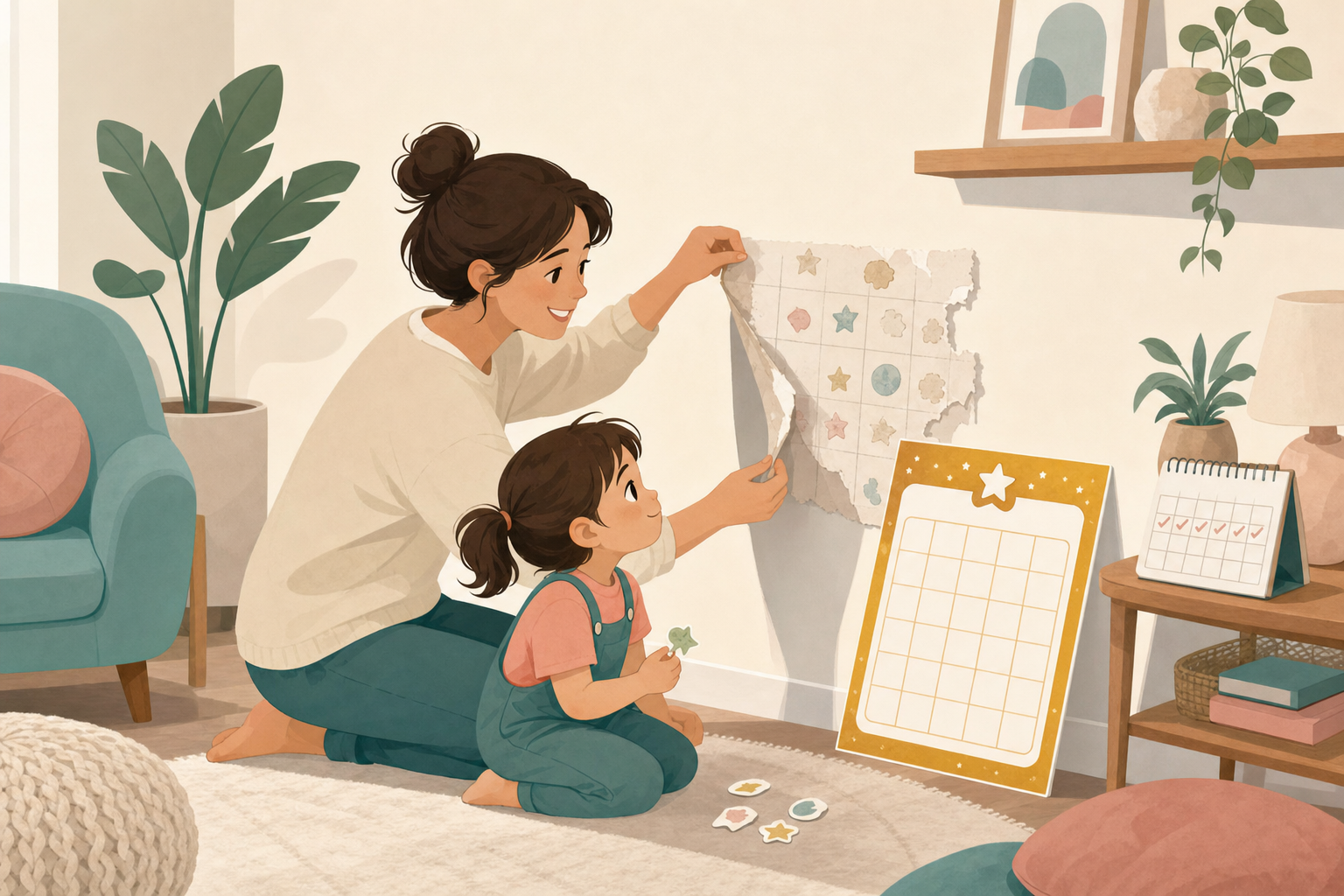
What to Do When a Sticker Chart Stops Working for a Preschooler: A 7-Day Printable Reset Plan
Your preschooler used to sprint to the chart after every success, pressing a sticker on like it was the most important job in the world. Now the chart sits on the fridge, half-filled, completely ignored, and asking "don't you want a sticker?" gets you a shrug. The reward chart stops working phase is real, and it usually hits around week two or three, right when you were counting on momentum.
Most advice tells you to simplify the goal or shorten the reward interval, which is true but incomplete. What's missing is a plan for the actual reset: what to do on day one versus day four, how to know if the chart is dead or just stale, and when to stop using stickers altogether. Here's a 7-day plan built for kids ages 3 to 5.
Why a Sticker Chart Stops Motivating a Preschooler
Preschoolers live in the present. A sticker chart works at first because it's novel and visual, not because your child understands delayed gratification. Once the novelty fades, the chart becomes wallpaper.
Common reasons a chart stalls:
- The goal is too big or vague ("be good" instead of one specific action)
- The reward is too far away (end of the week feels like forever to a 4-year-old)
- There are too many boxes to track at once
- The chart was introduced during a stressful week and got tangled up with a meltdown
- Your child has simply outgrown the current reward and needs something new
If any of these sound familiar, you don't need a brand new system. You need a reset, and a reset works best with a clear start and end date your child can actually see.
The 7-Day Reset: Day by Day
Print a fresh chart. A blank, new-looking chart signals "this is different" to a preschooler in a way that talking never will. Then follow this structure.
Day 1: Pick one behavior sticker chart, not five.
Choose a single, concrete action: "puts shoes on when asked" or "uses a quiet voice at dinner." Not three things, not a general attitude. A one behavior sticker chart removes the decision fatigue that kills motivation in young kids.
Day 2: Shrink the reward window.
Instead of a prize at the end of the week, reward every single success immediately with a sticker and a specific, short verbal callout ("You put your shoes on the first time I asked, that was fast!"). The sticker is the marker, your words are the actual reinforcement.
Day 3: Add a mini goal inside the week.
Tell your child that 3 stickers (not 7) earns a small reward, like picking the song for bath time or choosing what's for snack. Short-term sticker chart goals work better for preschoolers because a 3-day finish line is something they can hold in their head.
Day 4: Check in, but don't lecture.
Ask your child how the chart is going. Let them look at it, count stickers, and feel some ownership. This is also a good day to notice if the behavior itself is already improving, even without a sticker attached.
Day 5: Let your child help choose tomorrow's reward.
Giving a small choice (two options you've already approved) rebuilds buy-in. "Do you want extra story time or to pick the cereal tomorrow?" takes 10 seconds and matters a lot to a 4-year-old.
Day 6: Keep it boring and consistent.
Day 6 is where most resets quietly fall apart because parents either overdo the praise or forget to follow through. Stay steady. Same sticker, same short praise, same spot on the fridge.
Day 7: Celebrate the finish, then decide what's next.
Mark the week as complete with your child watching. Deliver the reward you promised, nothing bigger. Then decide: does this behavior need another week of the chart, or has it become automatic enough to retire?
How to Know If It's a Reset or a Replacement
Not every stalled chart needs the same fix. Before you print a new one, ask:
- Has the behavior actually improved, just the enthusiasm has faded? That's a reset. Keep the same behavior, change the reward and timing.
- Did your child never really care about the reward in the first place? That's a replacement problem, not a reset problem. Try a different reward entirely, or consider a non-sticker system if stickers themselves have lost their appeal.
- Is the behavior itself too big or confusing for a chart to fix? Some things (sharing toys, speaking kindly to a sibling) need a narrower, more specific chart. A chart focused only on sharing and turn-taking often works better than a broad "be nice" goal.
- Is this really a routine problem, not a single behavior? If mornings or after-school hours are falling apart in general, a single sticker chart might be the wrong tool. A flexible after-school routine chart handles multiple steps without demanding perfect compliance on all of them.
Making Positive Reinforcement Actually Land With Young Kids
Positive reinforcement for young children works best when it's immediate, specific, and small. A sticker chart is just the visual tracker. The real reinforcement happens in the seconds right after the good behavior, when you name exactly what your child did well.
A few things that make the reset stick:
- Praise the action, not the child ("you put your shoes on fast" beats "good boy")
- Keep rewards cheap and immediate rather than big and delayed
- Let your child see progress visually, even a half-filled row counts as progress
- Skip punishment for missed days. A blank box is just a blank box, not a failure to discuss
When the week is done and the chart is full, you don't need a big prize to make it feel like an accomplishment. A free coloring page from Chunky Crayon makes a nice no-cost reward when the chart is full, and it gives your child something to do with their hands while you talk about what went well.
When to Stop Using a Chart Altogether
Some behaviors graduate out of chart territory once they become routine, and that's the goal, not a failure. If your child is doing the behavior consistently without needing a sticker to remember, quietly retire the chart instead of restarting it again. Save the printable for the next skill that needs extra support, whether that's a new chore, a tricky transition, or something totally unrelated to this round.
A stalled chart isn't proof that reward charts don't work for your child. It usually just means the chart needs fresh eyes, a shorter runway, and a reward that still feels worth earning. Print a new one, pick one behavior, and give it seven days before you decide anything bigger.