September 16, 2026
Tooth Brushing Reward Chart: End Bedtime Battles Fast
Struggling with brushing time tantrums? Try this printable brush teeth chart for kids ages 3 to 7 and turn morning and night brushing into a fun routine.
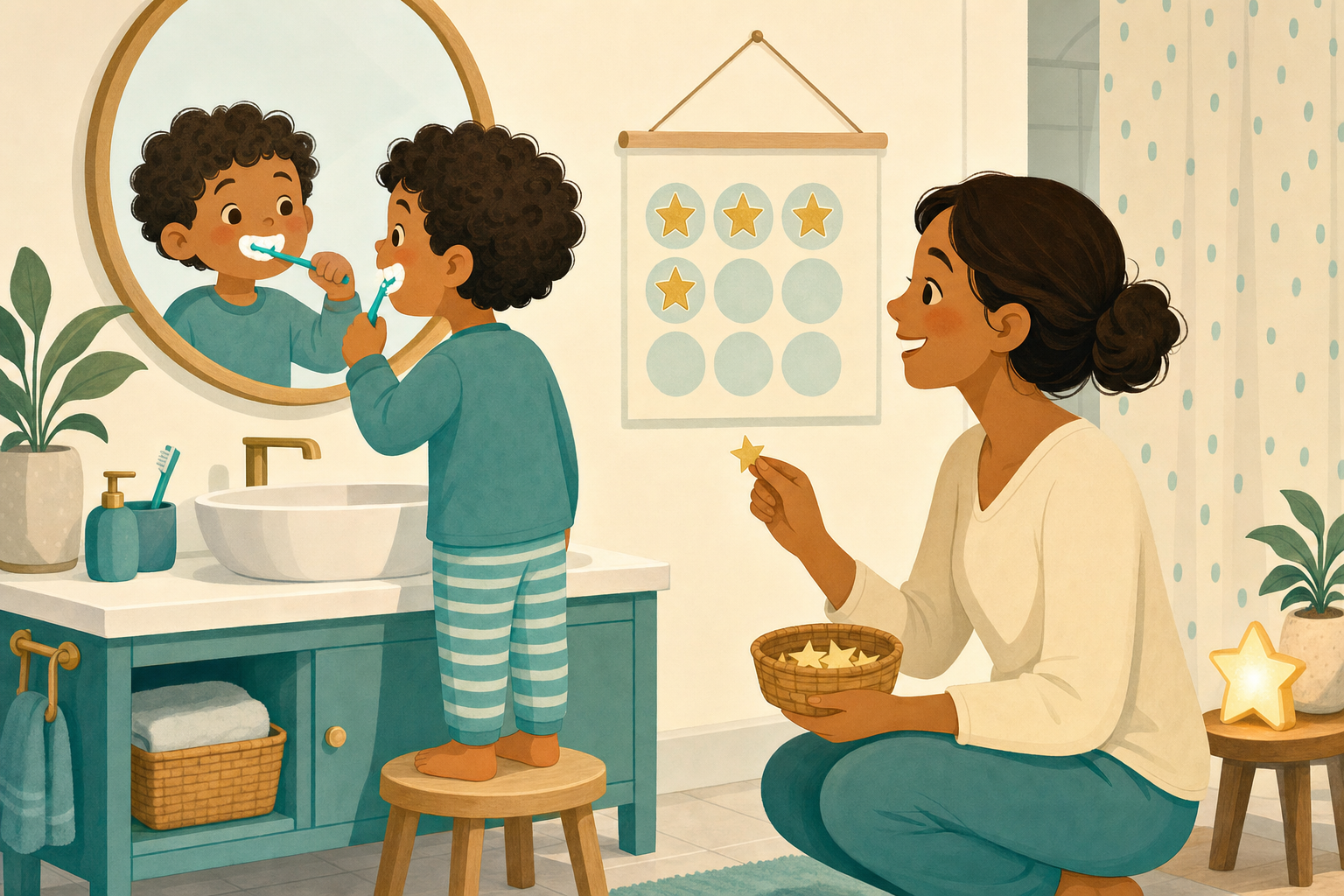
How to Use a Printable Sticker Chart for a 3- to 7-Year-Old Who Fights You on Brushing Teeth
If brushing teeth has turned into a nightly wrestling match, you already know a chart alone will not fix it. The clenched jaw, the running away, the "one more minute" negotiations, none of that gets solved by taping a calendar to the bathroom wall. But a tooth brushing reward chart, set up the right way, can turn brushing from a fight into something your child actually wants to do. Here is how to make one that survives past day three.
Why Most Teeth Brushing Charts for Kids Fail Fast
Most printable brushing routine charts fail for one of three reasons:
- The reward is too far away. Asking a 4-year-old to wait two weeks for a prize is asking too much of a brain that barely understands tomorrow.
- The chart tracks the wrong thing. If the only box to check is "brushed teeth," your child has no way to feel successful during the actual two minutes of brushing, only after it is over.
- There is no plan for the meltdown. A chart assumes cooperation. It does not tell you what to do when your child clamps their mouth shut and cries.
A sticker chart for brushing teeth works best when it addresses the resistance itself, not just the finished task.
Set Up the Chart So It Rewards the Right Moments
Skip the single daily box. Instead, build your kids' oral hygiene chart around the two brushing sessions your child actually has to survive: morning and night. A reward chart for morning and night brushing gives two small wins a day instead of one big ask, which matters a lot for kids who see brushing as one long ordeal.
Break each session into stickers your child can earn along the way:
- One sticker for coming to the bathroom without being carried or dragged
- One sticker for opening their mouth and letting you (or them) brush for a full count of 20
- One sticker for rinsing and spitting without a fight
For a 3- or 4-year-old, three stickers per session (six a day) feels achievable and keeps their attention. For a 6- or 7-year-old who understands time better, you can simplify to one sticker per session and add a bigger weekly reward instead.
Print the chart with big, clear squares and a spot for their name at the top. Kids this age respond to seeing their own name on something that is theirs.
Make the First Few Days Almost Impossible to Fail
The biggest mistake parents make with a new brush teeth chart printable is starting with the full routine on day one. If your child already hates brushing, day one should be easy enough that they win no matter what.
For the first three days, lower the bar:
- A sticker for touching the toothbrush to their teeth at all, even for five seconds
- A sticker for choosing their own toothpaste flavor or toothbrush color
- A sticker for standing next to you while you brush your own teeth
Once your child has a few days of stickers and a sense that the chart is on their side, you can raise expectations gradually: longer brushing time, then both sessions, then no reminders needed. This slow ramp-up matters more than the chart design itself.
What to Do When Brushing Still Turns Into a Battle
Even a well-built chart will not stop every meltdown. A few things that actually help in the moment:
- Give a choice, not a command. "Do you want to brush the top teeth first or the bottom teeth first?" works better than "Open your mouth."
- Use a timer or song instead of your voice. Two minutes of a favorite song takes the nagging out of your voice and puts a neutral endpoint on the task.
- Let them hold the brush while you guide their hand, especially for kids who hate feeling controlled. Shared control often ends the standoff faster than insisting on full parent control.
- Skip the chart talk mid-meltdown. Do not mention stickers while your child is mid-tantrum. Bring the chart back up once they are calm, as a place to land after the hard part is over, not a bribe to stop crying.
If brushing resistance is part of a bigger pattern of transition struggles (getting dressed, leaving the house, starting homework), it can help to look at the whole day's structure. A visual routine chart for kids who resist starting tasks can work alongside the brushing chart so your child sees consistent expectations everywhere, not just at the sink.
Keep the Chart Motivating Past Week One
A printable brushing routine chart loses power fast if the reward never changes. Plan for that in advance:
- Week 1: Small, immediate rewards. An extra bedtime story, choosing tomorrow's breakfast, five extra minutes of playtime.
- Week 2 to 3: A slightly bigger reward for a full week of stickers, like picking the family movie or a trip to the park.
- Ongoing: Once brushing is a habit, switch from a sticker-per-session chart to a simpler weekly check-in, since the goal is for brushing to eventually need no chart at all.
Free, low-cost rewards work just as well as toys. A free coloring page from Chunky Crayon makes a nice no-cost reward when the chart is full, since your child gets to pick a page and color it themselves right after a hard-won brushing win.
If your child also fights other parts of the evening routine, like bath time, it is worth handling that battle the same way. A bath time sticker chart built the same way can run right alongside the brushing chart so bedtime stops feeling like an obstacle course.
A Quick Troubleshooting Checklist
Before you print anything, ask:
- Is the reward close enough in time for my child's age to feel it?
- Does the chart give credit for partial cooperation, not just full success?
- Have I planned an easy first few days so my child starts with wins?
- Do I have a plan for what to say (and not say) during a meltdown?
- Is there a plan to fade the chart once brushing becomes routine?
If your mornings are rough beyond just brushing, pairing this chart with a printable ready-for-school checklist can take some of the pressure off so brushing is not the last straw in an already chaotic morning.
A sticker chart for brushing teeth will not make every night perfect. But built around small, believable wins instead of one big daily task, it can turn brushing from the fight you dread into something your child actually asks to check off.