September 13, 2026
Tooth Brushing Sticker Chart: End Toddler Battles Fast
Toddler refuses to brush teeth? Try this reward chart for brushing teeth to build a calm dental routine, no more nightly battles. Get your free template.
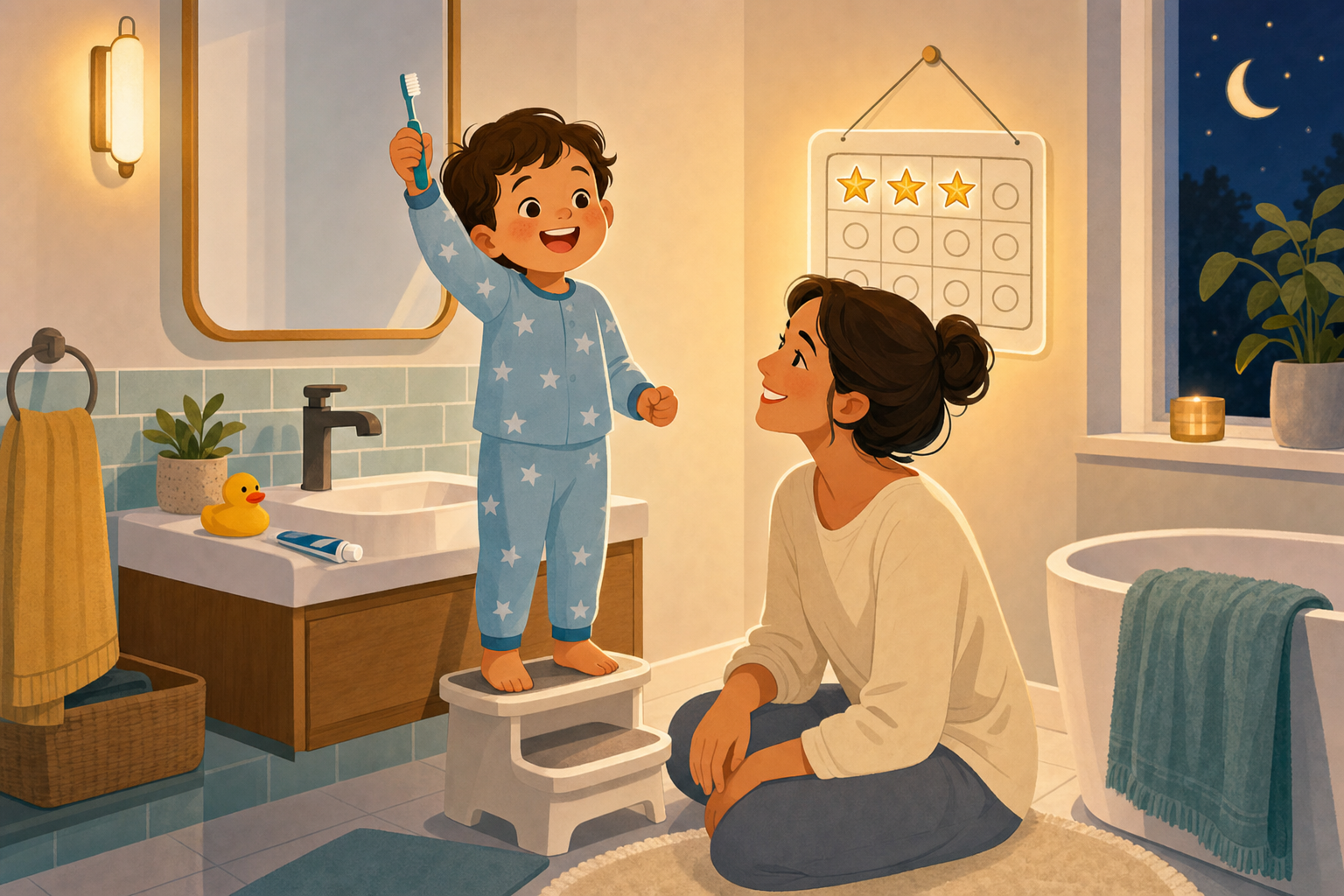
How to Use a Sticker Chart for a Toddler Who Refuses to Brush Teeth (Without a Nightly Battle)
It's 7:45 pm, your toddler is clamping their mouth shut like a bank vault, and you're one lunge away from wrestling a toothbrush into a moving target. If this is your evening, a sticker chart can genuinely help, but only if you set it up differently than the generic "give a sticker for good behavior" advice you've probably already tried.
Most articles tell you to "use a sticker chart" and stop there. They don't tell you what the chart should actually reward, how many stickers should exist between now and a real payoff, or how to keep the chart itself from becoming the next thing your toddler refuses. Here's how to build one that works.
Why the Standard Tooth Brushing Sticker Chart Fails
Most tooth brushing sticker charts fail for one of three reasons:
- The goal is too vague. "Brushed teeth" is not something a toddler can picture. They need to see the steps, not just the outcome.
- The reward is too far away. A 30-day chart means 30 days of a 3 year old getting zero payoff for effort. At this age, that's basically forever.
- The chart becomes a new control battle. If your toddler senses the chart is a tool to make them comply, they'll refuse the chart too. Toddlers are shockingly good at sniffing out manipulation.
A better tooth brushing sticker chart fixes all three: it's visual, it pays off fast, and it feels like something your toddler is in on, not something being done to them.
Set Up a Visual Toothbrushing Chart That Actually Makes Sense to a Toddler
Skip the single box that says "brushed teeth: yes/no." A visual toothbrushing chart for kids works better when it breaks brushing into small, obvious steps they can picture doing:
- Wet the toothbrush
- Put on toothpaste
- Brush top teeth
- Brush bottom teeth
- Rinse and spit
- Show mouth to a grown-up (the fun part, most toddlers like this step)
Each step gets its own small icon or sticker spot. This matters because toddlers who refuse to brush teeth are often refusing the unknown, not the brushing itself. When every step is visible, there's nothing left to negotiate about.
If you're using Sticker Chart Maker, you can build this exact structure for free: pick icons for each step, print it, and stick it to the bathroom mirror at toddler eye level. No app, no login, no login screen to fight about at 7:45 pm.
Make the Reward Chart for Brushing Teeth Pay Off Fast
Here's the part most guides skip: the reward chart for brushing teeth needs a short runway, especially for a toddler. Aim for:
- A same-night micro reward. One sticker per completed brushing (morning and night both count). This is the dopamine hit that keeps them coming back tomorrow.
- A 3 to 5 day mini-goal. Something small and immediate, like picking the bedtime story or choosing tomorrow's pajamas. This is the bridge between "today" and "the big prize."
- A 1 to 2 week bigger reward. A small toy, a trip to the park, or a free coloring page. A free coloring page from Chunky Crayon makes a nice no-cost reward when the chart fills up, since it feels like a treat without adding another toy to the pile.
For a sticker chart for a 3 year old specifically, keep the whole cycle under a week at first. Three year olds don't have a reliable sense of "next Friday." They understand "tonight" and "tomorrow morning" much better.
How to Get a Toddler to Brush Teeth Without Turning the Chart Into a Fight
The chart is only half the plan. How you introduce it determines whether it becomes a helpful routine or one more thing to resist. A few things that make a real difference in how to get a toddler to brush teeth without a standoff:
- Introduce it during a calm moment, not mid-refusal. Show them the chart at breakfast or during a bath, not while they're already clamping their jaw shut at bedtime.
- Let them pick the stickers. Dinosaurs, stars, their favorite cartoon character, whatever. Ownership matters more than the sticker design itself.
- Narrate instead of command. "Let's check the chart, what's step one?" works better than "Open your mouth right now." The chart becomes the authority, not you, which removes you from the power struggle entirely.
- Let them place the sticker themselves. This small act of control often defuses the whole interaction.
- Don't remove stickers as punishment. A missed day just means no sticker that day, not a wiped chart. Erasing progress teaches toddlers the chart is unsafe, and they'll stop trusting it.
If your toddler also fights other parts of the evening routine, not just brushing, it can help to zoom out and build a full bath time sticker chart that covers the whole wind-down sequence instead of tackling brushing in isolation.
When the Chart Alone Isn't Enough
Be honest with yourself here: a sticker chart won't fix a toddler who's genuinely afraid of the toothbrush, has sensory sensitivities to toothpaste texture or flavor, or is going through an unrelated developmental leap. In those cases, try:
- Swapping toothpaste flavors (mint is often the problem, not brushing itself)
- Using an electric toothbrush or a different bristle texture
- Letting them brush a stuffed animal's teeth first to reduce the fear
- Checking in with your pediatric dentist if resistance is extreme or constant
A kids dental routine chart is a tool for building a habit, not a fix for sensory issues or anxiety. If refusal is intense and consistent, that's worth a conversation with your dentist, separate from the chart.
If general nightly power struggles are the bigger issue (not just teeth, but everything from pajamas to lights out), it might help to look at strategies for kids who won't listen the first time or a full after-school and evening routine chart that gives the whole day more predictable structure.
The Bottom Line
A tooth brushing sticker chart works best when it's visual, fast-paying, and toddler-led rather than parent-enforced. Break brushing into steps they can see, reward same-night effort, and let them hold some control over stickers and pace. Build one free in a few minutes at Sticker Chart Maker, print it tonight, and put it where your toddler can reach it themselves. The fastest way out of a nightly battle is usually to stop making it a battle at all.