August 16, 2026
Sticker Chart for Siblings Who Fight: Stop Rivalry Fast
Struggling with sibling rivalry? Try this printable sibling behavior chart to reward sharing, turn taking, and cooperation. Download and start today.
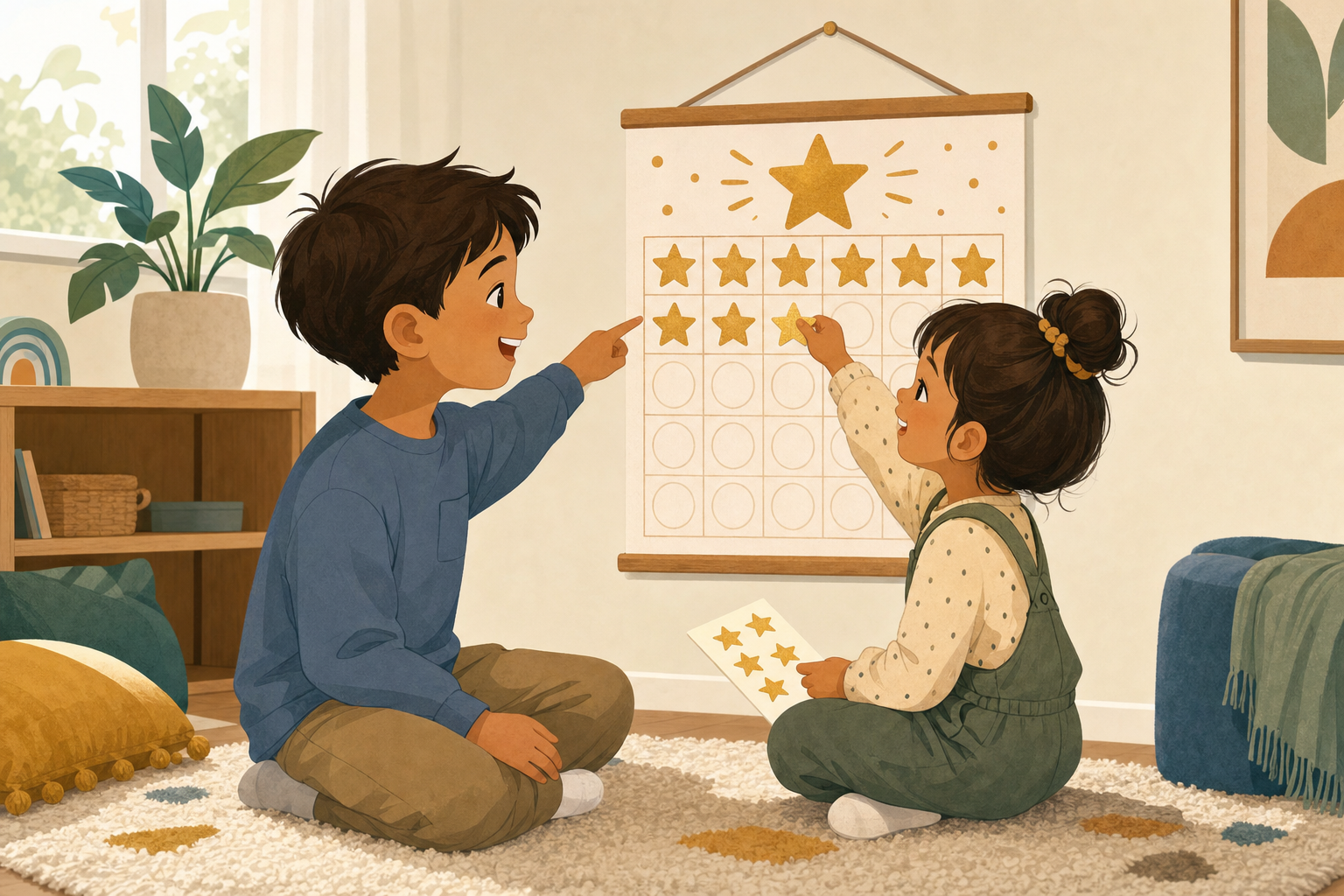
If your two kids can turn a shared bowl of cereal into a screaming match before 7 a.m., you already know that saying "stop fighting" doesn't work. It never has. Kids ages 3 to 7 fight with siblings because they're still learning how to share attention, space, and stuff, and most of them don't have the words yet to ask for a turn instead of grabbing.
A sticker chart won't rewire that overnight, but a well-built sibling rivalry reward chart can give both kids a reason to try the harder, more cooperative option instead of the fast, grabby one. Here's how to set one up so it actually holds up past day three.
Why Most Sibling Sticker Charts Fail by Day Two
Most printable sibling behavior charts fall apart because they aim at the wrong target. "No fighting" isn't a behavior, it's the absence of one, and kids can't earn a sticker for something they didn't do. There's also no way to verify it fairly, which means every sibling squabble turns into an argument about who broke the rule first.
The other common mistake is making it a competition. If only one kid can win the sticker each time (like "whoever shares first"), you've built a chart that rewards tattling and punishes the slower-to-recover kid. That's the opposite of a cooperative behavior chart for siblings. Both kids need a way to earn stickers on the same day, even the same hour, for doing their own specific thing right.
Pick One Shared, Visible Behavior
Instead of targeting the fighting itself, pick one small, positive behavior that replaces it. Good options for ages 3 to 7:
- Using a timer to take turns with one toy, tablet, or swing
- Asking "can I have a turn when you're done?" instead of grabbing
- Saying a word out loud when frustrated instead of hitting or shoving
- Waiting for a sibling to finish talking before jumping in
- Playing in the same room for 10 minutes without an adult stepping in
Pick just one. A reward chart for sharing and taking turns works better than a chart trying to fix five behaviors at once, because kids this age can only hold one new expectation in their head at a time. Once the first behavior is solid for a week or two, add a second one.
If toy grabbing is the daily flashpoint specifically, a chart built just around that fight can move faster than a general one. There's a step-by-step version of that setup in this guide to stopping sibling toy battles that pairs well with the broader system below.
Build a Chart Where Both Kids Can Win the Same Day
This is the part that makes a sticker chart for siblings who fight actually different from a generic one. Set it up so:
- Each kid has their own row, even if they're working on the same behavior
- Stickers get earned for individual effort, not for