October 8, 2026
Sticker Chart for Sharing: Teach Turns Without Forcing It
Stop toy grabbing with a printable sticker chart for sibling sharing that rewards kind hands and real turn-taking, not forced giving. Grab the free chart.
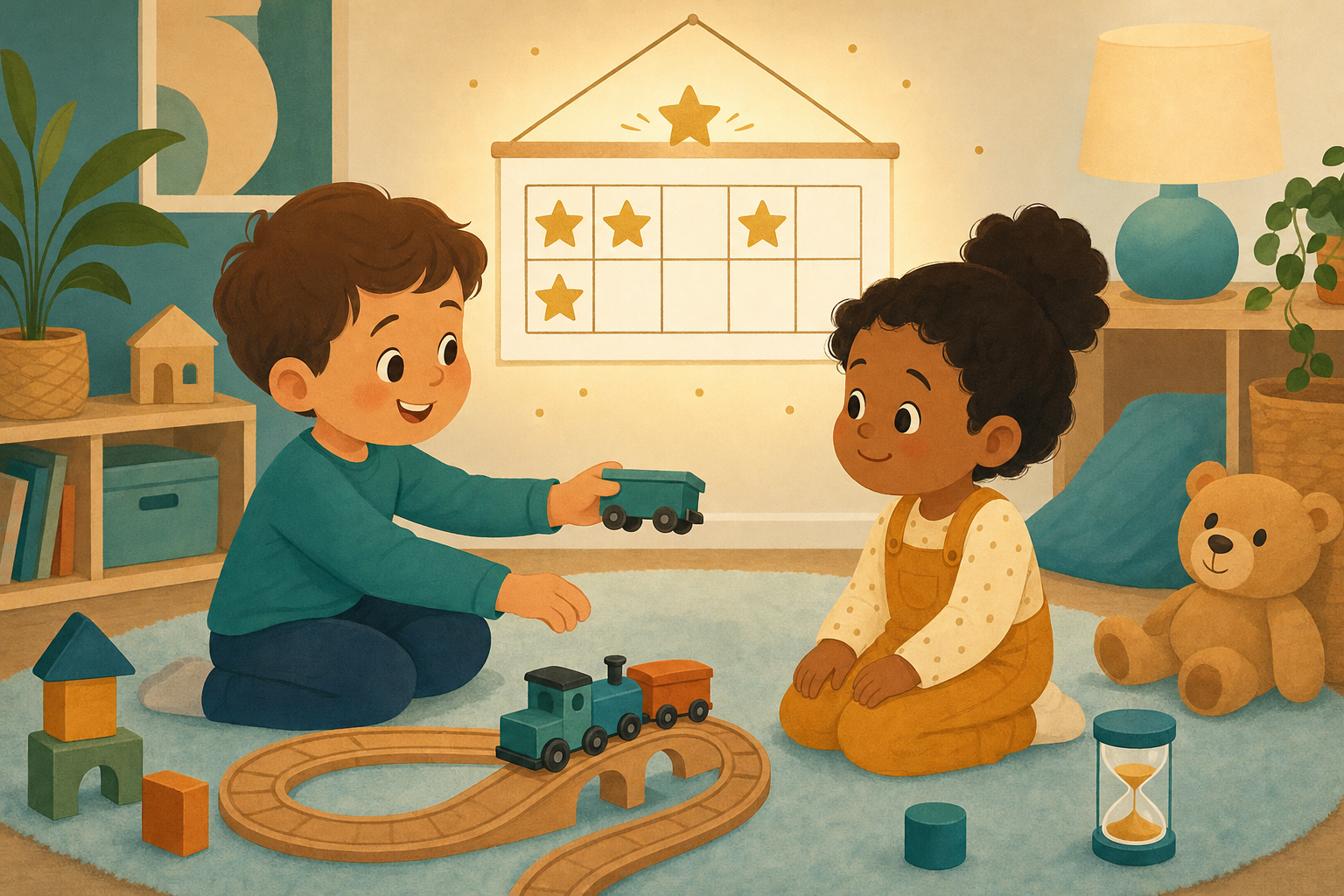
How to Use a Sticker Chart for a Preschooler Who Won't Share (Without Forcing Fake Sharing)
Your preschooler snatches a toy out of their sibling's hands, screams "MINE," and you've already said "we share in this house" four times before 9 a.m. A sticker chart can actually help here, but only if it rewards the right thing. Most sticker charts fail at this because they reward the outcome ("shared the truck") instead of the skill ("used kind hands and waited for a turn"). That difference matters a lot for a 3- to 5-year-old brain that doesn't fully understand ownership yet.
This guide is about building a printable sticker chart for sibling sharing that targets turn-taking and gentle hands, not forced generosity.
Why Forcing Sharing Backfires
When you make a child hand over a toy the second another kid wants it, you're teaching two things you probably don't intend: that grabbing works (the other kid gets what they want by crying loud enough) and that the current holder has no control over their own stuff. Neither builds real sharing skills.
Preschoolers aren't developmentally wired to share on demand. What they can learn, with practice, is:
- Waiting for a turn
- Asking before taking
- Using kind hands instead of grabbing or hitting
- Trading instead of snatching
A reward chart for taking turns works because it's specific and doable. "Share nicely" is vague and judged after the fact. "Ask for a turn and wait" is a skill you can catch and praise in the moment.
Pick Behaviors, Not Outcomes
Before you print anything, choose two or three concrete behaviors. These become your chart categories. Good options for a preschool sibling fighting chart:
- Asked for a turn (used words like "my turn please" or a simple phrase you've practiced)
- Waited without grabbing (even if the wait was short and loud)
- Used kind hands (no hitting, pushing, or pulling toys away)
- Offered a trade ("you can have this one while I finish")
- Said okay when a turn ended (even with a grumble, as long as hands stayed to themselves)
Notice none of these say "shared the toy." That's intentional. You're rewarding the kind hands and the waiting, not the moment of letting go. This is what makes a kind hands reward chart different from a generic sharing chart: it catches the behavior that's actually learnable.
Pick two or three max. A chart with eight categories for a 4-year-old just becomes noise.
Setting Up the Turn-Taking Sticker Chart
Use Sticker Chart Maker to build a simple printable grid with your chosen behaviors as rows and the days of the week as columns. Keep it visual with icons or simple words, since most preschoolers aren't reading fluently yet.
A few setup tips that make a real difference:
- Make stickers earnable multiple times a day. Sibling conflict doesn't happen once a day, it happens ten times before lunch. Let your child earn a sticker each time you catch the good behavior, not just at bedtime review.
- Catch it, don't quiz for it. Narrate in the moment: "You asked your brother for a turn instead of grabbing. That's a sticker." Immediate feedback sticks better than a nightly recap.
- Keep the reward small and frequent. Five stickers might earn ten extra minutes of a parent's undivided attention, a choice of bedtime book, or a free coloring page. A no-cost reward like a printable page from Chunky Crayon works well here because it's low-pressure and doesn't turn the chart into a toy-buying negotiation.
- Chart it for the sibling who grabs, not just the one who gets grabbed from. Both kids benefit from practicing turn-taking language, even the one who usually loses toys.
If mornings or after-school hours are when sharing fights spike, it can help to pair this chart with a broader routine. Families dealing with after-school meltdowns have had success with a flexible after-school routine chart that builds in downtime before the toy wars start.
What to Do When a Turn Gets Missed (Without Losing the Sticker Momentum)
Here's the part most sticker chart advice skips: what happens when your preschooler grabs anyway, mid-chart, in front of everyone.
- Don't erase a sticker already earned. Taking away a sticker for a later mistake confuses kids and makes the chart feel punitive instead of motivating.
- Narrate the miss without shame. "You grabbed instead of asking. Let's try again, ask her for a turn." Then prompt the words if needed.
- Give a reset chance in the same interaction. If they correct course even after grabbing, that still counts as practice. Preschoolers need several tries in the same five minutes sometimes.
- Keep a visual cue nearby. A small printed card with "ask, wait, trade" or simple hand icons posted where the toys live reminds both kids what's expected, even mid-fight.
- Expect regression during tired, hungry, or overstimulated windows. Late afternoon before dinner is brutal for turn-taking. If evenings are rough across the board, a before-dinner routine chart that builds in a snack and quiet time can reduce the number of fights you're trying to chart in the first place.
The goal isn't zero grabbing by day three. It's more asking, more waiting, and fewer blowups over two or three weeks.
When Siblings Are Very Different Ages
If you're managing a 3-year-old and a 7-year-old, the chart needs separate expectations. The younger one might just be working on "ask before taking," while the older one works on "offer a turn without being asked twice." Put both on the same chart but with age-appropriate rows so nobody feels like the bar is unfair.
This is also a good moment to build in shared activities that don't revolve around one coveted toy. Rotating screen-free games made for mixed-age siblings gives both kids a chance to succeed at the same task instead of competing over the same object.
A Realistic Timeline
Most families see a shift in grabbing frequency within 10 to 14 days of consistent sticker use, not because the chart is magic, but because the behaviors get named and practiced that often. If nothing changes after three weeks, the categories might be too vague or the reward too delayed. Go back to one single behavior (just "asked before taking") and rebuild from there.
A sticker chart won't make a 3-year-old genuinely want to give up a favorite toy. What it can do is turn "grab and scream" into "ask and wait," which is the actual skill that makes sharing possible later. Start small, reward the attempt, and let the stickers do the noticing you don't have time to do mid-chaos.