June 23, 2026
Sticker Chart for Dinner Time: End Mealtime Battles (Ages 4-7)
Transform dinner time chaos into smooth transitions. Learn how to use sticker charts with positive reinforcement to get your 4-7 year old to stop playing and come to the table without yelling.
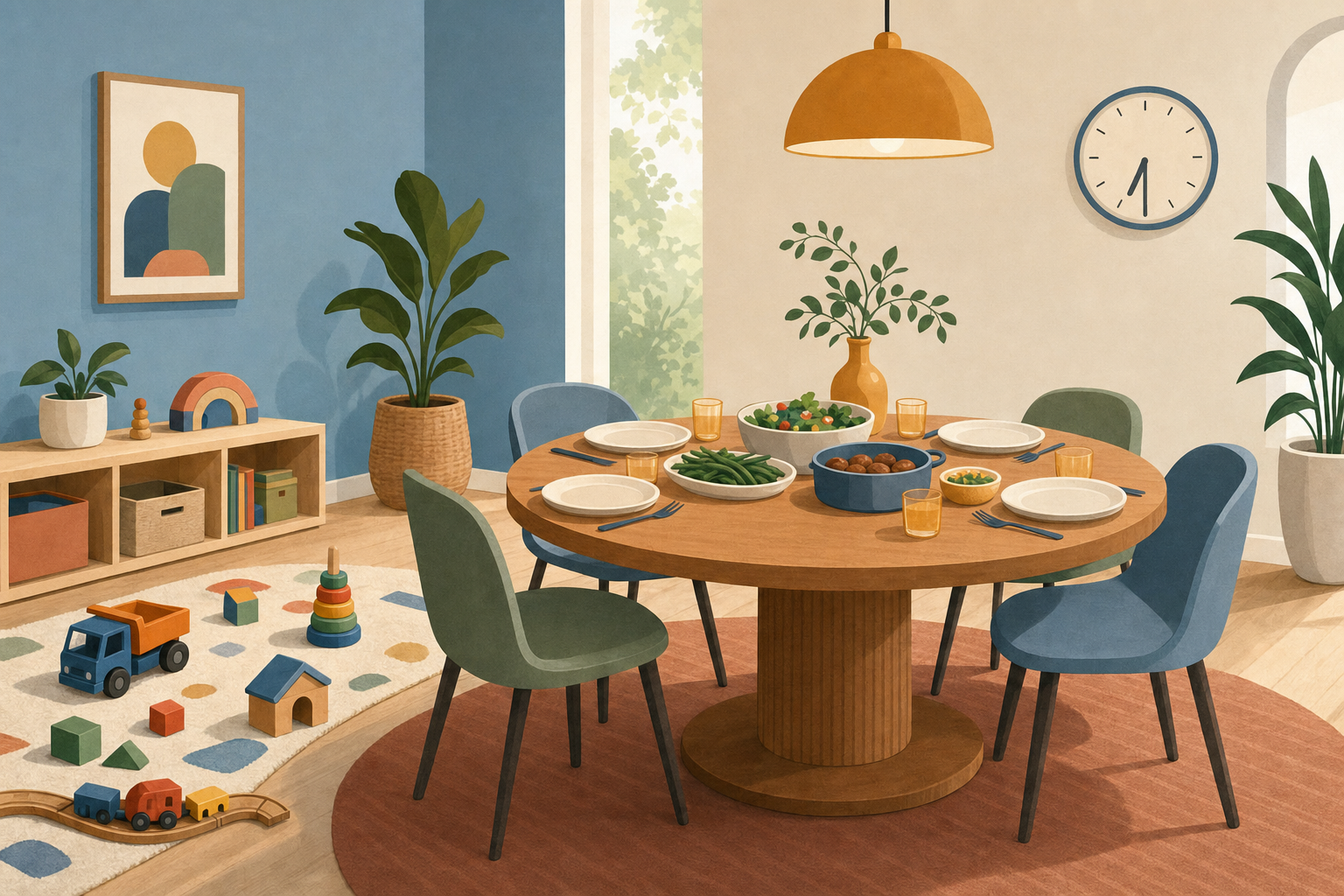
How to Use a Sticker Chart for a 4- to 7-Year-Old Who Refuses to Stop Playing with Toys When It's Time to Come to the Dinner Table Without Turning Every Meal into a Battle
You've already called them twice. Dinner is getting cold. And your child is still on the floor with a bucket of Lego, completely ignoring you like you're speaking in a foreign language.
Sound familiar? The dinner time transition is one of the hardest parts of the day for kids aged 4 to 7. They're deep in imaginative play, their brain is firing on all cylinders, and you're asking them to stop mid-story to sit still and eat broccoli. No wonder it ends in yelling.
A sticker chart for dinner time routine can turn this daily battle into a calm, predictable win. Here's how to build one that actually works.
Why Kids Ignore the Dinner Call (And Why Yelling Doesn't Fix It)
Your 5-year-old isn't ignoring you to be defiant. Their brain is fully absorbed in play, and switching gears is genuinely hard at this age. Executive function (the ability to stop one thing and start another) is still developing through age 7.
Yelling escalates the emotion but doesn't teach the skill. A visual chart for kids to stop playing and come to dinner gives them a clear, repeatable process. It also removes you from the role of nag and puts the chart in charge.
This is the same principle that works for bedtime battles and morning shoe struggles. You're not begging. You're pointing to the chart.
How to Build a Sticker Chart for Dinner Time Transitions (Step by Step)
A reward chart for kids who won't come to dinner table works best when it's specific, visual, and tied to a short-term reward. Here's the exact structure.
Step 1: Break the Transition into Small, Observable Steps
Don't just write