September 22, 2026
Sticker Chart for Kids Who Leave the Table at Meals
Stop mealtime battles with a printable sticker chart for staying seated. Simple steps to keep your 3 to 6 year old at the dinner table, stress free.
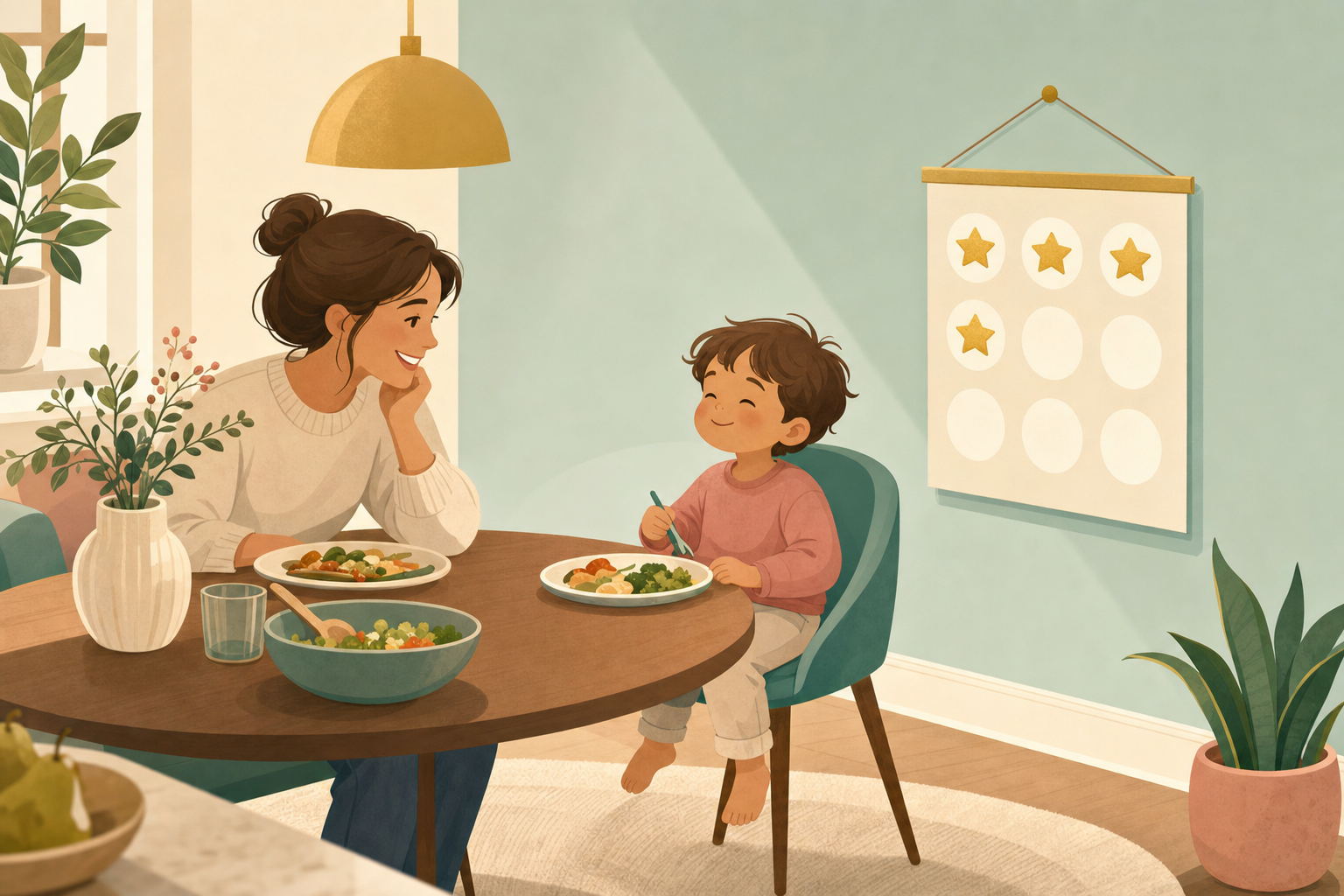
How to Use a Sticker Chart for a Kid Who Won't Stay at the Table During Meals
Your kid takes three bites, announces they're "all done," and slides out of their chair before you've even sat down. Ten minutes later they're back, hungry again, wanting a snack. Repeat this four times a meal and dinner stops being dinner. It becomes a game of chair whack-a-mole.
A printable sticker chart can help here, but only if you set it up around the specific behavior you want (staying seated) instead of vague goals like "good manners." Here's how to build one that actually reduces the getting-up-and-down cycle instead of adding another thing to nag about.
Why Mealtime Behavior Charts Usually Fail
Most meal time behavior charts for a preschooler ask for too much too soon. "Sit nicely through the whole meal" is not a real target for a 4-year-old. Sitting still for 25 minutes is genuinely hard for a young kid's body, especially one that's been in a chair at school or daycare all day already.
The fix is breaking the meal into chunks a 3- to 6-year-old can actually succeed at. Instead of one big win or fail, you're rewarding a series of small, achievable moments. This is the difference between a chart that works in week one and a chart that gets abandoned by Thursday.
Setting Up the Sticker Chart Child Leaves Table Struggle Actually Needs
Skip the generic printable and build one around three stay-in-seat checkpoints per meal instead of a single pass or fail. Something like:
- Checkpoint 1: Stays seated through the first five minutes (when everyone is still serving food)
- Checkpoint 2: Stays seated through the middle of the meal
- Checkpoint 3: Asks to be excused instead of just getting up
Each checkpoint earns its own sticker. A kid who makes it through checkpoint one but bolts at checkpoint two still walks away with a win instead of a total loss. That matters a lot for kids this age, who tend to give up entirely once they think they've already "failed" the whole thing.
When you print the chart, use one row per meal, not one row per day. That way dinner and lunch each get their own shot, and a rough breakfast doesn't doom the rest of the day.
Teaching "Asking to Be Excused" Before the Chart Starts
Here's the part most reward charts skip: kids get up from the table not because they're defiant, but because nobody taught them the alternative. "Staying seated" isn't just about muscles, it's about knowing what to do instead of getting up.
Before you introduce the chart, spend one meal teaching the phrase or gesture for "may I be excused." Practice it at a snack, not at dinner when everyone's tired and hungry. Make it simple:
- Raise a hand, or
- Say "Can I get up?"
Then you answer immediately, even if the answer is "not yet, two more bites." The predictability is what reduces the bolting. Kids get up mid-meal partly because they've learned that asking gets ignored, so leaving is faster.
This single habit does more for a reward chart for staying seated at meals than the stickers themselves. The chart just reinforces a skill you've already introduced.
Running the Chart Without Turning Dinner Into a Negotiation
A dinner table sticker chart kids can actually use needs to stay out of the power struggle, not become part of it. A few rules that keep it low-drama:
- Deliver stickers after the meal, not mid-meal. Stopping to hand over a sticker in the middle of dinner just resets the whole dynamic and gives an easy exit cue.
- Never threaten to remove an earned sticker. Once it's on the chart, it stays, even if the next meal goes badly. Removing stickers turns positive reinforcement for kids at mealtime into something that feels punitive, and kids stop trying once they think the chart is rigged against them.
- Say what you see, briefly. "You stayed through the whole first part, that's a sticker" takes two seconds. Save the longer conversation about behavior for later, not at the table.
- Let the checkpoints do the talking. If a kid gets up early, you don't need a lecture. Just note quietly, "That one didn't earn a sticker, next checkpoint is coming up." Neutral, no drama, moving on.
If mealtimes are already tense for other reasons, like a kid who's hungry and cranky before dinner even starts, it's worth looking at what's happening in the half hour before the meal. A printable before-dinner routine chart for hungry, clingy kids can take some of the edge off before the sticker chart even comes into play.
Picking Rewards That Fit a Mealtime Chart
The reward matters less than the consistency, but a few things work particularly well for a printable reward chart for eating at table:
- A small choice at the next meal (pick the side dish, pick the plate)
- Being the one to choose what's on the plate for a weekend breakfast
- Extra story time or a game after dinner cleanup
- A specific number of stickers (say, 10) unlocking a slightly bigger reward, like picking a weekend activity
Avoid dessert as the reward. It ties food directly to behavior at the table and can create a weird relationship with eating over time. Keep the reward separate from the plate itself.
When the chart fills up for the week, a free activity works well as the bigger payoff. A free coloring page from Chunky Crayon makes a nice no-cost reward once the week's checkpoints are full, especially for kids who like having something to show for their effort.
When the Chart Isn't Enough
Be honest about what a sticker chart can and can't fix. If a kid is genuinely too young to sit for even five minutes, or if the getting-up is tied to sensory needs (the chair, the noise, the food itself), no amount of stickers will override that. In those cases, shorten the checkpoints even further, or look at whether the seating itself needs adjusting (a booster, a fidget item held in the lap, dimmer lighting).
If tantrums show up around mealtime specifically, not just the getting-up but full meltdowns when asked to sit back down, it might be worth pairing the mealtime chart with strategies from a broader sticker chart guide for tantrums in 4-year-olds, since the two often overlap.
And if stickers themselves aren't landing (some kids genuinely don't care about them), there are other tracking options worth trying, outlined in this guide to non-sticker reward markers for toddlers.
The Bottom Line
A meal time behavior chart for a preschooler works best when it rewards small, specific wins instead of one big pass or fail. Break the meal into checkpoints, teach the "asking to be excused" habit before you introduce stickers, and keep the delivery calm and brief. Give it a week of consistent checkpoints before deciding whether it's working. Most kids need a few days to trust that the system is predictable before they actually change their behavior around it.