July 11, 2026
Screen Time Sticker Chart: Stop TV Meltdowns in 3 Easy Steps
End the battle over turning off screens! Learn how to use a sticker chart to help your toddler or preschooler transition from TV and tablets without tantrums.
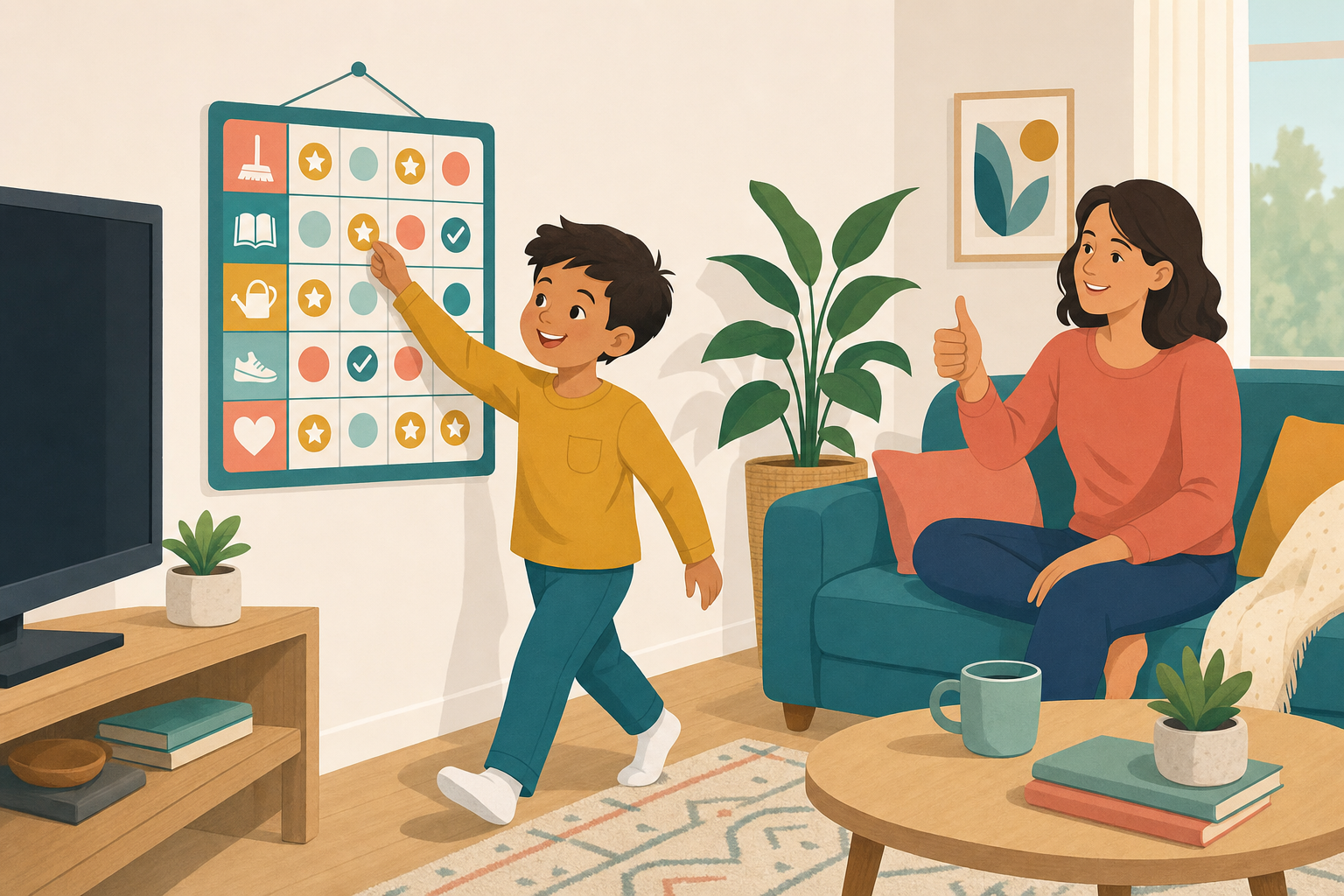
Using a Sticker Chart to Manage the 'TV/Tablet Off' Transition Without a Meltdown
Your three-year-old is glued to Bluey, the timer goes off, and you say "time to turn off the TV." What happens next? Screaming. Floor-flopping. A full meltdown that makes you wonder if the 20 minutes of peace was even worth it.
The problem isn't the screen time itself. It's the transition. Young kids don't have the emotional regulation to handle sudden stops, especially when they're deep into something they love. A sticker chart for child who won't stop watching TV works because it turns the painful moment of stopping into a visible win they can control.
Here's how to set up a screen time sticker chart for preschoolers that actually prevents the meltdown instead of just documenting it.
Why the 'Turn Off' Moment Triggers Meltdowns
Toddlers and preschoolers live in the present. When you announce screen time is over, their brain hears "this good thing is ending forever" not "we'll watch again tomorrow."
They also struggle with executive function. Stopping mid-episode requires impulse control they haven't developed yet. That's why a timer alone doesn't work. They hear the beep, they know what it means, and they still can't make themselves stop.
A "turn off the TV" sticker chart toddler system works because it gives them something concrete to do in that hard moment. Instead of just losing something (the show), they gain something (a sticker). That shift from loss to achievement changes the entire emotional experience.
Set Up the Chart Before Screen Time Starts
Don't introduce a new system in the middle of a meltdown. Print or draw your chart during a calm moment, ideally earlier in the day.
Explain the rule simply: "When the timer beeps, we turn off the tablet. Every time you turn it off without crying or yelling, you get a sticker. After five stickers, you pick a special activity."
Let them help decorate the chart if they want. Some kids care about this, others don't. Either way is fine. The important part is they understand the deal before the TV goes on.
Keep the chart visible near the TV or wherever they watch. They need to see it during the transition.
Use a Visual Timer They Can See
An audio-only timer doesn't give toddlers enough warning. Their sense of time is terrible. "Five more minutes" means nothing to a three-year-old.
Get a visual timer (the red disc kind that shrinks as time passes) or use a phone timer they can glance at. Place it next to them, not across the room.
Give a halfway warning: "The timer is halfway done. When the red is all gone, we turn off and get a sticker." This plants the idea early instead of ambushing them.
Some parents add a two-minute warning. Try it if the halfway mark isn't enough, but don't turn the whole experience into constant interruptions.
The First Few Times Will Still Be Hard
Even with the chart, the first turn-off might not go smoothly. That's normal. You're building a new habit.
If they melt down on day one, stay calm. Say "I know this is hard. Let's try again tomorrow." Don't give the sticker for a meltdown, but don't shame them either.
On day two, remind them about the sticker before you start screen time. "Remember, when the timer beeps and you turn it off, you get a sticker."
Most kids start cooperating by the third or fourth attempt once they trust the sticker will actually appear. If your child takes longer, that's also normal. Keep going.
How to Use Sticker Chart to Limit Screen Time 3 Year Old: Pick the Right Reward
The end reward (what they earn after filling the chart) matters more than you'd think.
Skip candy, toys, or anything that costs money. You'll resent it after three weeks, and it teaches them that compliance requires payment.
Good rewards for a reward chart for turning off tablet without fighting:
- 15 minutes of a special activity with you (build a blanket fort, play their favorite game, bake cookies)
- They choose what's for dinner (within reason)
- An extra story at bedtime
- A free coloring page from Chunky Crayon they can color while you prep dinner
- 10 minutes of roughhousing or chase in the backyard
The best rewards are time with you doing something they don't usually get to choose. It also reinforces that turning off screens leads to connection, not deprivation.
When the Chart Stops Working
After a few weeks, some kids lose interest in the stickers. This is actually a good sign. It means the habit is forming.
You have three options:
- Keep the chart but drop the end reward. The sticker itself becomes the ritual.
- Fade the chart entirely. They've learned the skill.
- Switch to a new chart for a different struggle (like getting out the door without a battle).
Don't panic if they regress after a good week. Regression is normal. Bring the chart back for a few days, then try fading it again.
What to Do When They Still Refuse
Some kids will test the boundary. They'll watch the timer run out and refuse to press the off button.
Stay calm. Say "The timer is done. If you turn it off now, you get the sticker. If I have to turn it off, no sticker today."
Wait 10 seconds. If they don't move, turn it off yourself without drama. No sticker, no lecture. Just move on.
The next day, remind them before screen time starts: "Remember, you only get the sticker if you turn it off yourself."
Most kids will comply within a few attempts once they see you're serious. If your child keeps refusing after a full week, the reward might not be motivating enough. Try asking what they'd like to earn instead.
Adjust for Different Ages and Temperaments
A three-year-old needs a short chart (3 to 5 stickers) and immediate rewards. A six-year-old can handle 7 to 10 stickers and wait a few days for the payoff.
Some kids do better with a choice: "Do you want to turn it off now and get the sticker, or watch two more minutes but skip the sticker today?" Giving them control reduces the power struggle.
Kids who struggle with transitions in general (not just screens) might need the chart combined with other tools. If your child also fights leaving the playground or coming inside from the yard, you're dealing with a broader transition issue. The same chart approach works, but expect it to take longer.
The Real Goal Isn't Obedience
A sticker chart isn't about forcing compliance. It's about teaching your child to handle disappointment without falling apart.
Every time they turn off the screen and earn that sticker, they're practicing emotional regulation. They're learning that hard feelings pass, that they can do difficult things, and that cooperation feels better than a meltdown.
The screen time battle won't last forever. But the skill of managing transitions will carry them through homework time, leaving a friend's house, and every other moment life requires them to stop something fun.
A simple printed chart, a pack of stickers, and two weeks of consistency can turn your worst daily power struggle into a moment you both handle calmly. That's worth more than any amount of uninterrupted Bluey time.