August 24, 2026
Printable Reward Chart to Stop Sibling Fights Over Toys
Reduce sibling rivalry with a printable sharing sticker chart for kids 2 to 6. Try this reward chart for sharing today and bring peace back home.
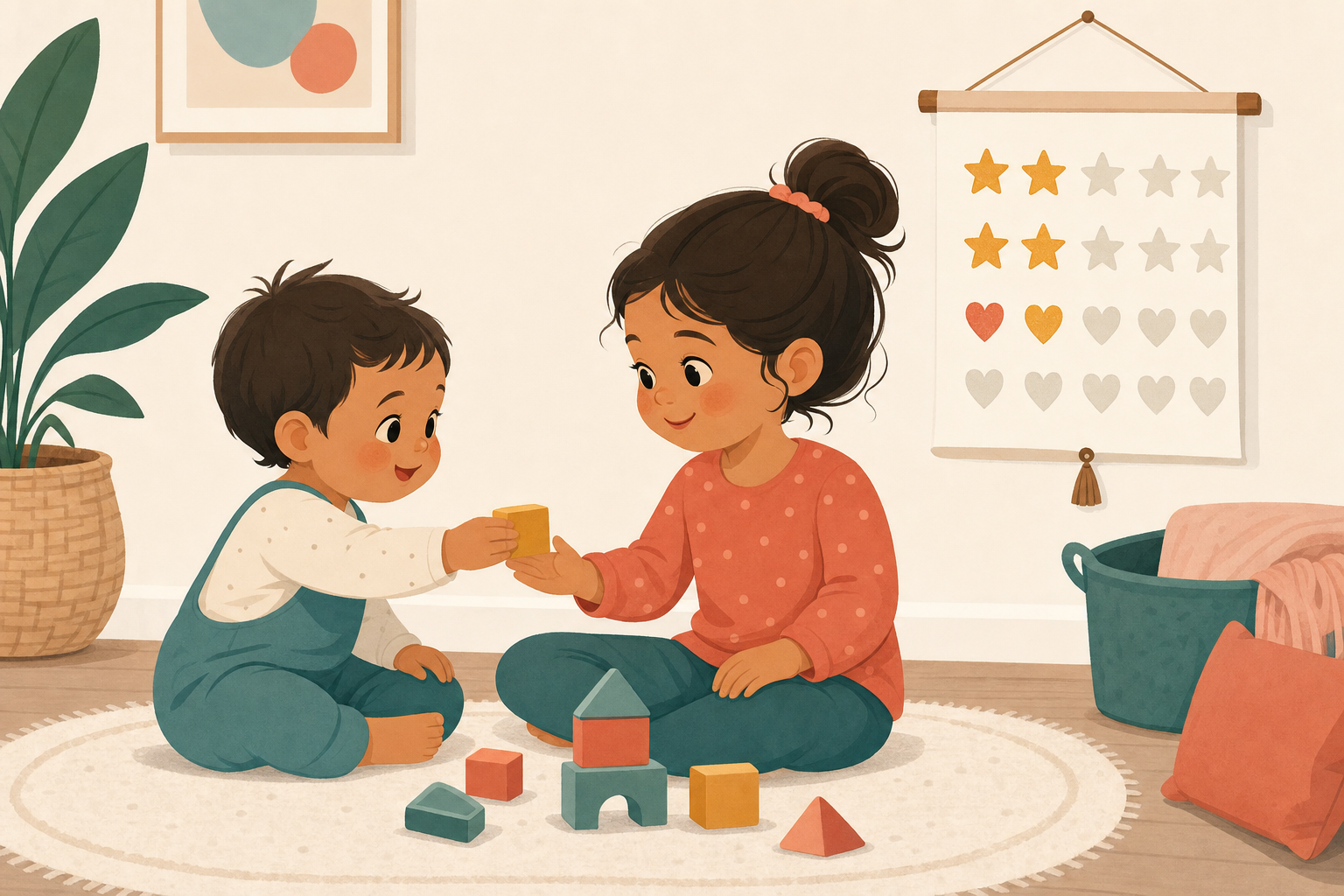
How to Use a Printable Reward Chart to Reduce Sibling Fights Over Toys and Sharing
It's the same fight, five times a day. One kid grabs a toy, the other screams like they've lost a limb, and you're stuck playing referee before you've even finished your coffee. If you're tired of saying "share nicely" into a void, a reward chart built specifically for sibling conflict can actually shift the pattern, not just paper over it for an afternoon.
Most advice out there says "make a sticker chart" and stops there. That's not enough when the real problem is two kids competing for the same toy at the same moment. Here's a system that targets the actual behavior, not just "good listening" in general.
Why Generic Sticker Charts Don't Fix Sibling Fights
A basic chart that rewards "being good" doesn't work for sibling conflict because sharing isn't one behavior, it's a negotiation between two people with different goals. If only one kid gets rewarded, the other feels punished, and that resentment often shows up as more fighting, not less.
The fix is a cooperative sticker chart where both siblings earn toward the same goal together. This reframes the dynamic from "me versus you" to "us versus the problem." It's a small shift, but for kids ages 2 to 6, it matters a lot.
Set Up a Sibling Rivalry Reward Chart That Rewards the Team, Not Just One Kid
Before you print anything, decide what specific behavior you're targeting. "Sharing toys" is too broad. Break it into things you can actually observe:
- Taking turns with a toy without an adult stepping in
- Asking before grabbing something the other sibling is using
- Trading toys instead of snatching
- Playing together with one toy for five minutes without a meltdown
Pick one or two of these to start. A cooperative sticker chart works best when both kids' names are on it and they earn stickers together, as a team, for the same shared goal. If they get through a whole play session without a fight over the blocks, both kids add a sticker. If they hit a group goal (say, 10 stickers), they get a joint reward: a trip to the park, a movie night, or a new toy they'll actually share on purpose.
This is different from a behavior chart for siblings that scores them against each other. Competing charts (whoever behaves better gets more stickers) often backfire and make rivalry worse, since now they're competing for your approval too.
Build the Chart Around the Actual Trigger Moments
Most sibling toy fights happen at predictable times: right after school, during unstructured play, or when a favorite toy only has one of something (like one bike or one specific stuffed animal). Your chart should target those windows specifically instead of trying to cover the whole day.
Try this format:
- Morning play (before school): sticker if toys are shared without a fight
- After school free play: sticker if turns are taken without a parent refereeing
- Evening wind-down: sticker if cleanup happens together without arguing over whose toy is whose
Three checkpoints a day is plenty. Too many boxes and the chart becomes a chore instead of a tool. If your afternoons are already chaotic with backpacks and after-school stuff, it can help to pair this with something like a morning routine chart so mornings aren't adding fuel to the fire before the toy fights even start.
Teach the Sharing Skill Before You Expect the Reward to Work
A reward chart for sharing only works if the kids actually know what sharing looks like in the moment. For 2- to 4-year-olds especially,