June 15, 2026
Reward Chart for Interrupting: Stop Blurts Without Battles
Use a sticker chart to stop constant interrupting and blurting out in 4 to 7 year olds. Turn listening into wins, not correction battles. Get started today.
How to Use a Sticker Chart for a 4- to 7-Year-Old Who Interrupts Constantly, Blurts Out, or Talks Over Adults Without Turning Every Conversation Into a Correction Battle
Your child interrupts you mid-sentence for the fourth time in two minutes, and you're about to snap. You've tried reminding them to wait their turn, explaining why interrupting is rude, and even counting to three before responding, but nothing sticks. A reward chart for interrupting can help, but only if you set it up right and avoid the trap of turning every single blurt into a correction.
Here's how to build a sticker chart for talking back and interrupting that actually works for kids aged 4 to 7, without making everyone miserable in the process.
Why Kids This Age Interrupt (And Why That Matters for Your Chart)
Four- to seven-year-olds interrupt because their brains are still learning impulse control. They have a thought, and it feels urgent right now. They're not being disrespectful on purpose. They genuinely forget that you were talking.
This matters because your visual behavior chart for listening needs to reward the skill you want (waiting their turn to talk), not punish every slip-up. If you correct every interruption, you'll spend the entire day saying "wait your turn," and your child will tune you out.
Instead, focus on catching them doing it right. That's where positive reinforcement for interrupting comes in.
Set Up Your Sticker Chart With One Clear, Specific Goal
Don't try to fix all interrupting behaviors at once. Pick one situation where interrupting drives you the most crazy, and start there.
Good starter goals for a reward chart for waiting their turn to talk:
- "I will raise my hand or say 'excuse me' when Mom is on the phone"
- "I will wait until Dad finishes talking before I start"
- "I will count to three in my head before I talk when someone else is talking"
- "I will use my waiting signal (a hand on your arm) instead of interrupting"
Write the goal at the top of your chart. Use your child's exact words if possible. A 4-year-old might say "I will touch Mom's arm when I need to talk," while a 7-year-old might prefer "I will wait for a pause before I start talking."
Make the chart together. Let them pick the stickers. This isn't about you imposing rules. It's about building a skill they want to get better at.
How to Give Stickers Without Constant Monitoring
Here's the part most parents get wrong: you can't watch for interruptions all day. You'll burn out, and your child will feel micromanaged.
Instead, pick 2 to 3 specific practice times each day. Tell your child in advance: "This morning while I'm talking to Grandma, we're practicing waiting your turn. If you use your waiting signal, you'll earn a sticker."
Good practice times:
- During phone calls (warn them 30 seconds before you answer)
- At dinner when adults are talking
- During a sibling's homework time
- When you're talking to another adult at pickup
Outside those times, you're not tracking. If they interrupt during breakfast, you might remind them once ("remember, we wait for pauses"), but you're not withholding a sticker. This keeps the chart motivating instead of punishing.
Similar to how after-school routine charts work best with clear start and end times, your behavior chart for talking over adults needs defined practice windows so your child knows when they're "on the clock."
How Many Stickers Before a Reward
For 4- to 5-year-olds: 3 to 5 stickers, then a small reward. Their brains need quick wins. Think same-day or next-day payoff.
For 6- to 7-year-olds: 5 to 10 stickers. They can delay gratification a bit longer, but not much. A week is still too long.
Rewards that work well:
- 15 minutes of one-on-one time doing something they pick
- A trip to the park or library
- Staying up 15 minutes past bedtime to read together
- Picking dinner one night
- A free coloring page from Chunky Crayon makes a nice no-cost reward when the chart is full
Avoid food rewards or screen time. You want the reward to feel special without creating new negotiations.
What to Say When They Interrupt (And When to Let It Go)
During practice times, use a simple, two-part script:
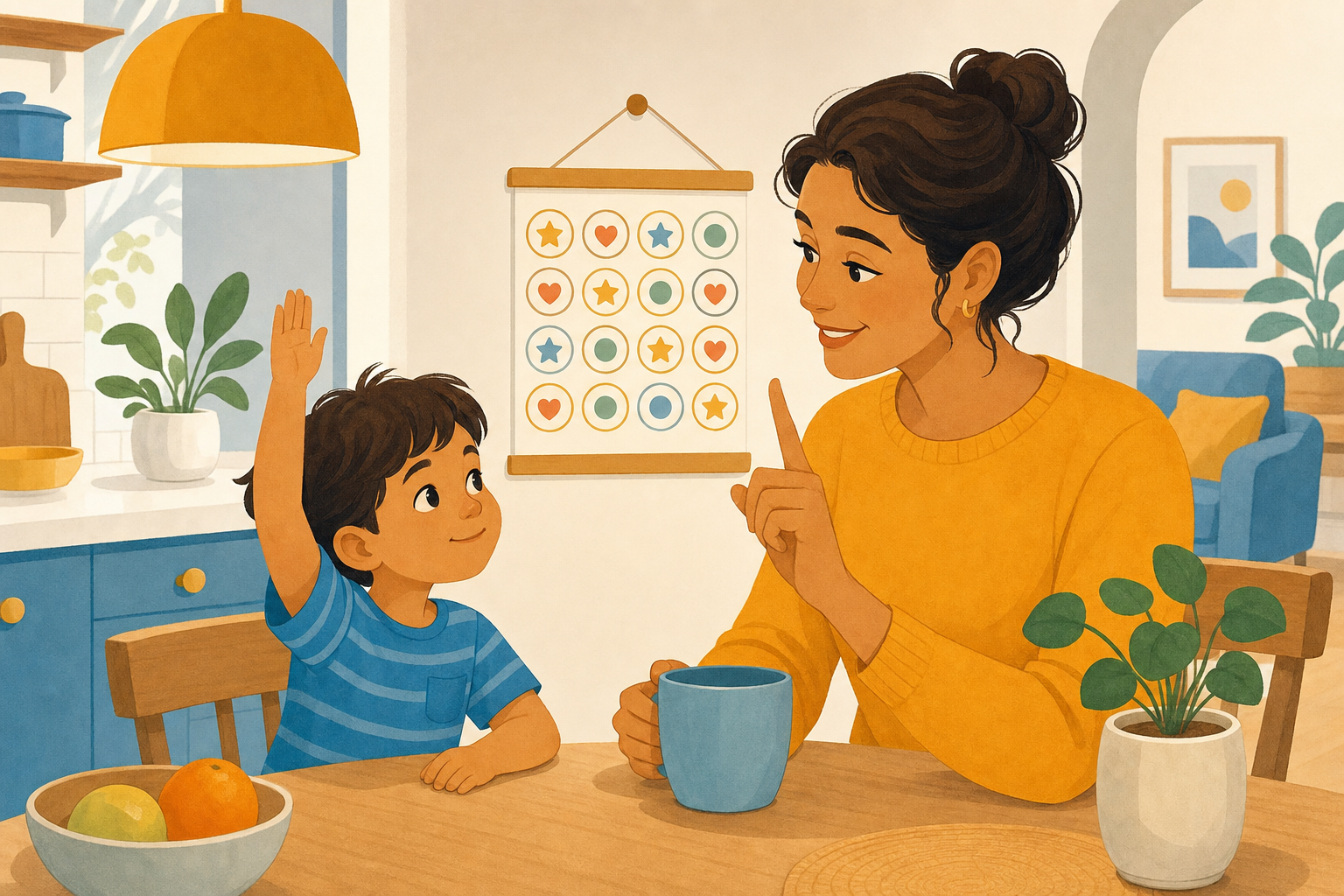
When they interrupt: Hold up one finger (the universal "wait" signal) and finish your sentence. Don't lecture. Just pause them, finish, then turn to them: "Okay, what did you want to tell me?"
When they wait (even for 5 seconds): Immediately acknowledge it. "You waited until I finished talking. That was respectful. Go put a sticker on your chart."
Outside practice times, let small interruptions slide. If your child blurts out "Mom, I saw a bird!" while you're mid-sentence with your partner, just say "I see it, hold that thought" and keep going. Save your energy for the practice windows.
This is hard. You'll want to correct every interruption because it's annoying. But constant correction teaches them that talking is a minefield, not a skill they're learning.
When the Chart Stops Working (And What to Do Next)
After 2 to 4 weeks, interrupting will improve, and your child will lose interest in the chart. This is normal. The chart was training wheels. Now the skill is becoming automatic.
If interrupting creeps back up, try these before restarting the chart:
- Check if they're overtired, hungry, or overstimulated. Kids who are regulated interrupt less.
- Look at your own habits. Do you interrupt them? Do you talk over their dad? Kids mirror what they see.
- Give them a physical signal for "I need to talk." A hand on your arm works better than words for some kids.
If you need to restart the chart, change the reward. The old one isn't motivating anymore.
Common Mistakes That Make Sticker Charts for Interrupting Fail
Mistake 1: Trying to track interruptions all day. You'll miss some. Your child will argue about whether something "counted." Stick to practice times.
Mistake 2: Taking stickers away. Once earned, a sticker stays. If they interrupt during practice time, they just don't earn one. Don't remove progress.
Mistake 3: Using the chart as a threat. "If you interrupt one more time, no sticker today" teaches them that the chart is about punishment, not skill-building.
Mistake 4: Making the goal too vague. "Be respectful" doesn't help a 5-year-old. "Wait for a pause before you talk" does.
Mistake 5: Forgetting to fade the chart. Once the behavior improves, celebrate and retire the chart. If you keep it going forever, it loses power. Some kids do well with a bedtime routine chart running at the same time, but don't stack too many behavior goals at once.
How to Stop Blurting Out With a Chart When You Have Multiple Kids
If you have more than one child who interrupts, give each their own chart with their own goals. Don't make them compete for stickers. One child might be working on waiting during phone calls while another is working on raising their hand at dinner.
Some families find it helpful to add a bonus sticker when siblings help each other remember to wait. "You reminded your brother to use his waiting hand. That was kind. You both get a bonus sticker." This works if your kids are cooperative. If they're in a competitive phase, skip it.
When to Skip the Chart Entirely
Sticker charts aren't magic. They work best for kids who:
- Understand cause and effect ("if I do this, I get that")
- Are motivated by tangible rewards
- Can remember a simple rule for a few minutes
They don't work well if:
- Your child is interrupting because they're anxious or need sensory input (they need a different tool)
- They're under 4 (impulse control isn't there yet)
- You can't commit to the practice times (consistency matters more than the chart itself)
If the chart isn't working after two weeks, the problem might not be interrupting. It might be that your child needs more connection time with you, earlier bedtimes, or help managing big feelings. The chart reveals what's really going on, but it won't fix everything.
Start Small and Celebrate Progress
Your child won't stop interrupting overnight. But a well-designed reward chart for waiting their turn to talk gives them a concrete way to practice, and it gives you a way to notice improvement instead of just counting mistakes.
Pick one practice time. Set up the chart together. Give it two weeks. You'll both feel less frustrated, and your child will start building a skill that'll serve them well beyond age 7.
And when you're not in the middle of interruption drama, head over to Sticker Chart Maker to build and print your chart in under 5 minutes. No signup, no fuss, just a simple tool that helps you start today.