July 7, 2026
Potty Training Sticker Chart for Kids Who Won't Sit Still
Step-by-step guide using printable sticker charts and positive reinforcement to help your toddler stay on the potty. Get free reward charts today!
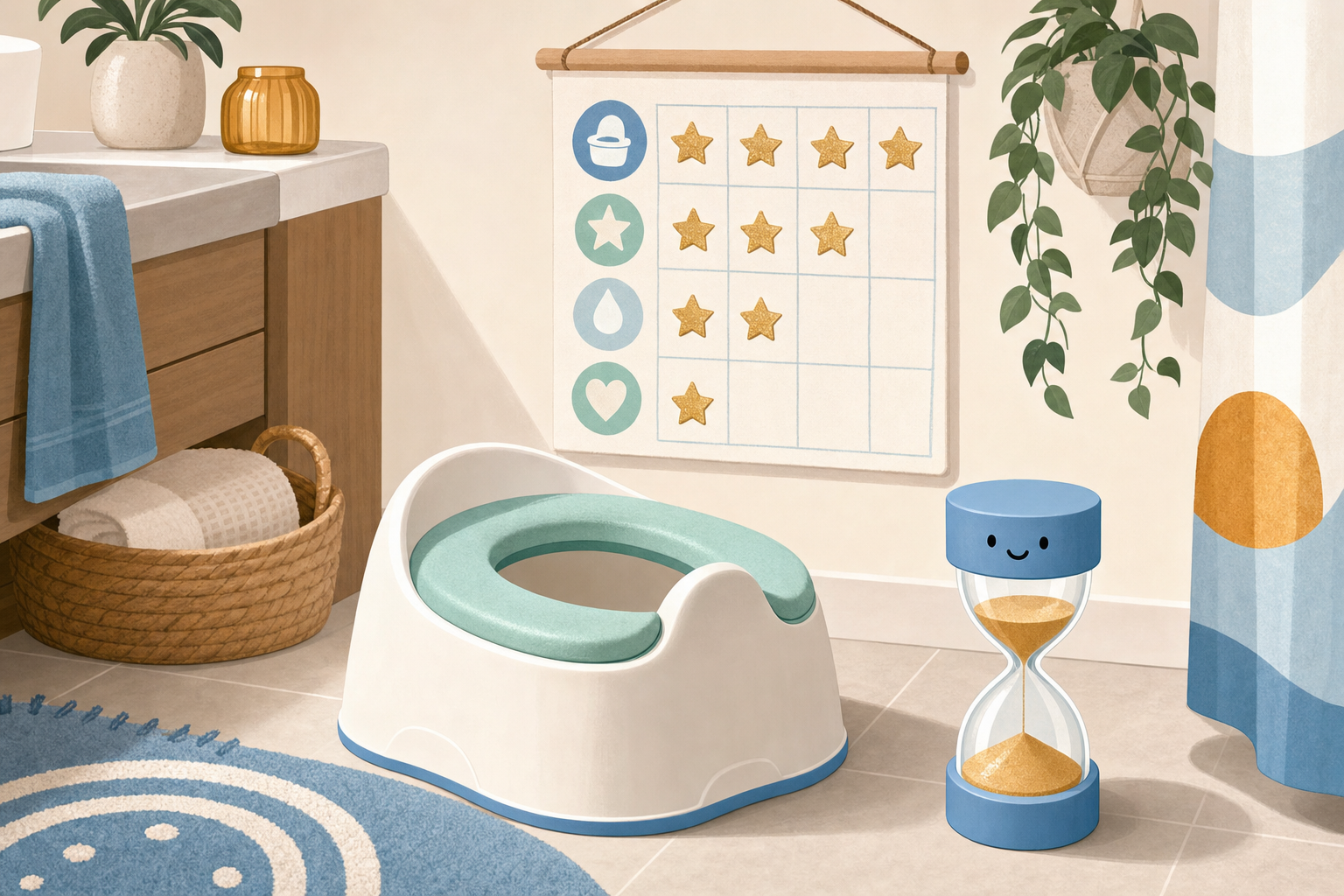
Potty Training Sticker Chart Strategy for Kids Who Won't Sit Long Enough: A Step-by-Step Guide to Using Rewards to Encourage Staying in the Potty Until Finished
Your toddler pees a little, hops off the potty, and promptly has an accident 10 minutes later. You know they're not finished, they know they're not finished, but getting them to sit long enough to fully empty their bladder feels like negotiating with a tiny, stubborn lawyer.
Most potty training advice assumes your child will sit when asked. But when the real problem is a kid who refuses to stay put, you need a different approach. A well-designed sticker chart can turn "sitting until finished" into a game your child wants to win, using positive reinforcement to build the patience potty training requires.
This guide walks you through exactly how to set up printable sticker charts that reward the sitting behavior, not just the outcome, so your child learns to wait those crucial extra seconds.
Why Kids Won't Sit Long Enough (And Why Reward Charts Work)
Most toddlers ages 2-9 don't resist the potty because they're being difficult. They resist because sitting still is boring, they don't yet recognize the internal signals that mean "not quite done," or they're so excited to get back to playing that they convince themselves they're finished.
Reward charts for parents work here because they make the boring part (sitting and waiting) into something with a visible payoff. Instead of abstract praise later, your child sees an immediate sticker go on the chart. That tangible reward helps young kids connect the behavior (staying seated) with something good happening right now.
The key is rewarding the process, not just successful potty trips. If you only reward staying dry or using the toilet, kids who hop off too early won't understand what they're supposed to change.
Step 1: Set Up a Chart That Rewards Sitting Time, Not Just Results
Create a simple chart with 10-15 spaces. Each space represents one successful "sit until I say you're done" session. Don't make it too long at first; you want quick wins to build motivation.
Label it clearly: "I Stay on the Potty Until Finished!" or "Potty Sitting Champion." Keep the language positive and specific to the behavior you want.
Use Sticker Chart Maker to print a chart in under two minutes. Pick a theme your child loves (dinosaurs, princesses, trucks) so they're excited to fill it. The more ownership they feel over the chart, the more they'll care about earning stickers.
Hang the chart at your child's eye level in the bathroom. They should be able to see it while sitting on the potty. This visual reminder reinforces what they're working toward.
Step 2: Define "Finished" in Simple, Clear Terms
Your child needs to know exactly what counts. Vague instructions like "stay until you're done" don't help a 3-year-old who thinks they're done after three seconds.
Try: "We sit and count to 20 together. If more pee or poop comes out, we count to 20 again. When nothing comes out after counting to 20, then you're finished."
Counting gives them a concrete endpoint. It also keeps you from guessing whether they're truly done. Some parents use a simple song (one round of "Twinkle Twinkle") or a timer set for 30-45 seconds.
Be consistent. Whatever method you choose, use it every single time for the first two weeks. Consistency is what teaches the pattern.
Step 3: Reward Every Successful Sit, Even If Nothing Happens
This is the part most parents skip, and it's where the strategy falls apart.
Your child gets a sticker every time they sit through the full count, whether or not they actually pee or poop. You're building the habit of sitting and waiting, which is the behavior goal that leads to staying dry.
If they sit through the count and nothing happens, they still get the sticker and tons of praise: "You did it! You sat the whole time like a big kid. That's exactly what we're practicing."
If they hop off early, no sticker. Stay calm and neutral: "Oops, we didn't finish counting yet. We'll try again next time." No lecture, no guilt. Just a clear cause and effect.
This approach uses positive reinforcement to teach patience without turning potty training into a power struggle.
Step 4: Plan a Small Reward for a Full Chart
When your child fills the chart (10-15 successful sits), they earn a bigger reward. Keep it small and immediate.
Good options:
- A special snack they don't get every day
- 15 minutes of one-on-one playtime doing their favorite activity
- A small toy from the dollar store
- A trip to the park or playground
- A free printable coloring page from Chunky Crayon they can color and hang in their room
Avoid rewards that take days to deliver. A 3-year-old can't connect "sitting on the potty Tuesday" with "going to the zoo on Saturday." The reward needs to happen within hours of finishing the chart.
Once they earn the reward, start a fresh chart immediately. Most kids need 3-4 completed charts before the sitting behavior becomes automatic.
Step 5: Troubleshoot the Three Most Common Roadblocks
Roadblock 1: Your child sits for the count but still has accidents 10 minutes later.
They're probably not fully relaxing. Try having them blow bubbles, look at a book, or sing while sitting. The distraction helps their muscles relax enough to fully empty.
Roadblock 2: They refuse to sit at all, even for the sticker.
The reward isn't motivating enough yet. Let them pick the stickers each time (give them two options so they feel in control). Or switch to a chart with a character they're obsessed with right now. A child who couldn't care less about stars might sit for Bluey stickers.
Roadblock 3: They earned stickers for three days, then stopped caring.
This is normal around day 4-5. Refresh motivation by letting them pick a new interim reward at the halfway point (after 5 stickers, they get to choose tomorrow's breakfast or pick the bedtime story). Mid-chart rewards keep momentum going.
If sitting is becoming a battle in other areas (like getting ready in the morning or leaving the house), a visual routine chart for kids that actually works can help with those transitions too.
When to Phase Out the Sticker Chart
Once your child consistently sits through the full count for two weeks straight without reminders, start fading the chart. Move to every-other-time stickers for a few days, then switch to verbal praise only.
Most kids need the chart for 3-6 weeks. Some need it longer, especially if they're younger (ages 2-4) or have other behavioral challenges. That's completely normal.
If your child is resisting multiple parts of the bathroom routine (not just potty sitting), you might also benefit from a visual morning bathroom routine chart that breaks down each step with pictures.
The One Thing That Matters Most
Sticker charts work for potty training when you reward the specific behavior you want to see (sitting long enough), not just the outcome (staying dry). Kids this age need that concrete, immediate connection between what they did and the sticker they earned.
You're not bribing your child to use the toilet. You're teaching them that good things happen when they practice patience and follow through, which is a life skill that extends far beyond the bathroom.
When you pair clear expectations ("count to 20"), immediate rewards (stickers right away), and consistency (same method every time), even the most resistant sitter usually comes around within a week or two.
Print a chart, pick your counting method, and commit to two weeks of consistent sticker-giving. You'll know within days whether this approach is clicking for your child. And when it does, those post-potty accidents will finally stop.