June 24, 2026
Potty Training Sticker Chart for Kids Afraid of the Toilet
Gentle potty training sticker chart strategies for toddlers with potty anxiety. Turn fear into confidence without battles. Free printable charts inside.
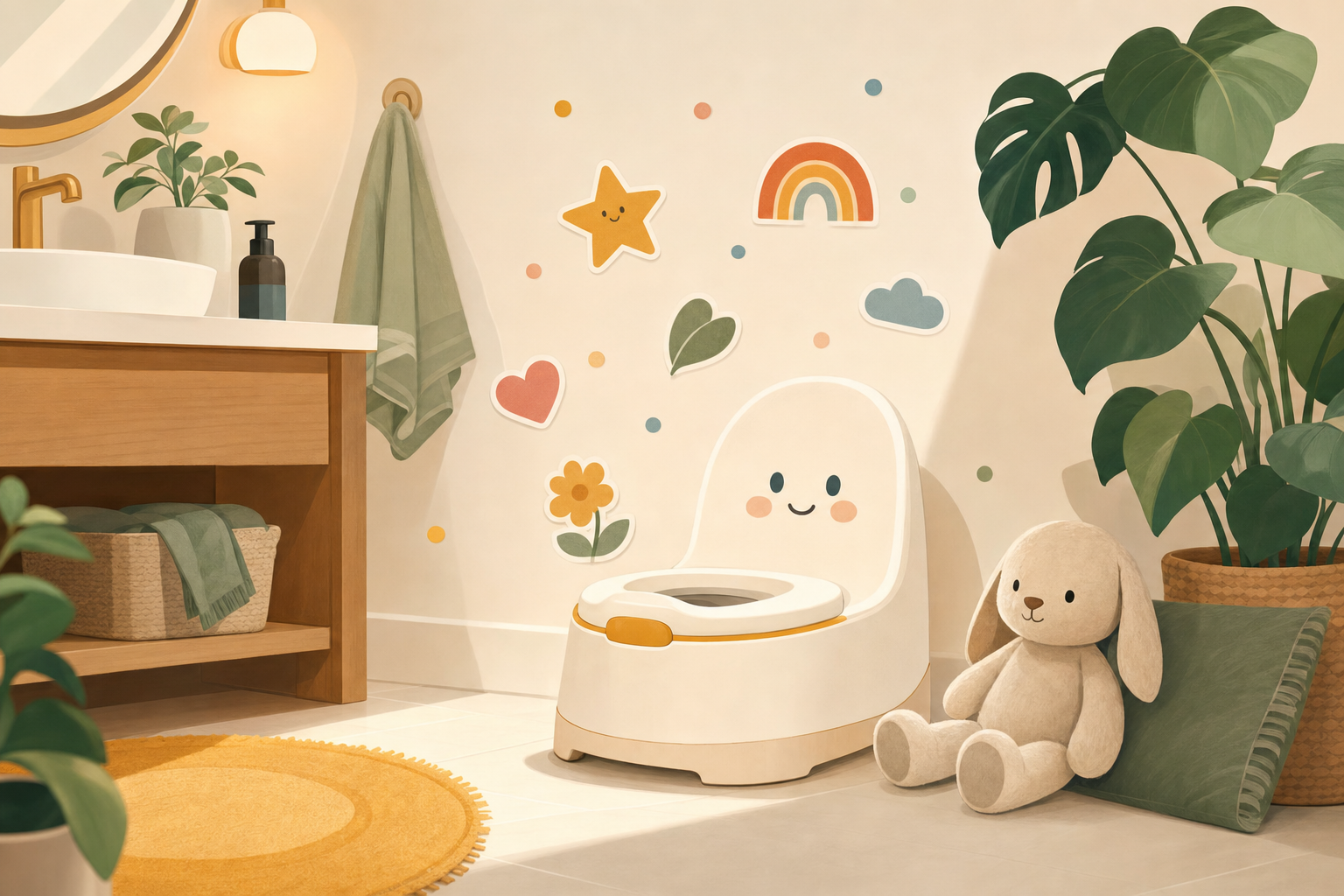
How to Use a Potty Training Sticker Chart for a 3- to 5-Year-Old Who Is Afraid of the Toilet (Potty Anxiety) Without Turning It Into a Forceful Battle
Your kid can sit through a 30-minute car ride without an accident, knows when they need to go, and will happily tell you all about it. But the second you suggest actually using the toilet? They freeze, cry, or flat-out refuse. If your toddler is terrified of the potty (the sound, the flush, the feeling of sitting on it), a traditional potty training sticker chart won't work because it rewards the end result, not the tiny brave steps it takes to get there.
A potty training sticker chart for kids with potty anxiety needs to break the process into small, non-threatening wins that build confidence without force. Here's how to design one that actually works when fear, not defiance, is the real blocker.
Start with proximity, not performance
Most potty training reward charts for toddlers who refuse to sit on the potty jump straight to "use the toilet and get a sticker." But if your child is scared, that's like asking someone with a fear of heights to climb a ladder on day one.
Instead, reward being near the bathroom. Your first chart goals might look like this:
- Walks into the bathroom with you (door open, toilet lid down)
- Sits on the closed toilet lid fully clothed while you wash your hands
- Stays in the bathroom while you flush (even if they cover their ears)
- Touches the potty seat or flushes for you
Each of these is a sticker-worthy moment. You're teaching their nervous system that the bathroom is safe, one tiny exposure at a time. If your child already uses visual cue cards for other transitions, this step-by-step approach will feel familiar and less overwhelming.
Break down the flush (it's usually the scariest part)
For many kids, the loudness or suddenness of flushing is the core fear. A potty training chart for kids who get scared of flushing should treat the flush as its own separate skill to practice, not something that happens automatically after every potty attempt.
Here's a gradual exposure sequence you can chart:
- Flush the toilet while standing in the hallway (door open)
- Flush while standing in the doorway
- Flush while standing next to the toilet
- Flush while sitting on the closed lid
- Flush for the parent after they go
- Eventually: flush after their own successful potty use
Each level earns a sticker. Some kids need two weeks on this progression alone, and that's fine. You're not in a race; you're building trust. Let them control the flush lever if they want, or let them leave the room right before you do it. The goal is desensitization, not compliance.
Separate "trying" from "succeeding"
A rigid chart that only rewards actual pee or poop in the potty sets kids up to feel like failures when they're already scared. That makes the anxiety worse, not better.
Your potty training incentives for toddlers who won't try the potty should celebrate effort:
- Sits on the potty with clothes on = 1 sticker
- Sits on the potty with pants down (even for 5 seconds) = 1 sticker
- Sits and tries to go, even if nothing comes out = 2 stickers
- Actually goes in the potty = 3 stickers (plus a bigger celebration, like picking a free coloring page from Chunky Crayon to print)
This way, every bathroom visit can be a win. If they only manage to sit for ten seconds today, that's still progress worth marking. You're reinforcing brave behavior, and that's what reduces fear over time.
Let them control one small thing
Anxious kids often refuse the potty because it feels like something being done to them. Giving them a sense of control inside the routine can reduce resistance without you giving up on the goal.
Chart-able choices might include:
- Which bathroom to use (upstairs or downstairs)
- Whether to sit forwards or backwards on the potty seat
- Which parent stays in the room
- Whether the door is open or closed
- Which song to sing or book to read while sitting
You're still asking them to try the potty. They're just deciding how. Add a column on your chart for "made a choice about potty time" and let them pick a sticker for it. It sounds small, but it shifts the emotional tone from "I'm being forced" to "I'm participating."
Similar to how we structured the after-dinner cleanup chart for kids, breaking tasks into choices gives them ownership without chaos.
Use a gradual reward ladder, not a single prize
If your chart promises one big reward after 10 successful potty uses, a scared kid will see that as an impossible mountain. They'll give up before they start.
Instead, build a potty training sticker chart for kids who are afraid of the toilet with small, frequent wins:
- 3 stickers = pick a snack
- 6 stickers = choose tonight's bedtime book
- 10 stickers = special one-on-one time (park trip, baking cookies, etc.)
- 15 stickers = they pick a small toy from the dollar store
The rewards don't have to be expensive. They just need to come quickly enough that your child feels momentum. Every few days, they're seeing proof that trying the potty leads to good things, not scary ones.
If bath time is another stress point in your house, the same gradual reward structure works there too. We cover it in detail in the bath time sticker chart guide.
What to do when progress stalls (or reverses)
Even with the gentlest chart, some kids will have setbacks. A bad experience (splash-back, an unexpected loud flush at a public restroom, a stomach bug) can undo weeks of progress.
When that happens, don't scrap the chart. Just move backwards a few steps. If they were sitting on the potty with pants down, go back to sitting fully clothed for a few days. Keep giving stickers for the easier wins until they feel safe again.
This isn't failure. It's how fear-based learning works. You're teaching their brain that even when something goes wrong, the bathroom is still a safe place to try again. Pressure and punishment make potty anxiety worse; patience and repetition make it fade.
When a chart won't solve it (and that's okay)
Some kids have potty anxiety rooted in sensory issues, past medical pain (constipation, UTIs), or developmental differences that a sticker chart alone can't address. If your child is still terrified after 4-6 weeks of a gentle, step-by-step chart, it's worth talking to your pediatrician.
You're not failing. You're gathering information. Sometimes the answer is "wait three more months and try again." Sometimes it's addressing an underlying physical issue first. A chart is a tool, not a magic fix, and knowing when it's not enough is part of good parenting.
Setting up your chart (the actual mechanics)
Now that you know what to reward, here's how to build the chart itself:
- Keep it visible but not public. Hang it in the bathroom or their bedroom, not the kitchen where guests see it. Potty stuff is private, even for little kids.
- Use one row per day or one column per skill (depending on whether you're tracking daily attempts or gradual exposure steps).
- Let them place the sticker themselves. Physical action reinforces the win.
- Review it together at bedtime. "You were so brave today. You sat on the potty and you flushed it. That's two stickers!"
- If they're not motivated by stickers, try checkmarks, stamps, or drawings. The visual progress matters more than the format.
You can build and print a custom chart in about two minutes at Sticker Chart Maker. Pick a theme your kid likes (dinosaurs, space, unicorns), add your specific goals, and print as many copies as you need. No signup, no cost, no pressure.
One last thing: your face matters more than the chart
A potty training sticker chart for toddlers who refuse to sit on the potty works best when your reaction to their effort is bigger than your reaction to accidents. If they sit for five seconds and nothing happens, your face should light up like they just scored a goal.
If they have an accident ten minutes later, your face should stay neutral. "Oops, pee goes in the potty. Let's try again after we clean up." No shame, no frustration, no comparing them to other kids.
They're watching you to figure out if this potty thing is actually safe or just something adults say is safe. Your calm confidence teaches them more than any chart ever will. The stickers are just scaffolding while they build that trust.