June 28, 2026
Potty Training Sticker Chart for 4-Year-Old Resistance
Struggling with a 4-year-old who knows how to use the potty but won't? Discover reward charts that work for resistant kids and potty training regression.
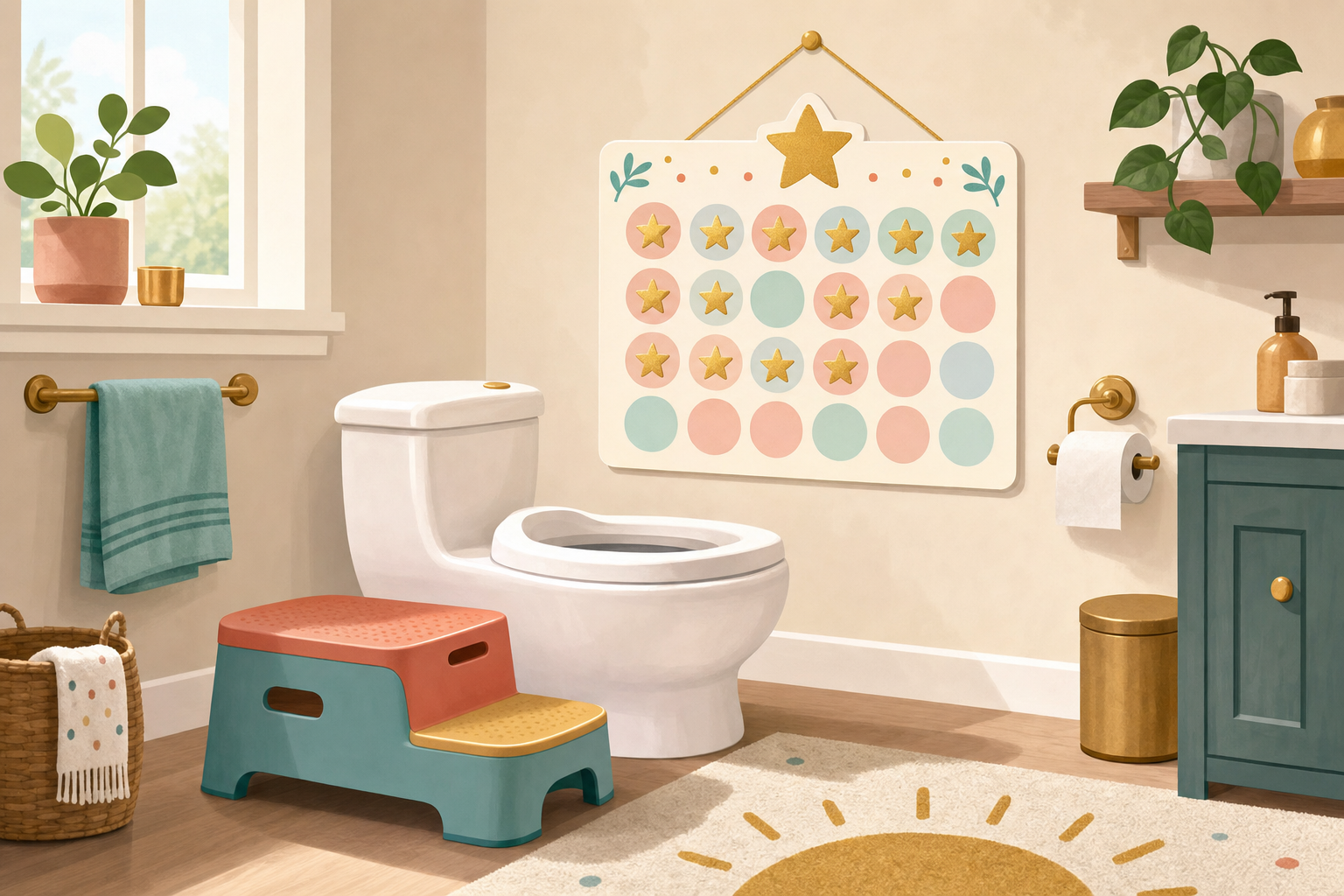
Potty Training Sticker Chart for a 4-Year-Old Who Knows How But Won't Go (Resistance & Regression)
Your 4-year-old can absolutely use the toilet. They've done it before. They know exactly what to do. But today they're refusing, and you're finding accidents in the laundry basket again.
This isn't about skill. It's about power, fear, or something else entirely. And the potty training sticker chart that worked for other kids won't touch this problem unless you adjust how you're using it.
Why a 4-Year-Old Who Knows How Still Won't Go
Before you print another generic chart with cartoon toilets, understand what you're actually dealing with. Most 4-year-olds who refuse the potty fall into one of three camps.
Some are asserting control. Potty training is one of the few things a preschooler can genuinely refuse, and they know it. Others are scared of something specific (the flush, falling in, the automatic hand dryer in public restrooms). And some have regressed because of a recent change, like a new sibling, a move, or starting preschool.
The fix depends on which camp your kid is in. A sticker chart potty training regression 4 year old needs looks different than one for a child who's just testing boundaries.
What a Potty Training Chart for Older Toddlers Should Actually Track
Generic charts ask kids to put a sticker on the toilet every time they go. That's fine for a 2-year-old learning cause and effect, but it doesn't work for a 4-year-old who's dug in.
Instead, track effort and progress separately. Create two columns: one for "trying" (sitting on the toilet when asked, even if nothing happens) and one for "success" (actually going). This removes the all-or-nothing pressure.
For regression cases, add a third column for "dry checks." Every hour or two, your child checks if their underwear is dry. If yes, they earn a sticker. This shifts focus away from the toilet itself and toward body awareness, which is often what's broken down during regression.
You can also track location. Some kids will use the potty at home but refuse at preschool or grandma's house. A potty training chart for kids who know how but won't go should acknowledge that and reward both, so your child sees that all toilets count.
Potty Training Rewards for 4 to 5 Year Old Kids That Actually Motivate
Stickers alone won't cut it at this age. Your 4-year-old needs a reason to care about the chart beyond "look, dinosaurs."
Tie the chart to something they actually want. Five stickers earns 10 extra minutes of outdoor play. Ten stickers means they pick what's for dinner. A full row unlocks a special outing, like the park or the library.
Avoid food rewards (they complicate eating habits) and avoid screen time (it often backfires). Instead, offer time, choices, or small privileges. A free coloring page from Chunky Crayon makes a nice no-cost reward when the chart is full.
Keep the reward timeline short. A 4-year-old can't stay motivated for a chart that takes two weeks to fill. They need a win today or tomorrow, not next month.