October 23, 2026
Potty Training Sticker Chart for Resistant Toddlers
Struggling with potty resistance or accidents? Learn what to reward with a printable potty chart that builds confidence, not pressure. Get your free chart today.
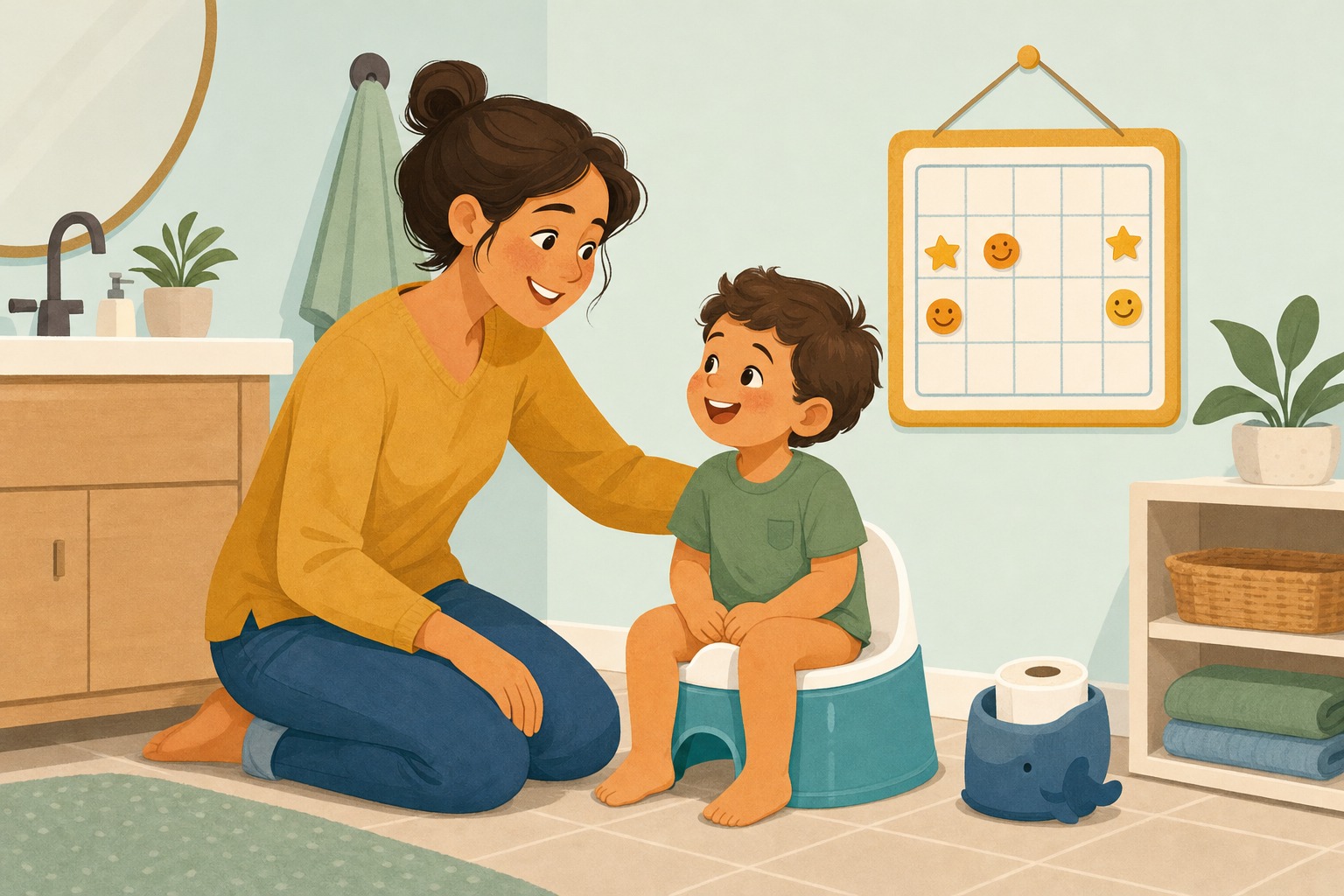
How to Use a Potty-Training Sticker Chart When Your Child Refuses the Potty (Without Making Accidents Worse)
You bought the cute chart. You bought the stickers shaped like dinosaurs. And your child still screams "NO POTTY" and pees on the rug twenty minutes later. If this is you, the chart isn't broken, it's just rewarding the wrong thing.
Most printable potty charts assume a kid who's willing to try and just needs a little nudge. But plenty of toddlers are actively resisting, scared of the toilet, or stuck in a cycle of accidents that's eroding everyone's patience. This is a different problem, and it needs a different chart.
What to Reward During Potty Training (It's Not What You Think)
Here's the mistake almost every potty chart makes: it only has one box to fill in, "used the potty successfully." For a resistant or reluctant kid, that box might stay empty for weeks. That's demoralizing for both of you, and it means the chart stops working before it even gets started.
Instead, build a potty training reward chart for accidents and attempts, not just wins. Reward the behaviors that lead up to success:
- Sitting on the potty for 10 seconds, even with clothes on
- Walking into the bathroom when asked, even if nothing happens
- Telling you after an accident instead of hiding it
- Helping change clothes or clean up without a meltdown
- Trying once a day, regardless of outcome
This is the core idea behind a printable potty chart for potty resistance: it meets your child where they are. A chart with five realistic goals a reluctant toddler can actually hit beats a chart with one goal they'll avoid for a month.
Build a Chart That Can't Be "Failed"
The biggest shift for potty chart goals for preschoolers is removing the idea of failure entirely. Accidents are part of learning, not a mistake to be corrected on the chart.
Here's a simple structure that works for most 2 to 4 year olds:
Row 1: Showed up. A sticker for sitting on the potty at a scheduled time, success or not.
Row 2: Told me. A sticker for communicating before, during, or even right after an accident.
Row 3: Stayed calm. A sticker for handling an accident without a tantrum (yours or theirs).
Row 4: Bonus box. A star or special sticker for an actual potty success, framed as a bonus, not the main event.
Notice that three out of four rows can be earned on a day full of accidents. That's intentional. A potty training sticker chart without punishing accidents needs built-in ways to win even on hard days, or your child will stop engaging with it altogether.
Never Take Stickers Away
This one rule matters more than any sticker design or chart layout: once a sticker is earned, it stays. Don't peel it off because of a later accident. Don't threaten to remove stickers as a consequence.
If stickers can disappear, the chart becomes a punishment tool in disguise, and kids figure that out fast. The whole point of positive reinforcement potty training printable systems is that they build confidence, not anxiety about losing progress already made.
If your child has a rough afternoon after a great morning, the morning's stickers are still there. Point to them. "Look, you already did three things today. That's still true."
When Your Child Refuses the Potty Entirely
Some kids aren't having accidents because they're not ready, they're refusing to engage with the potty at all. If that's your situation, back the chart up even further before adding any toilet-related goals.
Start with proximity goals:
- Sitting near the potty, fully clothed, while you read a book
- Flushing the toilet for fun, no pressure to use it
- Picking out their own potty or seat insert at the store
- Watching a sibling or parent use the bathroom (if you're comfortable with that)
Once those feel normal, add sitting on the potty clothed, then unclothed, then at specific times like after waking up or before bath. Each step gets its own sticker. This slow build is often what's missing from generic charts aimed at reluctant toddlers who need predictability more than pressure.
If resistance seems tied to fear (loud flush, fear of falling in, fear of the unknown), address that directly before expecting any chart to work. No sticker outweighs genuine fear. A smaller toilet seat insert, a step stool, or letting your child flush from a safe distance can remove the actual obstacle.
Keep Daily Goals Small and Visual
Preschoolers do better with charts they can read at a glance. Use pictures, not just words, for each row: a potty icon, a speech bubble for "told me," a heart for "stayed calm." Keep the whole chart to one week at a time so it doesn't feel like an endless project.
At the end of each day, do a 30-second recap together. Point at what they earned, skip over what they didn't. Don't lecture about the accidents, the chart already handled that by simply not including a punishment row.
For the