June 22, 2026
Bedtime Sticker Chart: Stop Kids Getting Out of Bed
Use a bedtime sticker chart to help preschoolers stay in bed after lights-out. Positive reinforcement tips for ages 3 to 6 that actually work.
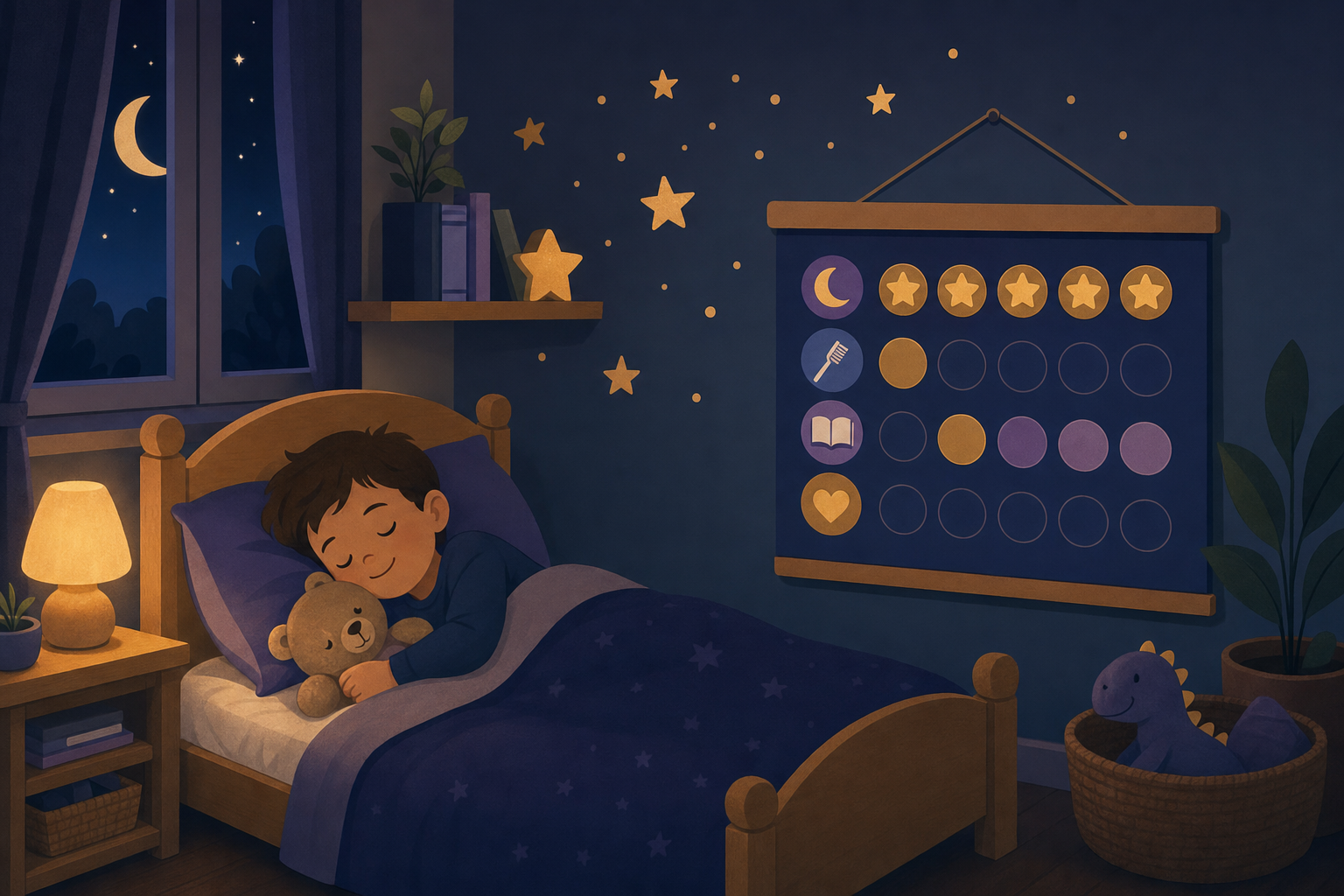
How to Use a Sticker Chart for a 3- to 6-Year-Old Who Keeps Getting Out of Bed After Lights-Out Without Turning Bedtime Into a Nightly Battle
Your child's bedroom door opens for the fourth time tonight. They need water. Then the closet looks scary. Then their stuffed bear fell off the bed. You're exhausted, they're wired, and bedtime has turned into a 90-minute negotiation you can't win.
A bedtime sticker chart for preschoolers works when it rewards one specific behavior: staying in bed after lights-out. Not brushing teeth, not reading stories, not saying goodnight. Just staying put. Here's how to set it up so your child succeeds on night one, and you both get some peace.
Why Getting Out of Bed Happens (and Why Most Charts Don't Fix It)
Your 4-year-old isn't trying to ruin your evening. They're testing whether the bedtime boundary still exists, or they genuinely feel anxious when you leave the room.
Most reward charts for staying in bed fail because they try to cover too much. Parents add "brush teeth," "put on pajamas," "read books," and "stay in bed" all on one chart. That makes bedtime longer, not shorter, because every step becomes a negotiation.
A sleep routine reward chart should reward the one behavior you can't physically enforce: choosing to stay in bed once you've left the room. Everything before that (pajamas, teeth, stories) is non-negotiable routine, not chart material.
What to Put on the Chart (Just One Thing)
Your visual bedtime chart for toddlers and preschoolers should say one thing:
"I stayed in my bed after lights-out."
That's it. No steps, no checklist, no "and then" clauses. You're rewarding the exact behavior you want more of.
Print or draw a simple chart with seven boxes, one for each night of the week. Tape it to the wall next to your child's bed where they can see it first thing in the morning.
Don't add stickers at bedtime. Your child earns the sticker the next morning if they stayed in bed the night before. This keeps bedtime short and avoids turning sticker time into another delay tactic.
Set the First Goal Small Enough to Win
Here's where most parents accidentally sabotage their own chart. You want your child to stay in bed all night, every night, starting tonight. Understandable, but it won't work.
If your child currently gets out of bed five times a night, they can't go straight to zero. The gap is too big. They'll fail, you'll both feel frustrated, and the chart goes in the trash by Wednesday.
Instead, redefine "staying in bed" for the first week:
"You can call me once after lights-out, then you stay in bed."
Yes, you're allowing one callout. This gives your child a safety valve (they're not trapped or abandoned), and it sets a goal they can actually hit tonight.
After three to five successful nights, you tighten the rule: "Tonight, staying in bed means no callouts. You can tell me anything you need before I turn off the light."
This is positive reinforcement for bedtime routine that actually works, because your child experiences success before you raise the bar.
How to Handle the First Few Nights
Night one will test you. Your child will get out of bed, not because the chart doesn't work, but because they're used to getting out of bed. Expect it.
When they appear in the hallway, stay calm. Walk them back without conversation. Say once: "It's bedtime. You stay in bed, you get a sticker in the morning."
Don't negotiate. Don't explain again. Don't ask why they got up. Every word you say makes getting out of bed more interesting than staying in bed.
If they used their one allowed callout already (for the first week), remind them: "You already called me once. That's the rule. Back to bed."
Some parents worry this feels harsh. It's not. You're teaching a boundary with clarity, not punishment. Your child knows exactly what happens next, and that's calming.
What the Reward Should Be (and What It Shouldn't)
After three to five successful nights (you decide the number before you start), your child earns a small reward. Not a toy, not a trip to Target, not something that costs money or creates a new expectation.
Good bedtime compliance rewards:
- Extra book at bedtime the next night
- Picking breakfast the next morning
- A free coloring page from Chunky Crayon to color together after breakfast
- Choosing the family movie on Friday night
- 10 extra minutes at the park after school
Avoid rewards that make bedtime longer ("stay up 15 minutes later") or that cost money every week. The goal is a system you can sustain for a month without burning out.
After your child hits the first reward, reset the chart and go again. Most kids need two to three weeks of consistent success before staying in bed becomes the new default.
When to Drop the Chart Entirely
Once your child stays in bed without thinking about it for two full weeks, the chart has done its job. Some parents keep it up longer because their child likes seeing the stickers. That's fine.
Others find the chart becomes a crutch, and bedtime only works if the sticker is waiting. If that happens, start skipping nights. Put a sticker up every other night, then every three nights, then stop.
Your child might protest. Hold the boundary: "You're so good at staying in bed now, you don't need the chart anymore. But the rule is still the same."
If getting out of bed starts again a month later (common during travel, illness, or school breaks), bring the chart back for a week. It's a tool, not a failure.
What to Do When the Chart Isn't Working
If your child isn't earning stickers after four to five nights, something's off. The most common problems:
The goal is too hard. Go smaller. Allow two callouts instead of one, or let them earn a sticker for staying in bed until you check on them 10 minutes after lights-out.
Bedtime is too late. An overtired preschooler can't settle. Move bedtime 15 minutes earlier and see if that helps. The bedtime first routine approach can help you figure out the right time to start winding down.
Your child is genuinely scared. A nightlight, a door cracked open, or a small stuffed animal might solve the real problem faster than a chart. Address the fear first, then add the chart.
You're still engaging when they get up. If walking your child back to bed involves conversation, questions, or problem-solving, you're accidentally rewarding them for getting up. Stay boring.
When a Sticker Chart Won't Help
A bedtime sticker chart works for kids who are developmentally able to stay in bed, but choose not to. It doesn't work for:
- Kids under 3 who aren't ready for delayed rewards
- Kids with genuine sleep disorders or night terrors (talk to your pediatrician)
- Kids who share a room with a sibling who gets out of bed constantly
- Families with inconsistent bedtime routines (the chart needs a predictable baseline)
If your child's bedtime battles involve refusing to brush teeth, put on pajamas, or get in bed at all, that's a different problem. You might find the visual bedtime bathroom routine chart more helpful for that stage, since it addresses the pre-lights-out chaos.
The One-Week Test
Give this system one full week. Print a seven-day chart, explain the rule once, and stay consistent every single night.
If your child earns four or more stickers in that first week, you're on track. If they earn fewer than three, adjust the goal smaller and try again.
Most parents see a real shift by night three or four. Not perfection, but enough improvement that bedtime stops feeling like a battle you're losing.
You can build and print a custom chart in about two minutes at Sticker Chart Maker. No signup, no cost, just a tool that works when you need one thing to try tonight.
Bedtime won't fix itself, but a clear boundary and a reason to stay put often gets you most of the way there.