September 9, 2026
Bath Time Sticker Chart: End Nightly Battles for Good
Struggling with bath time refusal? Learn how a printable bath routine chart turns tears into teamwork for toddlers and preschoolers. Try it tonight.
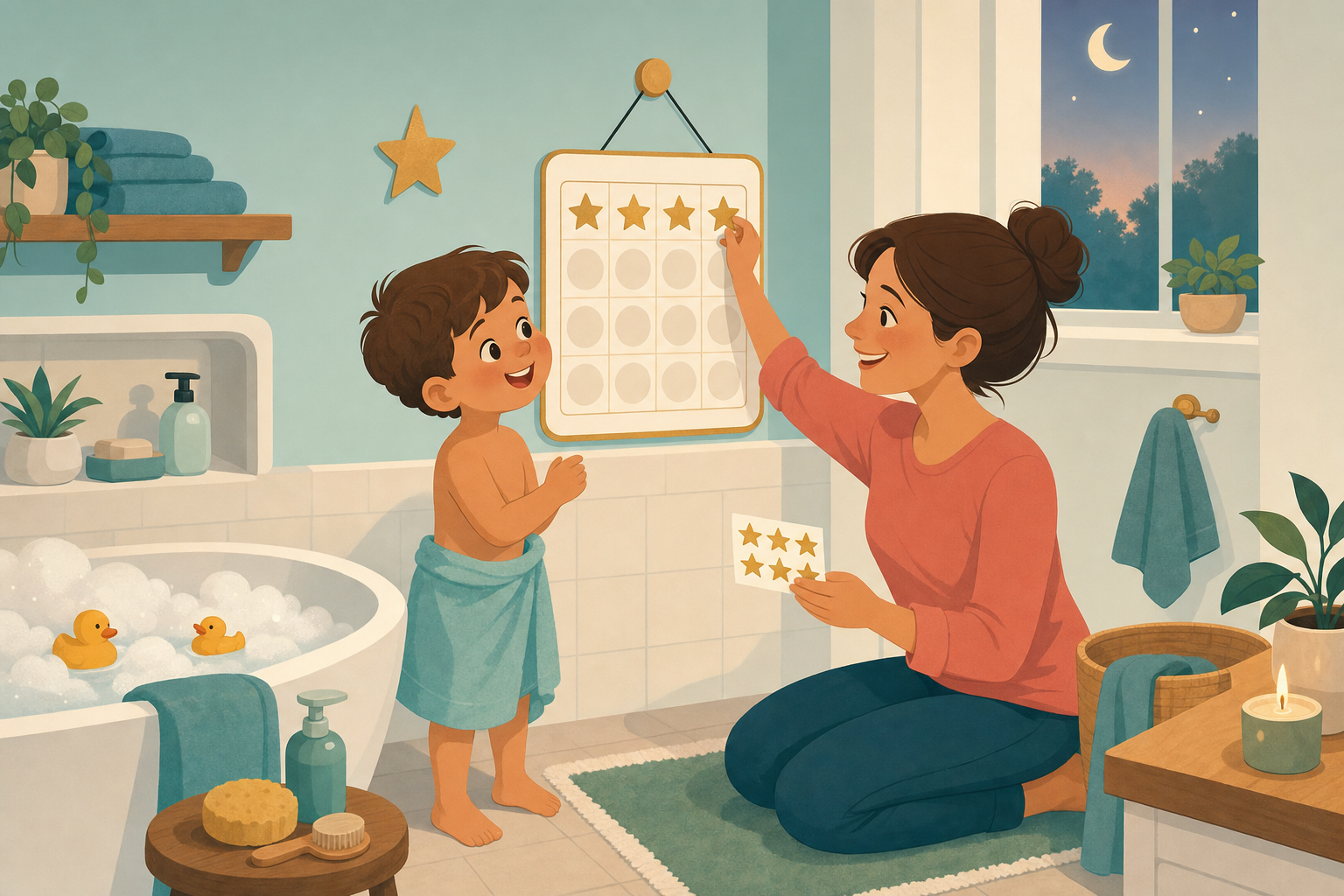
Why Bath Time Turns Into a Nightly Fight
Your kid is filthy from the sandbox, dinner is on their shirt, and the second you mention the word "bath" they go boneless on the floor like you've asked them to swim through lava. This isn't defiance for the sake of it. For a lot of 3- to 6-year-olds, bath refusal is about control, sensory discomfort (water in the ears, getting cold when they step out), or just not wanting to stop what they're doing.
A sticker chart won't fix sensory issues on its own, but it can turn a nightly power struggle into something your child actually wants to do. The trick is rewarding the right steps, not just "taking a bath," and setting it up so your child feels like they're winning something instead of losing an argument.
What to Actually Reward (Hint: Not Just "Took a Bath")
Most bath time behavior charts fail because they only track one giant, vague goal: bath = sticker. That's too big a step for a kid who's already dug in. Break it into pieces your child can actually succeed at.
Good things to put on a bath time sticker chart:
- Walked to the bathroom without being carried
- Got in the tub within 2 minutes of being asked
- Let hair get washed without a screaming match
- Stayed in for the full wash (even if grumpy)
- Got out and got dry without a meltdown
Notice none of these say "had a great attitude" or "didn't complain." Attitude is hard to measure and easy to argue about at 7pm when everyone's tired. Actions are not. Did they get in the tub, yes or no? That's a sticker you can hand out without a debate.
For kids who hate baths specifically because of hair washing or water on the face, split that into its own line. A child who tolerates the whole bath but panics at hair washing shouldn't lose their sticker for the parts they handled fine.
Setting Up the Printable Bath Routine Chart
Keep the chart itself dead simple. A printable bath routine chart with 5 to 7 icons (tub, washcloth, shampoo bottle, towel) works better than a wall of text for a preschooler who can't read yet. If you're building one, Sticker Chart Maker lets you print a free custom version in a few minutes with your child's own bath steps instead of generic clip art.
A few setup rules that make a real difference:
- Pick 3 to 4 steps max. More than that and preschoolers lose track of what they're even working toward.
- Put the chart somewhere they'll see it before bath time, like taped to the bathroom door, not buried in a drawer.
- Let them hand you the sticker sheet. Handing over control of the actual sticking motion takes some of the power struggle out of the room.
- Set a small reward at 5 stickers, not 20. A preschooler's sense of time is short. A goal that's three weeks away might as well be never.
Rewards don't need to cost anything. Extra 10 minutes of a favorite show, picking tomorrow's breakfast, or a free coloring page from Chunky Crayon all work fine as a "chart is full" prize.
A Sample Chart for Preschoolers Who Hate Baths
Here's a version that works for a lot of kids who resist the whole process, not just one part of it:
- Sticker 1: Comes to the bathroom when called (within 2 minutes)
- Sticker 2: Gets in the tub without being lifted in
- Sticker 3: Lets hair get rinsed (even with complaining, as long as they stay put)
- Sticker 4: Gets out when asked, first request
Run this for a week and see what actually gets stuck. If your kid earns stickers 1, 2, and 4 easily but always melts down at hair rinsing, that's useful information. It tells you the fight isn't about baths, it's about water on the face. You can solve that specific problem (a bath visor, a washcloth method, letting them hold a dry towel over their eyes) instead of fighting the whole routine every night.
This same narrow-the-problem approach helps with other nightly battles too. If tooth brushing is also a fight after the bath, a tooth brushing reward chart can run right alongside the bath one, or you can fold both into one evening routine chart so the whole wind-down is covered.
When the Chart Stops Working (Because It Will, Eventually)
Most sticker charts lose steam after 2 to 3 weeks. That's normal, not a sign you did it wrong. Kids get bored of the same stickers, and "the chart is full so I get a prize" starts to feel less exciting once the novelty wears off.
A few honest notes on when this approach won't be enough:
- If bath refusal comes with real sensory distress (screaming, gagging, panic at water sounds), a chart is treating the symptom, not the cause. Talk to your pediatrician about sensory processing support before leaning harder on rewards.
- If your child is testing you more broadly, not just at bath time, the chart might need to be part of a bigger pattern. Bath refusal that shows up alongside constant "no" to every request looks a lot like the pushback covered in Sticker Chart for Whining, where the fix is less about the specific task and more about how requests get made in the first place.
- If stickers stop motivating, swap the reward, not the whole system. Change stickers to stamps, or switch the prize from screen time to a small toy pick. Kids get bored of the same currency faster than parents expect.
Once bath time is calm, it's worth looking at the rest of the evening as one connected block. A visual morning routine chart works the same way for the other end of the day, and if dinner cleanup is also a fight, an after-dinner cleanup routine can bridge the gap between dinner and bath so you're not negotiating three separate battles every single night.
The Bottom Line
A bath time sticker chart works best when it rewards specific, visible actions, not attitude, and when the goal is close enough for a preschooler to actually feel it. Start small, watch which step is the real sticking point, and be ready to change the reward once the novelty fades. It won't make bath time magically fun overnight, but it gives your child something to work toward instead of just something to fight against.